Browse Articles

Characterization of a UPEC DegS Mutant in vitro and in vivo

Bradley et al. | Mar 16, 2015

Characterization of a UPEC <em>DegS</em> Mutant <em>in vitro</em> and <em>in vivo</em>

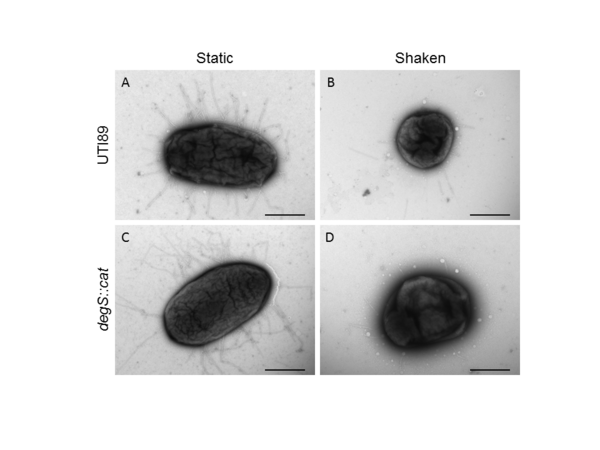
DegS is an integral inner membrane protein in E. coli that helps break down misfolded proteins. When it is mutated, there is a large increase in the production of outer membrane vesicles (OMVs), which are thought to play a role in pathogenesis. This study used mutant strains of uropathogenic E. coli (UPEC) to characterize the role of DegS and OMVs on UPEC virulence.

Read More...
Simulating single versus cocktail antibiotic effects on the human gut microbiome

Patel et al. | Jul 19, 2026

Simulating single versus cocktail antibiotic effects on the human gut microbiome
Image credit: Volodymyr Hryshchenko

This study, uses SimulATe to model changes in microbial diversity and community structure upon administering a cocktail of antibiotics versus a single antibiotic. The authors hypothesized that antibiotic cocktails, particularly those combining broad-spectrum drugs like tetracyclines and trimethoprims, would cause a more significant reduction in gut microbial diversity compared to single-drug treatments. The findings confirmed a greater loss of microbial diversity with combinatorial treatments compared to single-drug treatments. While individual antibiotics dynamically reshaped the surviving species of the microbiome, antibiotic cocktails frequently cleared all species of the gut microbiome.

Read More...

The effect of bioenhancers on ampicillin-sulbactam as a treatment against A. baumannii

Balaji et al. | Sep 21, 2024

The effect of bioenhancers on ampicillin-sulbactam as a treatment against <i>A. baumannii<i>

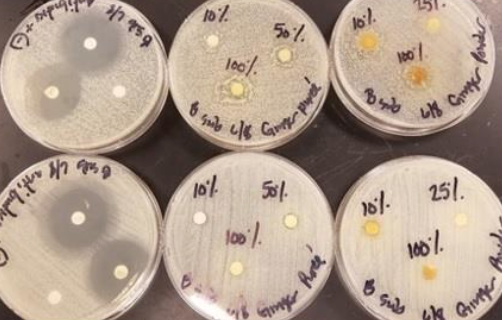
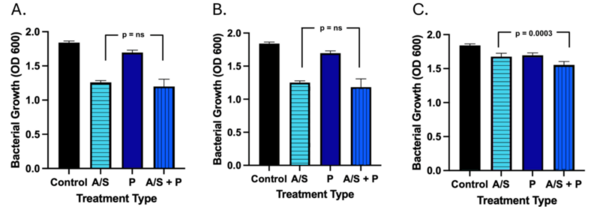
This article explores the potential of piperine, a bioenhancer from black pepper, to improve antibiotic efficacy against antibiotic-resistant Acinetobacter baumannii. By combining piperine with ampicillin-sulbactam, the study demonstrated a significant reduction in bacterial growth for most strains tested, showcasing the promise of bioenhancers in combating resistant pathogens. This research highlights the possibility of reducing the required antibiotic dosage, potentially offering a new strategy in the fight against drug-resistant bacteria.

Read More...

Enhancing activity of antibiotics against Staphylococcus aureus with Shuang-Huang-Lian

Liu et al. | Sep 29, 2022

Enhancing activity of antibiotics against Staphylococcus aureus with Shuang-Huang-Lian

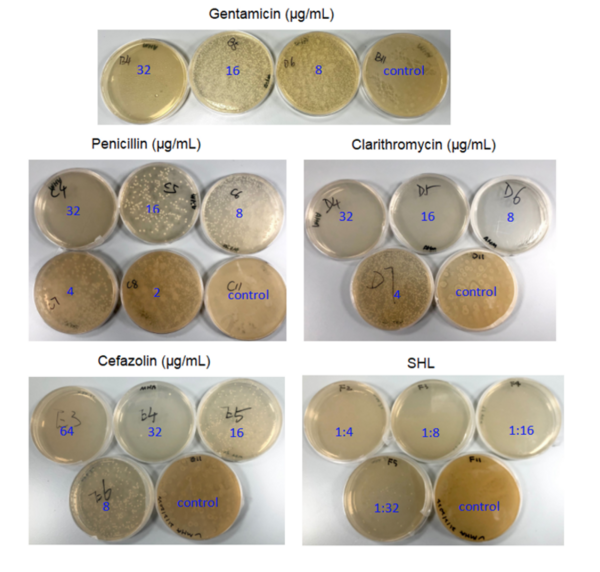
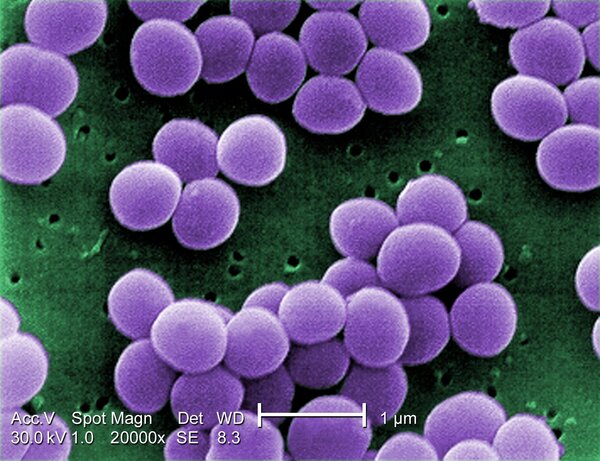
Staphylococcus aureus is a major pathogen in both hospitals and the community and can cause systemic infections such as pneumonia. Multi-drug resistant strains, such as Methicillin-resistant S. aureus (MRSA) are particularly worrisome. In order to reduce the development of bacterial resistance, we hypothesized that two selected traditional Chinese medicines, Shuang-Huang-Lian (SHL) and Lan-Qin, would be effective against S. aureus. The results showed that SHL had a synergistic effect with gentamicin as well as additive effects with penicillin and cefazolin against S. aureus compared with using antibiotics alone.

Read More...

Comparing Virulence of Three T4 Bacteriophage Strains on Ampicillin-Resistant and Sensitive E. coli Bacteria

Hudanich et al. | Dec 09, 2020

Comparing Virulence of Three T4 Bacteriophage Strains on Ampicillin-Resistant and Sensitive <em>E. coli</em> Bacteria

In this study, the authors investigate an alternative way to kill bacteria other than the use of antibiotics, which is useful when considering antibiotic-resistance bacteria. They use bacteriophages, which are are viruses that can infect bacteria, and measure cell lysis. They make some important findings that these bacteriophage can lyse both antibiotic-resistant and non-resistant bacteria.

Read More...

Improving Wound Healing by Breaking Down Biofilm Formation and Reducing Nosocomial Infections

DiStefano et al. | Jul 09, 2019

Improving Wound Healing by Breaking Down Biofilm Formation and Reducing Nosocomial Infections

In a 10-year period in the early 2000’s, hospital-based (nosocomial) infections increased by 123%, and this number is increasing as time goes on. The purpose of this experiment was to use hyaluronic acid, silver nanoparticles, and a bacteriophage cocktail to create a hydrogel that promotes wound healing by increasing cell proliferation while simultaneously disrupting biofilm formation and breaking down Staphylococcus aureus and Pseudomonas aeruginosa, which are two strains of bacteria that attribute to nosocomial infections and are increasing in antibiotic resistance.

Read More...

Impact of Population Density and Elevation on Tuberculosis Spread and Transmission in Maharashtra, India

Rao et al. | Nov 07, 2021

Impact of Population Density and Elevation on Tuberculosis Spread and Transmission in Maharashtra, India

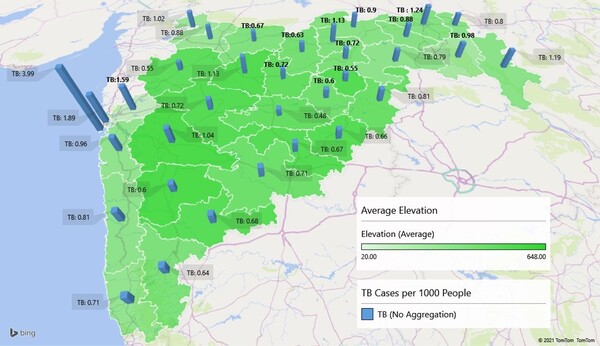
India accounts for over 2.4 million recorded cases of tuberculosis, about 26% of the world’s cases. This research ascertained the bearing of both the population density and the average elevation above mean sea level (MSL) on the number of cases of TB recorded by the districts in Maharashtra, India. The results found a strong positive correlation between the number of TB cases per thousand people and the population density and a strong negative correlation between the number of TB cases per thousand people and the average elevation above MSL.

Read More...