This manuscript was retracted on March 22, 2021 as it did not adhere to JEI's submission requirements with respect to author permissions. All authors on the manuscript agreed to its removal.
Read More...RETRACTED: Effect of Curcumin on Motor Behaviors in Drosophila melanogaster PINK1 Mutant Parkinson’s Model
This manuscript was retracted on March 22, 2021 as it did not adhere to JEI's submission requirements with respect to author permissions. All authors on the manuscript agreed to its removal.
Read More...Digestion products of bread and cheese cause addictive behavior in a planaria model
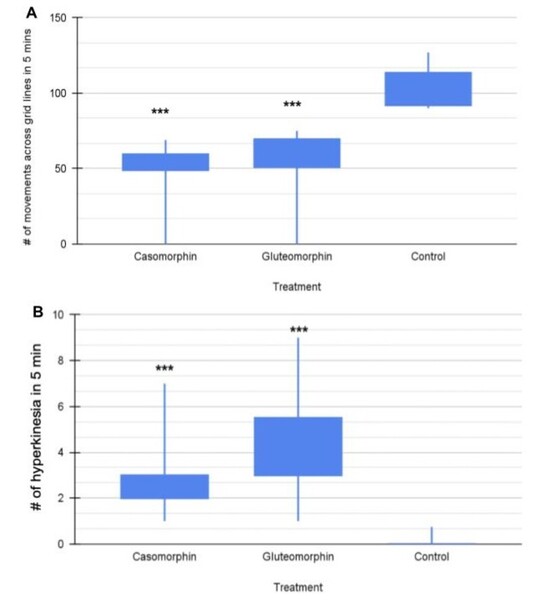
The authors looked at two peptides, gluteomorphin and casomorphin, that are present after the digestion of bread and cheese. As these peptides can bind opioid receptors the authors want to know if they could be addictive in the same way as conventional opioids (i.e., morphine) are known to be. Their results in a planaria model suggest that both of these peptides are addictive.
Read More...The influence of implicit social pressure on prosocial behavior of adolescents
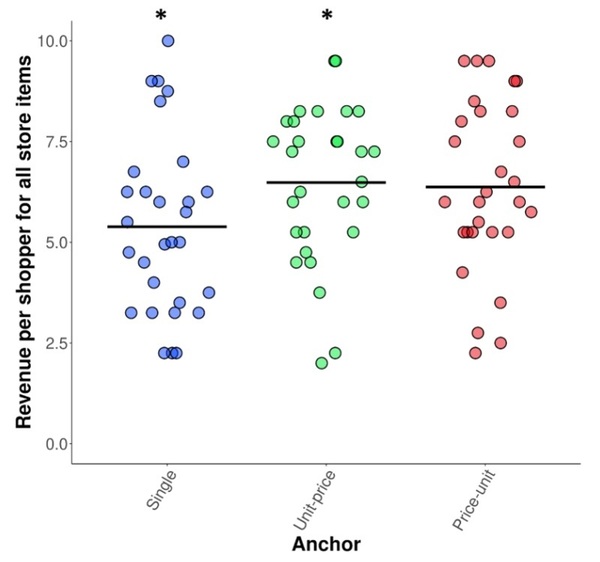
In this study the authors sought to understand the influence of implicit social pressure on prosocial behavior (voluntary acts that benefit someone else) in adolescents age 12–19. They considered how participants divided money between themselves and four teammate they did a school project with. Despite being shown examples of how to divide money (social pressure), their results showed that both boys and girls were unaffected by prosocial, neutral, and antisocial pressures.
Read More...Discovery of the Heart in Mathematics: Modeling the Chaotic Behaviors of Quantized Periods in the Mandelbrot Set
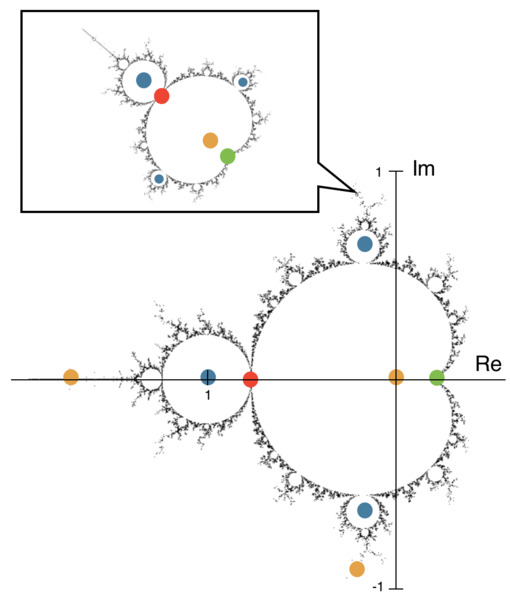
This study aimed to predict and explain chaotic behavior in the Mandelbrot Set, one of the world’s most popular models of fractals and exhibitors of Chaos Theory. The authors hypothesized that repeatedly iterating the Mandelbrot Set’s characteristic function would give rise to a more intricate layout of the fractal and elliptical models that predict and highlight “hotspots” of chaos through their overlaps. The positive and negative results from this study may provide a new perspective on fractals and their chaotic nature, helping to solve problems involving chaotic phenomena.
Read More...Expression of Anti-Neurodegeneration Genes in Mutant Caenorhabditis elegans Using CRISPR-Cas9 Improves Behavior Associated With Alzheimer’s Disease
Alzheimer's disease is one of the leading causes of death in the United States and is characterized by neurodegeneration. Mishra et al. wanted to understand the role of two transport proteins, LRP1 and AQP4, in the neurodegeneration of Alzheimer's disease. They used a model organism for Alzheimer's disease, the nematode C. elegans, and genetic engineering to look at whether they would see a decrease in neurodegeneration if they increased the amount of these two transport proteins. They found that the best improvements were caused by increased expression of both transport proteins, with smaller improvements when just one of the proteins is overly expressed. Their work has important implications for how we understand neurodegeneration in Alzheimer's disease and what we can do to slow or prevent the progression of the disease.
Read More...Pichia kudriavzevii Yeast Exposure Increases the Asthmatic Behavior of Alveolar Epithelial Cells In Vitro
Asthma affects over 334 million people worldwide and is triggered by inhalation of environmental stimuli. The authors of this study characterized the effect of exposure to common spoilage yeast, Pichia kidriavzevii on alveolar epithelial cells. A direct correlation between infection duration and asthmatic status of these cells was found, indicating the potential for this yeast to be an environmental stimulus of asthma and warranting further study.
Read More...The Effects of Ocean Acidification on the food location behavior and Locomotion of Pagurus Longicarpus
Increasing levels of atmospheric carbon dioxide is slowly acidifying our oceans. Here the authors test the effects of ocean acidification on the ability of hermit crabs (P. longicarpus) to find food. Though no statistically significant changes in food finding were observed, the data suggest a trend toward different activity.
Read More...Extroverts as Materialists: Correlating Personality Traits, Materialism, and Spending Behavior
The authors investigated the relationship between personality traits and adolescent materialism, as well as how materialism relates to spending habits. Results indicate that extroversion was positively correlated with materialism, and that adolescents' purchases were affected by the purchasing behaviors of their friends or peers. Moreover, materialistic youth were more likely than non-materialistic youth to spend money on themselves when given a hypothetical windfall of $500.
Read More...The effect of circumference on the segregation of objects in a mixture
The authors test how the size-segregation theory applies to the behavior of hollow and irregular-shaped objects.
Read More...Threshold Frequency of a Bubble is Positively Correlated to the Density of the Surrounding Fluid
In this article the authors explore the peculiar behavior of sinking bubbles. By investigating the relationship between the viscosity of a fluid and the the formation of stationary bubbles, they identify why bubbles behave differently between in different fluids.
Read More...