Browse Articles

Implications of various pure tones on Phaseolus vulgaris and Gaultheria shallon

Judit et al. | Jul 13, 2026

Implications of various pure tones on <i>Phaseolus vulgaris</i> and <i>Gaultheria shallon<i>

This study investigated how different sound frequencies (0, 1,000, 5,000, and 15,000 Hz) affect the growth of Phaseolus vulgaris and the transpiration rates of Gaultheria shallon. Although some differences in plant growth were observed, the authors found no consistent evidence that sound frequency enhanced overall growth or transpiration, highlighting the need for further research.

Read More...


How does light affect the distribution of Euglena sp. and Tetrahymena pyriformis

Singh et al. | Mar 03, 2022

How does light affect the distribution of <em>Euglena sp.</em> and <em>Tetrahymena pyriformis</em>

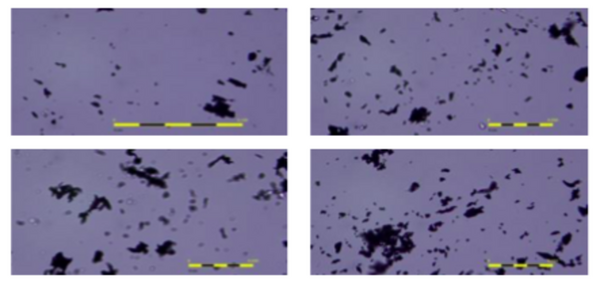
In this article, the authors explored the locomotory movement of Euglena sp. and Tetrahymena pyriformis in response to light. Such research bears relevance to the migration and distribution patterns of both T. pyriformis and Euglena as they differ in their method of finding sustenance in their native environments. With little previous research done on the exploration of a potential response to photostimulation enacted by T. pyriformis, the authors found that T. pyriformis do not bias in distribution towards areas of light - unlike Euglena, which displayed an increased prevalence in areas of light.

Read More...

Enhancing the quantum efficiency of a silicon solar cell using one dimensional thin film interferometry

Ahuja et al. | May 03, 2024

Enhancing the quantum efficiency of a silicon solar cell using one dimensional thin film interferometry
Image credit: American Public Power Association

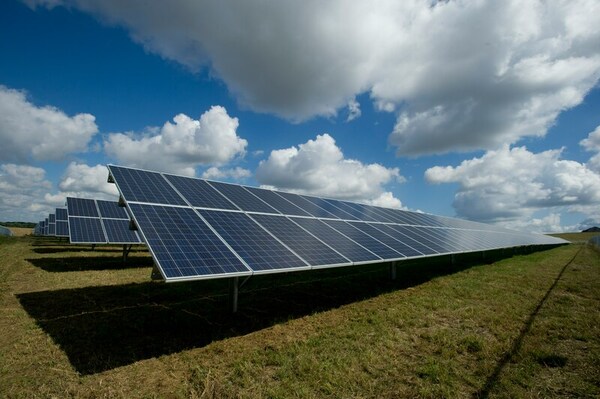
Here, recognizing the need to improve the efficiency of the conversion of solar energy to electrical energy, the authors used MATLAB to mathematically simulate a multi-layered thin film with an without an antireflective coating. They found that the use of alternating ZnO-SiO2 multilayers enhanced the transmission of light into the solar cell, increasing its efficiency and reducing the reflectivity of the Si-Air interface.

Read More...

The Cosmic Microwave Background: Galactic Foregrounds and Faraday Rotation

Connelly et al. | Nov 20, 2017

The Cosmic Microwave Background: Galactic Foregrounds and Faraday Rotation

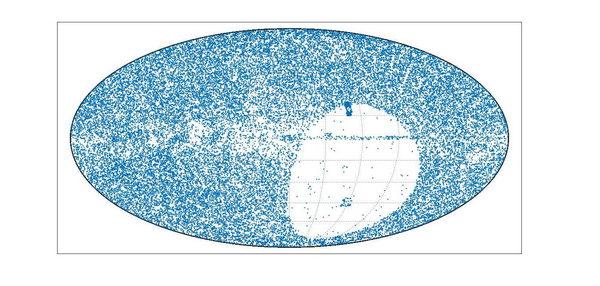
The cosmic microwave background (CMB) is faint electromagnetic radiation left over from early stages in the formation of the universe. In order to analyze the CMB, scientists need to remove from electromagnetic data foreground radiation that contaminates CMB datasets. In this study, students utilize extensive updated datasets to analyze the correlation between CMB maps and Faraday RM and WMAP sky maps.

Read More...