Browse Articles

The Development and Maximization of a Novel Photosynthetic Microbial Fuel Cell Using Rhodospirillum rubrum

Gomez et al. | Mar 02, 2014

The Development and Maximization of a Novel Photosynthetic Microbial Fuel Cell Using <em>Rhodospirillum rubrum</em>

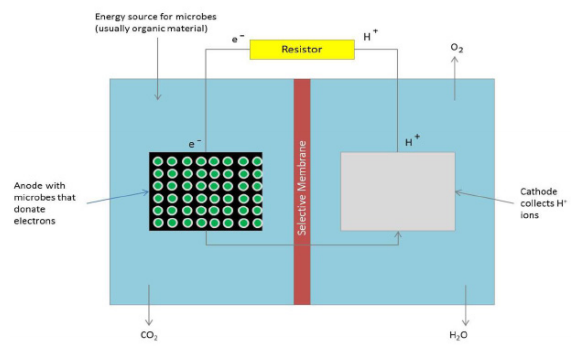
Microbial fuel cells (MFCs) are bio-electrochemical systems that utilize bacteria and are promising forms of alternative energy. Similar to chemical fuel cells, MFCs employ both an anode (accepts electrons) and a cathode (donates electrons), but in these devices the live bacteria donate the electrons necessary for current. In this study, the authors assess the functionality of a photosynthetic MFC that utilizes a purple non-sulfur bacterium. The MFC prototype they constructed was found to function over a range of environmental conditions, suggesting its potential use in industrial models.

Read More...

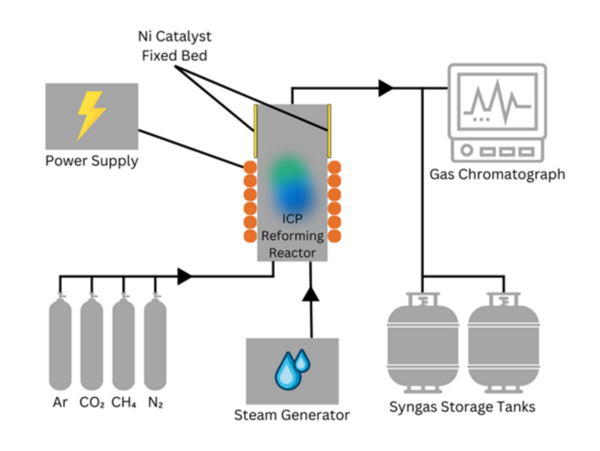
Correlating inlet gas composition to conversion efficiency in plasma-assisted landfill gas reforming

Kim et al. | Jun 28, 2025

Correlating inlet gas composition to conversion efficiency in plasma-assisted landfill gas reforming

The escalating crisis of climate change, driven by the accumulation of greenhouse gases from human activities, demands urgent and innovative solutions to curb rising global temperatures. Plasma-based methane (CH4) and carbon dioxide (CO2) reforming offers a promising pathway for carbon capture and the sustainable production of hydrogen fuel and syngas components. To advance this technology, particularly in terms of energy efficiency and selectivity, it is essential to enhance the conversion efficiencies of CO2 and CH4.

Read More...

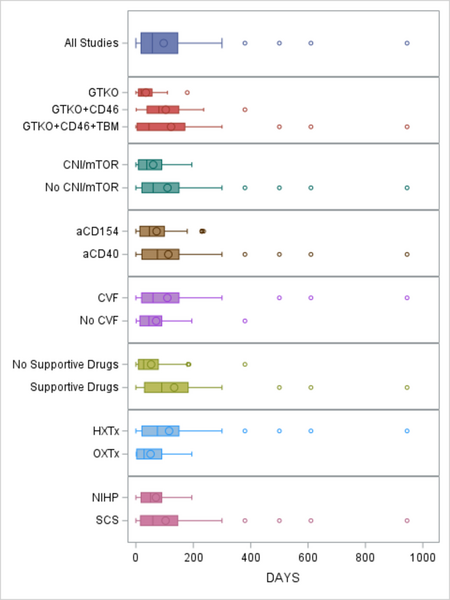
The effect of joint angle differences on blade velocity in elite and novice saber fencers: A kinematic study

Greene et al. | Mar 02, 2023

 The effect of joint angle differences on blade velocity in elite and novice saber fencers: A kinematic study

Here, recognizing that years of training in saber fencing could expectedly result in optimized movements that result in elite skill levels, the authors used motion tracking and statistical analysis to assess the difference in velocity and blade tip velocity of novice and elite fencers during a vertical blade thrust. They found statistically significant differences in blade tip velocity and elbow joint angle kinematics.

Read More...

How does light affect the distribution of Euglena sp. and Tetrahymena pyriformis

Singh et al. | Mar 03, 2022

How does light affect the distribution of <em>Euglena sp.</em> and <em>Tetrahymena pyriformis</em>

In this article, the authors explored the locomotory movement of Euglena sp. and Tetrahymena pyriformis in response to light. Such research bears relevance to the migration and distribution patterns of both T. pyriformis and Euglena as they differ in their method of finding sustenance in their native environments. With little previous research done on the exploration of a potential response to photostimulation enacted by T. pyriformis, the authors found that T. pyriformis do not bias in distribution towards areas of light - unlike Euglena, which displayed an increased prevalence in areas of light.

Read More...

Influence of Infill Parameters on the Tensile Mechanical Properties of 3D Printed Parts

Guan et al. | Jul 17, 2020

Influence of Infill Parameters on the Tensile Mechanical Properties of 3D Printed Parts

Manufacturers that produce products using fused filament fabrication (FFF) 3D printing technologies have control of numerous build parameters. This includes the number of solid layers on the exterior of the product, the percentage of material filling the interior volume, and the many different types of infill patterns used to fill their interior.This study investigates the hypothesis that as the density of the part increases, the mechanical properties will improve at the expense of build time and the amount of material required.

Read More...

Temperatures of 20°C Produce Increased Net Primary Production in Chlorella sp.

Biddinger et al. | Feb 25, 2020

Temperatures of 20°C Produce Increased Net Primary Production in <em>Chlorella sp.</em>

Chlorella sp. are unicellular green algae that use photosynthesis to reduce carbon dioxide into glucose. In this study, authors sought to determine the temperature that Chlorella sp. is maximally efficient at photosynthesis, and therefore removing the most carbon dioxide from the system. This activity could be harnessed to naturally remove carbon dioxide from the environment, fighting the effects of climate change.

Read More...