The authors access a panel of leaf traits across ten deciduous tree species to explore adaptive strategies between large and small trees.
Read More...Variation, relationship, and trade-offs of leaf traits in large and small deciduous broadleaf tree species
The authors access a panel of leaf traits across ten deciduous tree species to explore adaptive strategies between large and small trees.
Read More...Effects of plant-derived smoke water on germination and growth in stressed plants
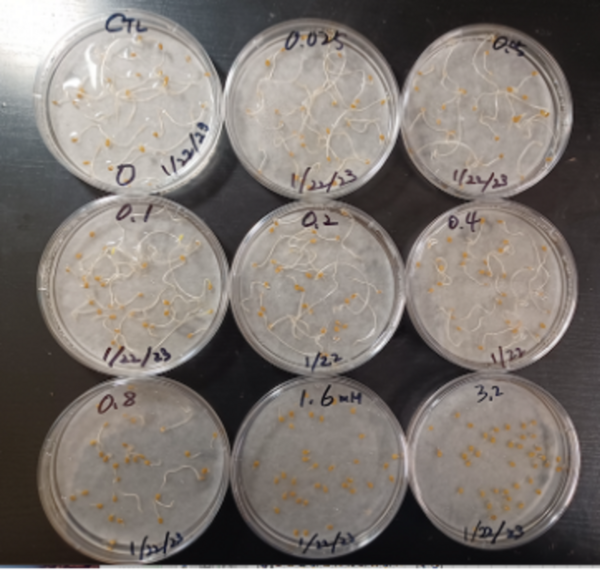
Here the authors investigated the potential of plant-derived smoke water to mitigate the negative impacts of abiotic stressors, such as heat, salinity, and water fluctuations, on the germination and growth of various agricultural crops. Their findings suggest that smoke water, specifically from buckwheat, pea, and radish, significantly improves plant resilience against drought and excessive water stress, offering a viable strategy to bolster food security in the face of climate change.
Read More...In silico design of novel acetylcholinesterase inhibitors as potential therapeutics for Alzheimer's disease
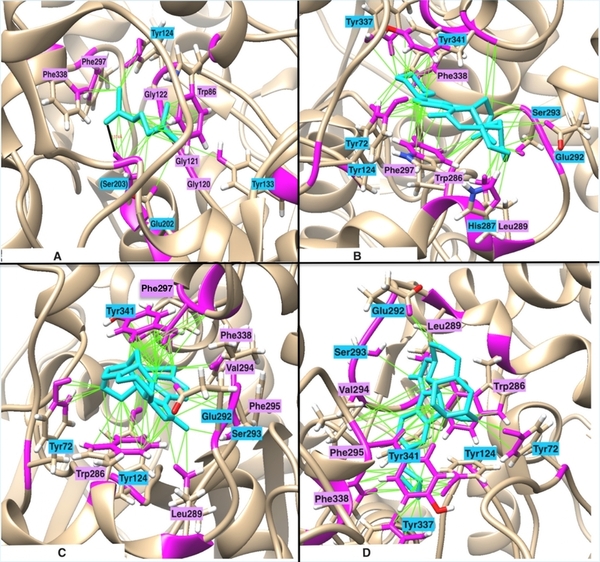
Elevated acetylcholinesterase (AChE) activity contributes to cognitive decline and neurodegenerative diseases such as Alzheimer’s, motivating the search for more effective inhibitors with better bioavailability. This study used computational methods to design novel, non-toxic AChE inhibitors.
Read More...Assessing the accuracy and efficiency of simplified gridded ion thruster simulations
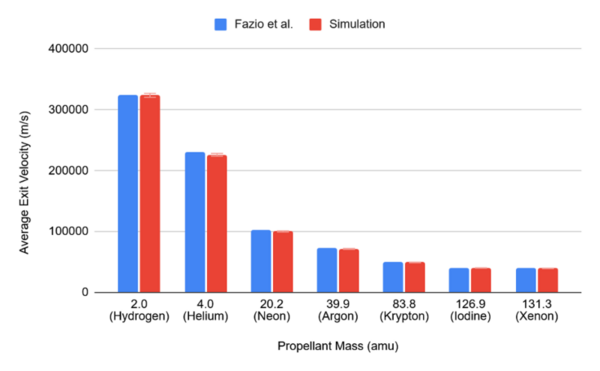
The authors used a particle-in-cell simulation to determine the effects on extensive and intensive metrics. They found that preliminary simulations could be run quickly with much lower particle counts before more technically demanding and comprehensive simulations are performed.
Read More...Chemoreception in Aurelia aurita studied by AI-enhanced image analysis
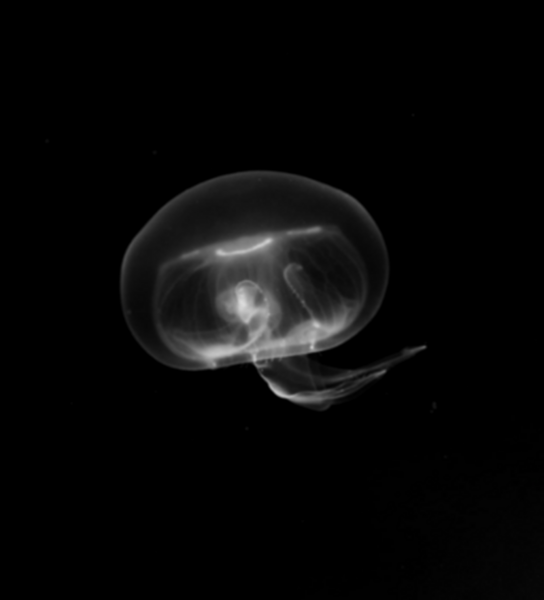
The authors studied the chemoreception of moon jellyfish in response to food, and developed an AI tool to identify track and quantify the pulsation of swimming jellyfish.
Read More...Lactic acid bacteria protect the growth of Solanum lycopersicum from Sodium dodecyl sulfate
Sodium dodecyl sulfate (SDS), a detergent component, can harm plant growth when it contaminates soil and waterways. Authors explored the potential of lactic acid bacteria (LAB) to mitigate SDS-induced stress on plants.
Read More...What is the optimal fuel for space flight? Efficiency, cost, and environmental impact
Here, the authors sought to investigate the efficiency, cost, and environmental impact of several possible propellants that are or could be used for space flight. By deriving three novel equations, they identified harm, energy, and cost scores for each fuel, suggesting that considering each factor will be essential to the ongoing growth of the space industry.
Read More...Effect of pH on the antibacterial properties of turmeric
Some spices have antimicrobial or antibacterial properties that people have already tested. Turmeric has a wide variety of uses and has even been implemented in alternative medicine as a treatment for cancer, inflammation, osteoarthritis, and other diseases. We tested the antimicrobial effects of turmeric under two different pHs to characterize this effect in vitro. Decreasing the pH of a solution of turmeric may increase antibacterial properties.
Read More...The effect of an anthocyanin on the gut permeability of a Type 2 Diabetic Drosophila melanogaster
Anti-diabetic drugs like Metformin are known to increase gut permeability, and this has a negative impact on patient health. These authors hypothesized that this can be mitigated using purple sweet potato extract, which is high anthocyanin content, that feeds bacteria metabolism to decrease gut permeability.
Read More...A novel filtration model for microplastics using natural oils and its application to the environment
Recognizing the need for a method to filter microplastics from polluted water the authors sought to use nonpolar solvents, palm oil and palm kernel oil, to filter microplastics out of model seawater. By relying on the separation of polar and nonpolar solvents followed by freezing the nonpolar solvent, they reported that microplastics could be extracted with percentages ranging from 96.2% to 94.2%. They also provided an estimation to use this method as part of container ships to clean the Pacific Ocean of microplastics.
Read More...