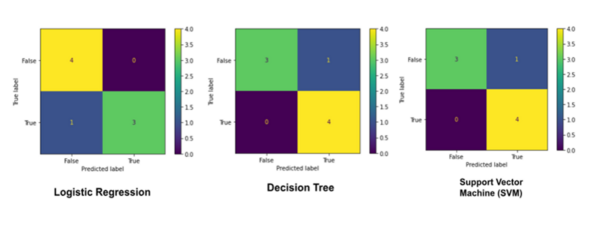
The authors trained a machine learning model to detect kidney stones based on characteristics of urine. This method would allow for detection of kidney stones prior to the onset of noticeable symptoms by the patient.
Read More...A machine learning approach to detect renal calculi by studying the physical characteristics of urine
The authors trained a machine learning model to detect kidney stones based on characteristics of urine. This method would allow for detection of kidney stones prior to the onset of noticeable symptoms by the patient.
Read More...Redesigning an Experiment to Determine the Coefficient of Friction
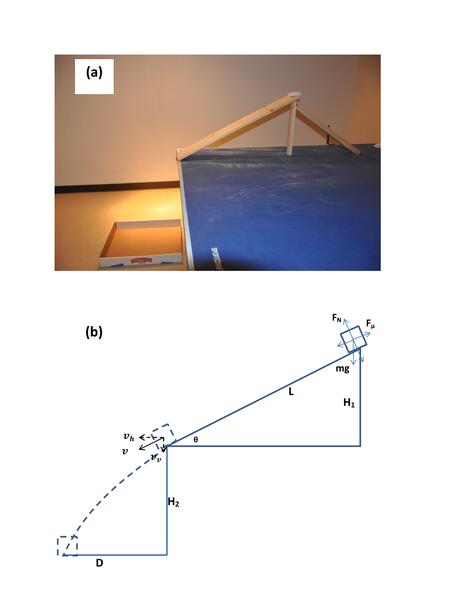
In a common high school experiment to measure friction coefficients, a weighted mass attached to a spring scale is dragged across a surface at a constant velocity. While the constant velocity is necessary for an accurate measurement, it can be difficult to maintain and this can lead to large errors. Here, the authors designed a new experiment to measure friction coefficients in the classroom using only static force and show that their method has a lower standard deviation than the traditional experiment.
Read More...Mitigating open-set misclassification in a colorectal cancer detecting neural network
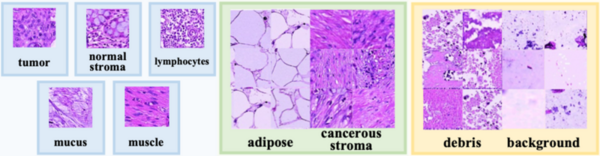
The authors develop a machine learning method to reduce misclassification of objects in safety-critical applications such as medical diagnosis.
Read More...Floor level estimation using MEMS pressure sensors
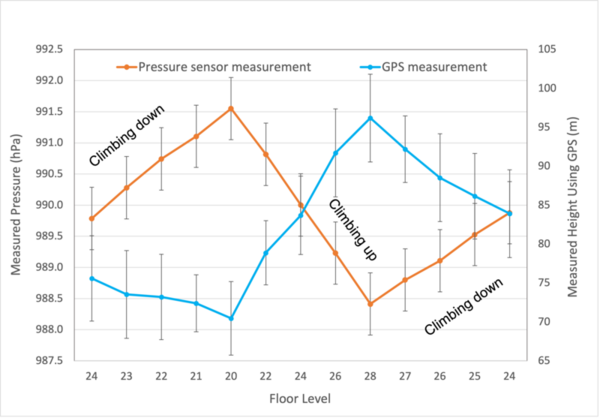
The authors propose a method to help first responders find the location of a person within a high-rise building in densely populated areas.
Read More...Effect of different cooking methods on the levels of iron and ascorbic acid in green vegetables

This study compares different methods for cooking vegetables to determine which retain iron and ascorbic acid, or vitamin C, levels the most.
Read More...Mining social media posts: An alternative approach to understanding home health care workers’ experiences

This study developed an effective method for extracting valuable information from social media data and employed computer-assisted human coding alongside the AI-powered tool to analyze social media posts. The findings provide a deep understanding of the major challenges that home health care workers are experiencing and offer important implications regarding how to improve home healthcare workers' well-being, and provide suggestions on optimizing the home health care service experience.
Read More...Convolutional neural network-based analysis of pediatric chest X-ray images for pneumonia detection
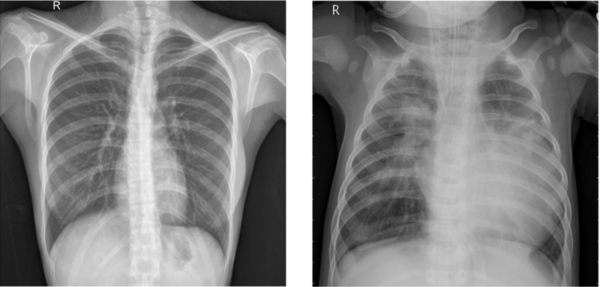
The authors test various machine learning models to improve the accuracy and efficiency of pneumonia diagnosis from X-ray images.
Read More...Effect of hypervitaminosis A in regenerating planaria: A potential model for teratogenicity testing
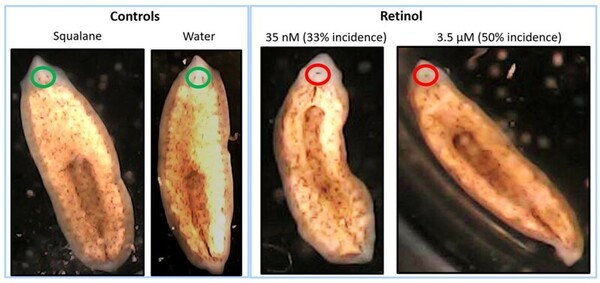
This unique research study evaluated the potential use of the flatworm, brown planaria (Dugesia tigrine), as an alternative model for teratogenicity testing. In this study, we exposed amputated planaria to varying concentrations of a known teratogen, vitamin A (retinol), for approximately 2 weeks, and evaluated multiple parameters including the formation of blastema and eyes. The results from this study demonstrated that high concentrations of retinol caused defects in head and eye formation in regenerating planaria, with similarities to vitamin A related teratogenicity findings in mammals. Based on these results, regenerating brown planaria are a promising alternative model for teratogenicity testing, which can potentially be paradigm shifting as it can reduce cost, time, and pregnant animal use in research.
Read More...Developing a Method to Remove Inorganic Arsenic from Rice with Natural Substances

In this study, the authors tested different approaches for removing arsenic from rice. Due to higher arsenic levels in water, some areas grow rice with higher levels as well. This is a health hazard and so developing methods to remove arsenic from the rice will be helpful to many. Using a rapid arsenic kit, the authors found that activated charcoal was the most effective at removing arsenic from rice.
Read More...Comparison of shower filters for reducing total residual chlorine under household flow conditions

This study compared two commercial shower filters and three individual filtration media to evaluate their ability to reduce total residual chlorine under household flow conditions. By identifying which materials most effectively reduce chlorine during regular shower use, this research provides practical information for consumers and offers guidance for designing more affordable and reusable shower filtration systems.
Read More...