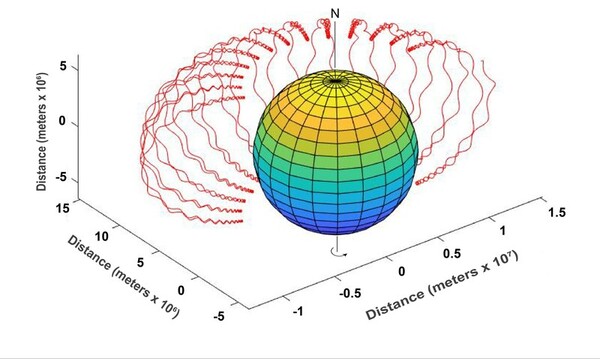
In this study the authors looked the trajectories of cosmic rays moving through a dipole field. They found that the trajectories of cosmic rays are determined by a particle's energy and interaction with Earth's B field.
Read More...Simulation of cosmic rays in the presence of a magnetic field
In this study the authors looked the trajectories of cosmic rays moving through a dipole field. They found that the trajectories of cosmic rays are determined by a particle's energy and interaction with Earth's B field.
Read More...Optimizing airfoil shape for small, low speed, unmanned gliders: A homemade investigation

Here, the authors sought to identify a method to optimize the lift generated by an airfoil based solely on its shape. By beginning with a Bernoullian model to predict an optimized wing shape, the authors then tested their model against other possible shapes by constructing them from Styrofoam and testing them in a small wind tunnel. Contrary to their hypothesis, they found their expected optimal airfoil shape did not result in the greatest lift generation. They attributed this to a variety of confounding variables and concluded that their results pointed to a correlation between airfoil shape and lift generation.
Read More...Investigating facilitated biofilm formation in Escherichia coli exposed to sublethal levels of ampicillin
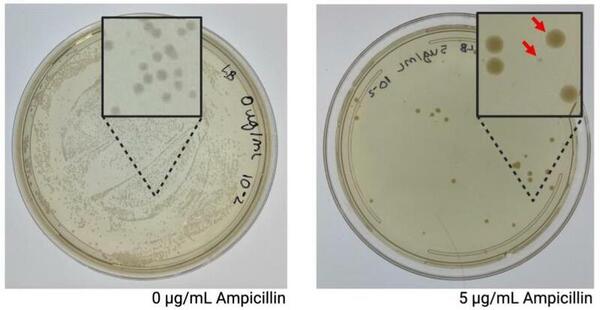
Here, the authors recognized the tendency of bacteria to form biofilms, where this behavior offers protection against threats such as antibiotics. To investigate this, they observed the effects of sublethal exposure of the antibiotic ampicillin on E. coli biofilm formation with an optical density crystal violet assay. They found that exposure to ampicillin resulted in the favored formation of biofilms over time, as free-floating bacteria were eradicated.
Read More...The presence of Wolbachia in Brood X cicadas

Here, seeking to understand a possible cause of the declining popluations of Brood X cicadas in Ohio and Indiana, the authors investigated the presence of Wolbachia, an inherited bacterial symbiont that lives in the reproductive cells of approximately 60% of insect species in these cicadas. Following their screening of one-hundred 17-year periodical cicadas, they only identified the presence of Wolbachia infection in less than 2%, suggesting that while Wolbachia can infect cicadas it appears uncommon in the Brood X cicadas they surveyed.
Read More...A computational quantum chemical study of fluorinated Allopurinol
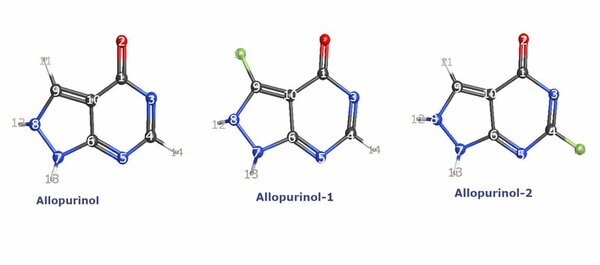
In this study, the impact of fluorination of heterocyclic drug Allopurinol on its stability and other chemical properties is investigated.
Read More...Rubik’s cube: What separates the fastest solvers from the rest?

In this study, the authors assess the factors that allow some speedcubers to solve Rubik's Cubes faster than others.
Read More...Reducing levels of C-Reactive Protein: An eight-week, open-label clinical trial of three oral supplements

In this study, the effects of vitamin C, ginger, or curcumin supplements on C-reactive protein levels in healthy participants are determined in an eight-week open-label trial.
Read More...The Potential of Fibroblast Growth Factors to Stimulate Hair Growth In Vitro
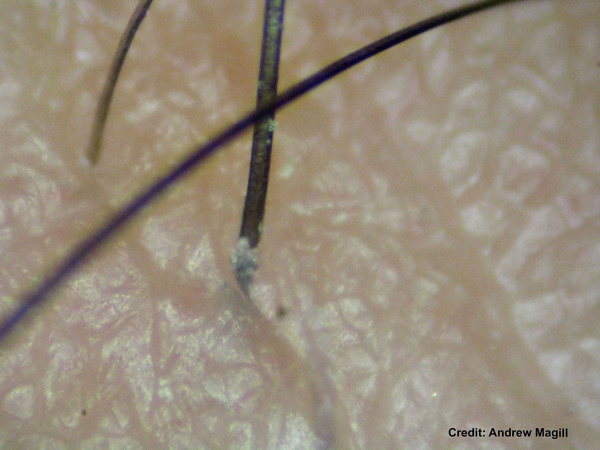
Identifying treatments that can stimulate hair growth use could help those struggling with undesirable hair loss. Here, the authors show that Fibroblast Growth Factors can stimulate the division of cells isolated from the mouse hair follicle. Their results suggest that this family of growth factors might be helpful in stimulating hair growth in living animals as well.
Read More...Zinc-related Treatments Combined with Chloroquine and Gemcitabine for Treating Pancreatic Cancer

Pancreatic cancer is one of the deadliest cancers, with a 10% 5-year survival rate. The authors studied various dosages of TPEN and zinc in combination with Chloroquine and Gemcitabine as treatments to reduce cell proliferation. Results showed that when combined with Chloroquine and Gemcitabine, zinc and TPEN both significantly lowered cell proliferation compared to Gemcitabine, suggesting a synergistic effect that resulted in a more cytotoxic treatment. Further research and clinical trials on this topic are needed to determine whether this could be a viable treatment for pancreatic cancer.
Read More...Genomic Signature Analysis for the Strategic Bioremediation of Polycyclic Aromatic Hydrocarbons in Mangrove Ecosystems in the Gulf of Tonkin
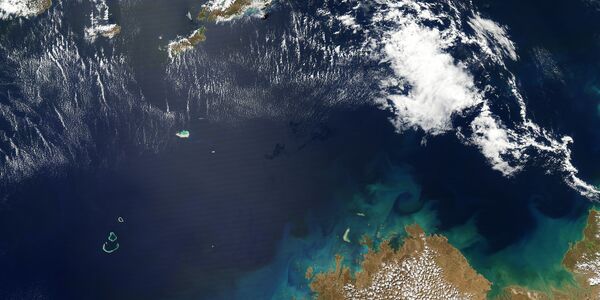
Engineered bacteria that degrade oil are currently being considered as a safe option for the treatment of oil spills. For this approach to be successful, the bacteria must effectively express oil-degrading genes they uptake as part of an external genoming vehicle called a "plasmid". Using a computational approach, the authors investigate plasmid-bacterium compatibility to find pairs that ensure high levels of gene expression.
Read More...