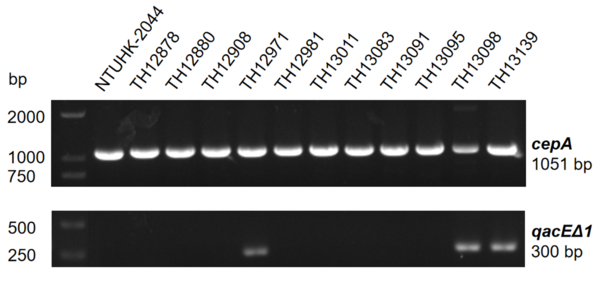
The authors identify disinfectant-resistant bacterial strains of infection-causing bacteria from samples collected at a hospital setting.
Read More...Varying levels of disinfectant resistance among invasive Klebsiella pneumoniae isolates
The authors identify disinfectant-resistant bacterial strains of infection-causing bacteria from samples collected at a hospital setting.
Read More...Household spices and minerals as alternative disinfectants for mobile phones
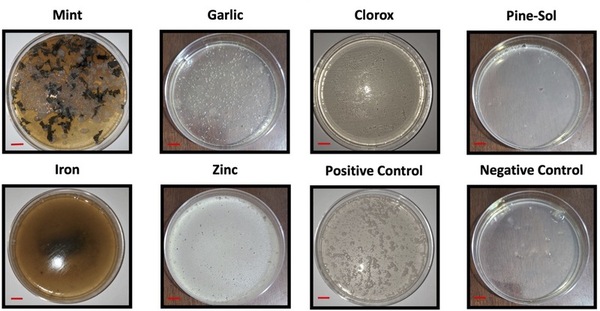
In this study, the authors investigate the disinfectant potential of many household spices and minerals. More specifically, they test whether these compounds can be used to disinfect mobile phones after daily use with the hope of identifying environmentally-friendly cleaning options.
Read More...The growth of bacteria on everyday objects and the antimicrobial effects of household spices
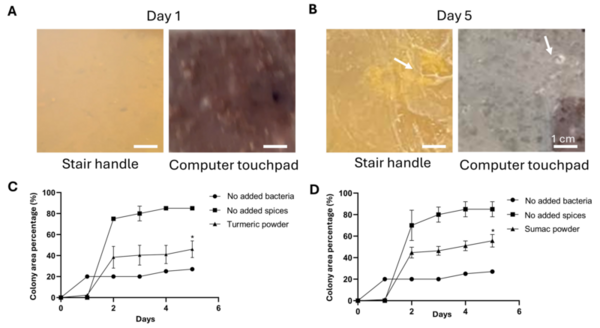
The study investigates the antibacterial properties of household spices on bacteria isolated from everyday objects, aiming to address the limited understanding of bacterial resilience on surfaces and the potential of spices as antibacterial agents. Researchers hypothesized that bacteria would grow faster on some surfaces than others and that spices like honey, chili powder, turmeric, and sumac would inhibit bacterial growth at varying rates. The findings suggest that household spices possess significant antibacterial properties and could be used as emergency disinfectants, particularly in under-resourced settings. However, they cannot replace medical treatments but offer insights into alternative health solutions using common ingredients.
Read More...Comparison of shower filters for reducing total residual chlorine under household flow conditions
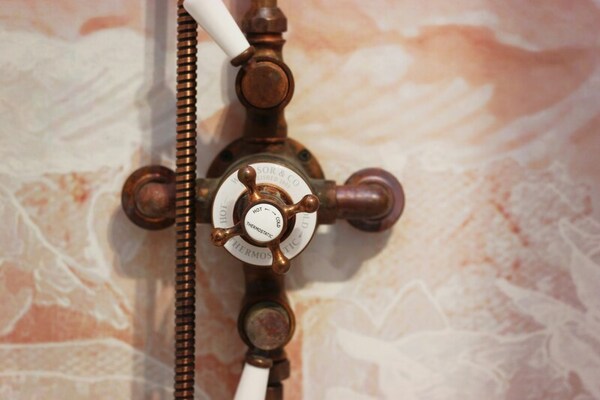
This study compared two commercial shower filters and three individual filtration media to evaluate their ability to reduce total residual chlorine under household flow conditions. By identifying which materials most effectively reduce chlorine during regular shower use, this research provides practical information for consumers and offers guidance for designing more affordable and reusable shower filtration systems.
Read More...Investigating Lemna minor and microorganisms for the phytoremediation of nanosilver and microplastics
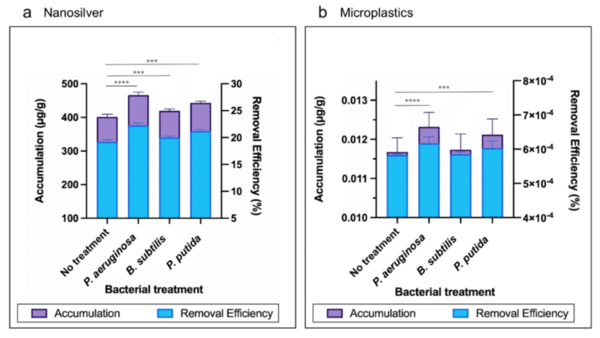
The authors looked at phytoremediation, the process by which plants are used to remove pollutants from our environment, and the ability of Lemna minor to perform phytoremediation in various simulated polluted environments. The authors found that L. minor could remove pollutants from the environment and that the addition of bacteria increased this removal.
Read More...Bacterial Load Consistency Among Three Independent Water Distribution Systems
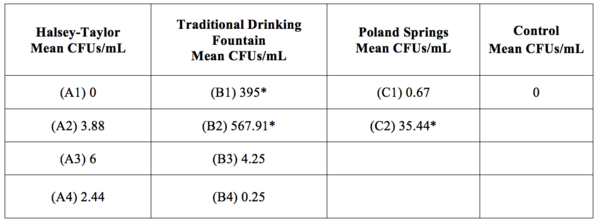
Clean drinking water is an essential component to maintaining public health. The authors of this study tested the bacterial load of water from three different disinfection and filtration systems in order to determine which system might be superior.
Read More...Isolation of Microbes From Common Household Surfaces
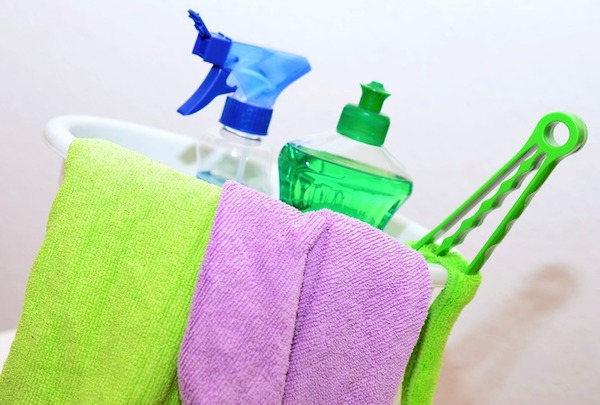
Microorganisms such as bacteria and fungi live everywhere in the world around us. The authors here demonstrate that these predominantly harmless microbes can be isolated from many household locations that appear "clean." Further, they test the cleaning power of 70% ethanol and suggest that many "clean" surfaces are not in fact "sterile."
Read More...