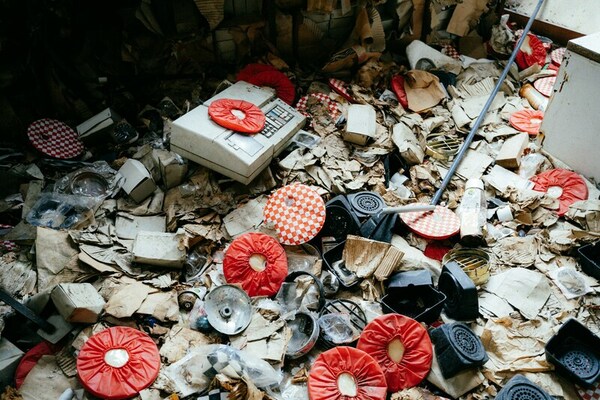
Domestic waste classification using convolutional neural network
Read More...Class distinctions in automated domestic waste classification with a convolutional neural network
Domestic waste classification using convolutional neural network
Read More...Utilizing sorbitol to improve properties of cellulose-based biodegradable hydrogels
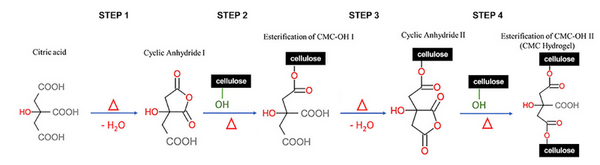
Hydrogels are commonly used in medicine, pharmaceuticals, and agriculture. Hydrogels absorb water by swelling and re-release this water by diffusion. This study sought to synthesize a biodegradable, cellulose-based hydrogel that is more effective at absorbing and re-releasing water than those produced by current methods. We tested the compressive strength of both the dry and swollen gels and the tensile strength of the swollen gels to elucidate the gel structure.
Read More...Optimal pH for indirect electrochemical oxidation of isopropyl alcohol with Ru-Ti anode and NaCl electrolyte
In this study, the authors determine optimal pH levels for maximizing isopropanol degradation in water. This has important applications for cleaning up polluted wastewater in the environment.
Read More...Assessing grass water use efficiency through smartphone imaging and ImageJ analysis
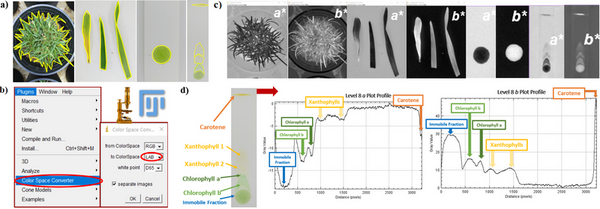
Overwatering and underwatering grass are widespread issues with environmental and financial consequences. This study developed an accessible method to assess grass water use efficiency (WUE) combining smartphone imaging with open access color unmixing analysis. The method can be applied in automated irrigation systems or apps, providing grass WUE assessment for regular consumer use.
Read More...Tap water quality analysis in Ulaanbaatar City
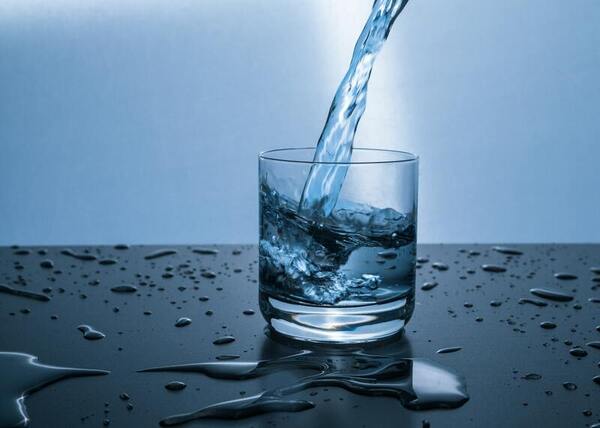
There have been several issues concerning the water quality in Ulaanbaatar, Mongolia in the past few years. This study, we collected 28 samples from 6 districts of Ulaanbaatar to check if the water supply quality met the standards of the World Health Organization, the Environmental Protection Agency, and a Mongolian National Standard. Only three samples fully met all the requirements of the global standards. Samples in Zaisan showed higher hardness (>120 ppm) and alkalinity levels (20–200 ppm) over the other districts in the city. Overall, the results show that it is important to ensure a safe and accessible water supply in Ulaanbaatar to prevent future water quality issues.
Read More...The effect of lead oxide concentrations on the bioluminescence intensity of Panellus stipticus
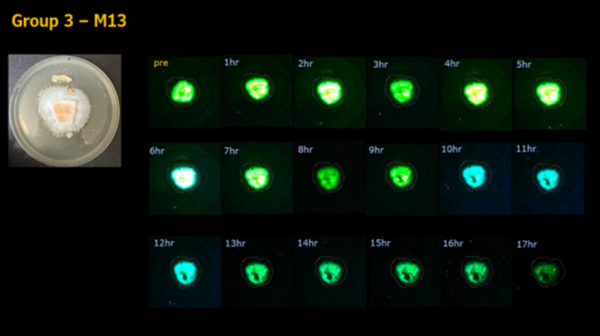
Here the authors investigate the potential of the bioluminescent fungus Panellus stipticus to serve as a sustainable bioindicator for environmental lead contamination. Their findings demonstrate that higher lead concentrations cause a measurable decrease in fungal bioluminescence intensity over time suggesting that the fungus could be an effective tool for detecting lead in an environment.
Read More...Understanding the correlation between various pollutants and cancer across geographical clusters in the U.S.
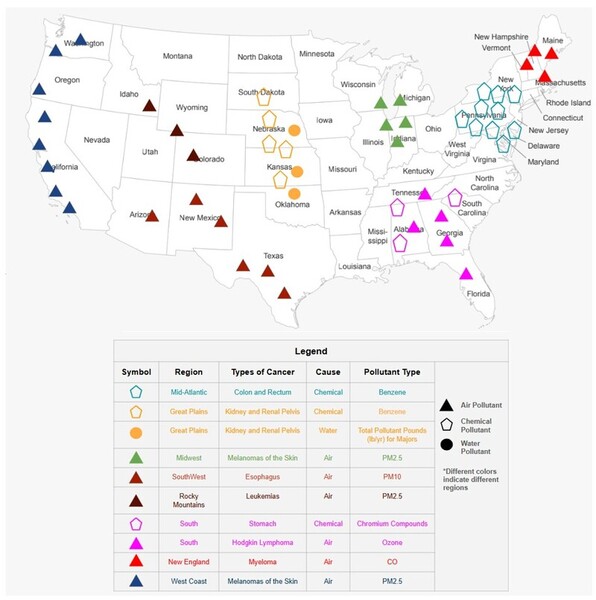
Here the authors investigate the relationship between environmental pollutants and cancer incidence rates across various geographical clusters in the United States from 2018 to 2020. By calculating Pearson correlation coefficients and t-statistics on CDC and EPA data, they demonstrated a strong correlation between specific pollutants and various cancers, offering insights that could help explain regional disparities in cancer rates and aid in preventing premature deaths.
Read More...Heavy Metal Contamination of Hand-Pressed Well Water in HuNan, China
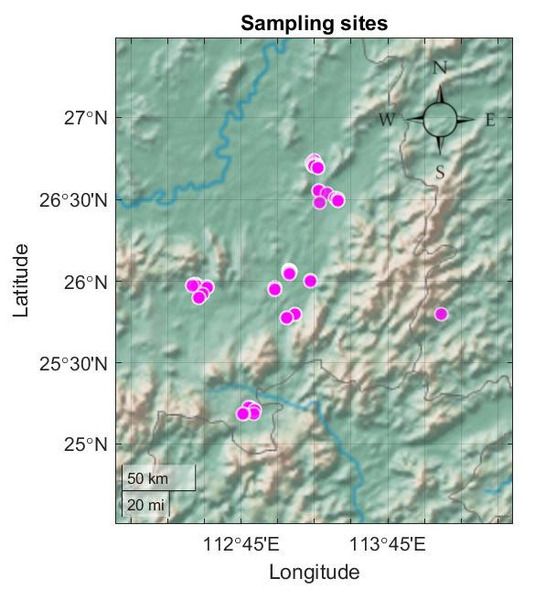
Unprocessed water from hand-pressed wells is still commonly used as a source of drinking water in Chenzhou, the “Nonferrous Metal Village” of China. Long et al. conducted a study to measure the heavy metal contamination levels and potential health effects in this area. Water samples were analyzed through Inductively Coupled Plasma Optical Emission Spectroscopy (ICPOES) and the concentrations of 20 metal elements. Results showed that although none of the samples had dangerous levels of heavy metals, the concentrations of Al, Fe, and Mn in many locations substantially exceeded those suggested in the Chinese Drinking Water Standard and the maximum contaminant levels of Environmental Protection Agency (EPA). The authors have made an important discovery regarding the water safety in HuNan and their suggestions to install water treatment systems would greatly benefit the community.
Read More...The relationship between meteorological factors and air quality in Washington D.C. metropolitan area
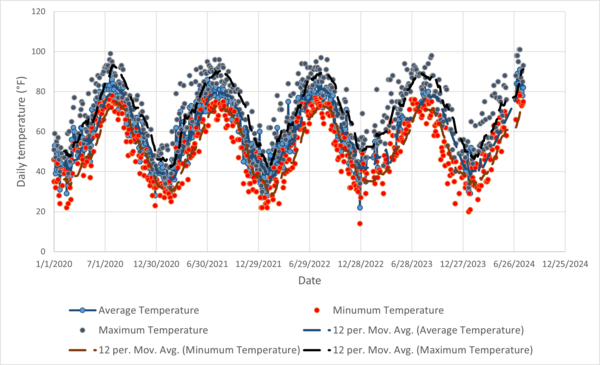
The authors studied the relationship between air quality and weather conditions (wind speed, precipitation, and temperature) in the Washington D.C. area.
Read More...Bird Feeding Experiment: Do Wild Birds Feed in a More Wooded or Exposed Area?
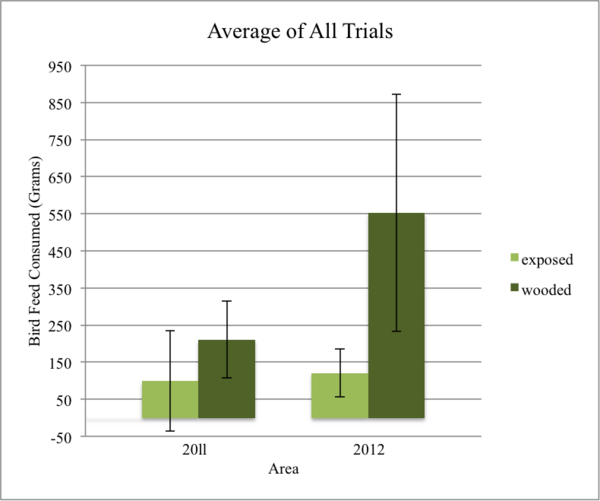
Habitat loss and global warming remain present-day issues that continue to place pressures on various ecosystems and their species. The authors of this paper performed studies over two years to understand whether birds feed more from wooded or exposed areas.
Read More...