Droughts have a wide range of effects, from ecosystems failing and crops dying, to increased illness and decreased water quality. Drought prediction is important because it can help communities, businesses, and governments plan and prepare for these detrimental effects. This study predicts drought conditions by using predictable weather patterns in machine learning models.
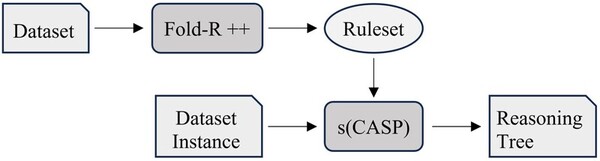
The authors compare current machine learning algorithms with a new Explainable AI algorithm that produces a human-comprehensible decision tree alongside predictions.
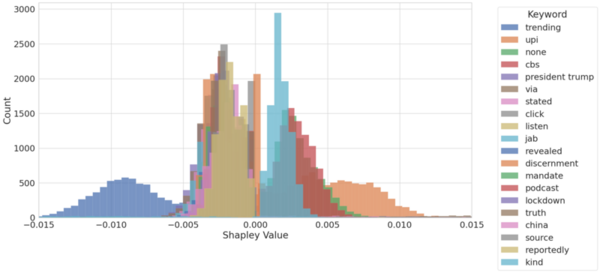
The authors looked at the ability of machine learning algorithms to interpret language given their increasing use in moderating content on social media. Using an explainable model they were able to achieve 81% accuracy in detecting fake vs. real news based on language of posts alone.
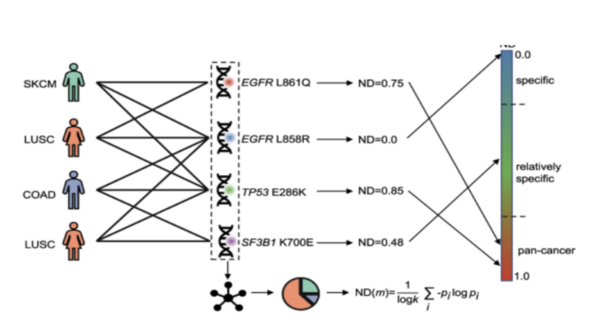
Breast cancer is the most common cancer in women, with approximately 300,000 diagnosed with breast cancer in 2023. It ranks second in cancer-related deaths for women, after lung cancer with nearly 50,000 deaths. Scientists have identified important genetic mutations in genes like BRCA1 and BRCA2 that lead to the development of breast cancer, but previous studies were limited as they focused on specific populations. To overcome limitations, diverse populations and powerful statistical methods like genome-wide association studies and whole-genome sequencing are needed. Explainable artificial intelligence (XAI) can be used in oncology and breast cancer research to overcome these limitations of specificity as it can analyze datasets of diagnosed patients by providing interpretable explanations for identified patterns and predictions. This project aims to achieve technological and medicinal goals by using advanced algorithms to identify breast cancer subtypes for faster diagnoses. Multiple methods were utilized to develop an efficient algorithm. We hypothesized that an XAI approach would be best as it can assign scores to genes, specifically with a 90% success rate. To test that, we ran multiple trials utilizing XAI methods through the identification of class-specific and patient-specific key genes. We found that the study demonstrated a pipeline that combines multiple XAI techniques to identify potential biomarker genes for breast cancer with a 95% success rate.
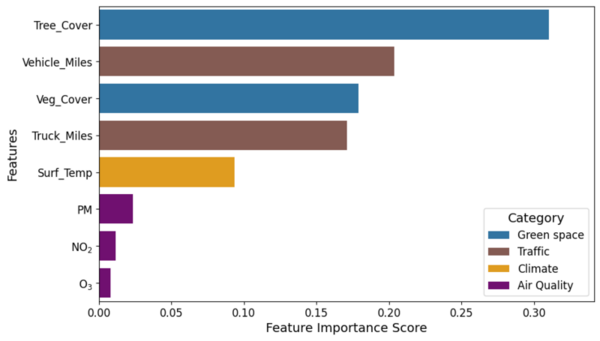
This study explored how green spaces, climate, traffic, and air quality (GCTA) collectively influence asthma-related emergency department visits in the U.S using machine learning models and explainable AI.
In this study, we investigated how the complexity of a query can influence tool-use hallucinations in large language models that were tasked with setting an appointment. Using explainable AI (XAI) as a tool to test the hypothesis, we analyzed trends in hallucination rates by the type of query and saw results that when complexity and ambiguity of the query increased (such as asking for multiple days or unclear time ranges), the model was more likely to make errors due to misunderstanding time-related data from tool outputs. This shows that making large language models (LLMs) understand what seems logical to a human is still difficult, especially in complex tasks, and that knowing what causes these errors can help build more trustworthy AI systems.