Browse Articles

Evaluating the impact of prompting styles on LLM accuracy for AIME math questions

Ganesa et al. | Jul 26, 2026

Evaluating the impact of prompting styles on LLM accuracy for AIME math questions

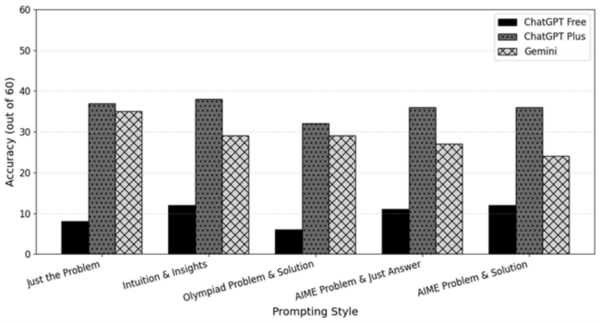
Large language models are increasingly used to solve math problems, but their ability to handle multi-step reasoning remains uncertain. In this study, students tested whether different prompting styles could improve LLM accuracy on challenging AIME math questions and found that detailed step-by-step solutions did not significantly outperform simpler prompts. These results suggest that improving LLM mathematical reasoning may require deeper model-level advances rather than changes in prompting style alone.

Read More...
Risk assessment modeling for childhood stunting using automated machine learning and demographic analysis

Sirohi et al. | Sep 25, 2022

Risk assessment modeling for childhood stunting using automated machine learning and demographic analysis

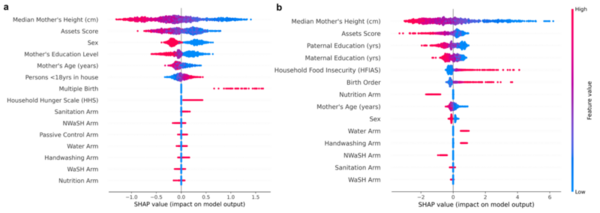
Over the last few decades, childhood stunting has persisted as a major global challenge. This study hypothesized that TPTO (Tree-based Pipeline Optimization Tool), an AutoML (automated machine learning) tool, would outperform all pre-existing machine learning models and reveal the positive impact of economic prosperity, strong familial traits, and resource attainability on reducing stunting risk. Feature correlation plots revealed that maternal height, wealth indicators, and parental education were universally important features for determining stunting outcomes approximately two years after birth. These results help inform future research by highlighting how demographic, familial, and socio-economic conditions influence stunting and providing medical professionals with a deployable risk assessment tool for predicting childhood stunting.

Read More...

A comparative study on the suitability of virtual labs for school chemistry experiments

Praveen et al. | Aug 22, 2022

A comparative study on the suitability of virtual labs for school chemistry experiments

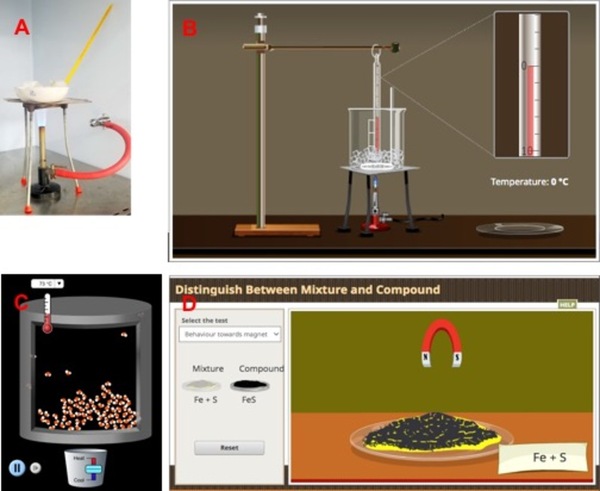
Virtual labs have been gaining popularity over the last few years, especially during the worldwide lockdown due to the COVID-19 pandemic. In this study, the suitability of virtual labs for school chemistry experiments is addressed and their effectiveness is compared to traditional physical lab experiments by focusing on physical and human resources, convenience, cost, safety, and time involved as well as topic "matter".

Read More...

Pancreatic Adenocarcinoma: An Analysis of Drug Therapy Options through Interaction Maps and Graph Theory

Gupta et al. | Feb 04, 2014

Pancreatic Adenocarcinoma: An Analysis of Drug Therapy Options through Interaction Maps and Graph Theory

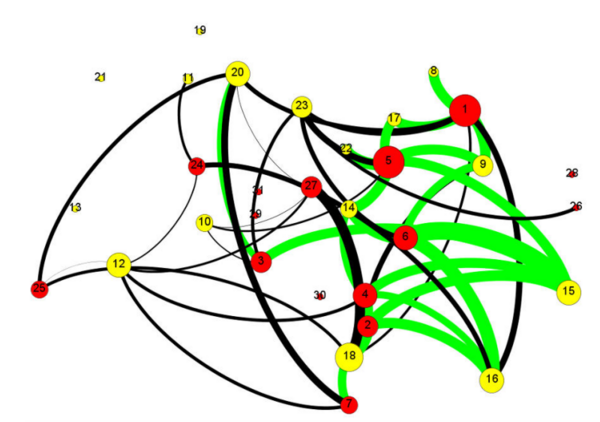
Cancer is often caused by improper function of a few proteins, and sometimes it takes only a few proteins to malfunction to cause drastic changes in cells. Here the authors look at the genes that were mutated in patients with a type of pancreatic cancer to identify proteins that are important in causing cancer. They also determined which proteins currently lack effective treatment, and suggest that certain proteins (named KRAS, CDKN2A, and RBBP8) are the most important candidates for developing drugs to treat pancreatic cancer.

Read More...

Gradient boosting with temporal feature extraction for modeling keystroke log data

Barretto et al. | Oct 04, 2024

Gradient boosting with temporal feature extraction for modeling keystroke log data
Image credit: Barretto and Barretto 2024.

Although there has been great progress in the field of Natural language processing (NLP) over the last few years, particularly with the development of attention-based models, less research has contributed towards modeling keystroke log data. State of the art methods handle textual data directly and while this has produced excellent results, the time complexity and resource usage are quite high for such methods. Additionally, these methods fail to incorporate the actual writing process when assessing text and instead solely focus on the content. Therefore, we proposed a framework for modeling textual data using keystroke-based features. Such methods pay attention to how a document or response was written, rather than the final text that was produced. These features are vastly different from the kind of features extracted from raw text but reveal information that is otherwise hidden. We hypothesized that pairing efficient machine learning techniques with keystroke log information should produce results comparable to transformer techniques, models which pay more or less attention to the different components of a text sequence in a far quicker time. Transformer-based methods dominate the field of NLP currently due to the strong understanding they display of natural language. We showed that models trained on keystroke log data are capable of effectively evaluating the quality of writing and do it in a significantly shorter amount of time compared to traditional methods. This is significant as it provides a necessary fast and cheap alternative to increasingly larger and slower LLMs.

Read More...

Tap water quality analysis in Ulaanbaatar City

Munkhbat et al. | Sep 25, 2022

Tap water quality analysis in Ulaanbaatar City

There have been several issues concerning the water quality in Ulaanbaatar, Mongolia in the past few years. This study, we collected 28 samples from 6 districts of Ulaanbaatar to check if the water supply quality met the standards of the World Health Organization, the Environmental Protection Agency, and a Mongolian National Standard. Only three samples fully met all the requirements of the global standards. Samples in Zaisan showed higher hardness (>120 ppm) and alkalinity levels (20–200 ppm) over the other districts in the city. Overall, the results show that it is important to ensure a safe and accessible water supply in Ulaanbaatar to prevent future water quality issues.

Read More...

Evaluating machine learning algorithms to classify forest tree species through satellite imagery

Gupta et al. | Mar 18, 2023

Evaluating machine learning algorithms to classify forest tree species through satellite imagery
Image credit: Sergei A

Here, seeking to identify an optimal method to classify tree species through remote sensing, the authors used a few machine learning algorithms to classify forest tree species through multispectral satellite imagery. They found the Random Forest algorithm to most accurately classify tree species, with the potential to improve model training and inference based on the inclusion of other tree properties.

Read More...

Similarity Graph-Based Semi-supervised Methods for Multiclass Data Classification

Balaji et al. | Sep 11, 2021

Similarity Graph-Based Semi-supervised Methods for Multiclass Data Classification

The purpose of the study was to determine whether graph-based machine learning techniques, which have increased prevalence in the last few years, can accurately classify data into one of many clusters, while requiring less labeled training data and parameter tuning as opposed to traditional machine learning algorithms. The results determined that the accuracy of graph-based and traditional classification algorithms depends directly upon the number of features of each dataset, the number of classes in each dataset, and the amount of labeled training data used.

Read More...

Examining the Accuracy of DNA Parentage Tests Using Computer Simulations and Known Pedigrees

Wang et al. | Jul 13, 2020

Examining the Accuracy of DNA Parentage Tests Using Computer Simulations and Known Pedigrees

How accurate are DNA parentage tests? In this study, the authors hypothesized that current parentage tests are reliable if the analysis involves only one or a few families of yellow perch fish Perca flavescens. Their results suggest that DNA parentage tests are reliable as long as the right methods are used, since these tests involve only one family in most cases, and that the results from parentage analyses of large populations can only be used as a reference.

Read More...

Molecular Alterations in a High-Fat Mouse Model Before the Onset of Diet–Induced Nonalcoholic Fatty Liver Disease

Lee et al. | Sep 20, 2016

Molecular Alterations in a High-Fat Mouse Model Before the Onset of Diet–Induced Nonalcoholic Fatty Liver Disease

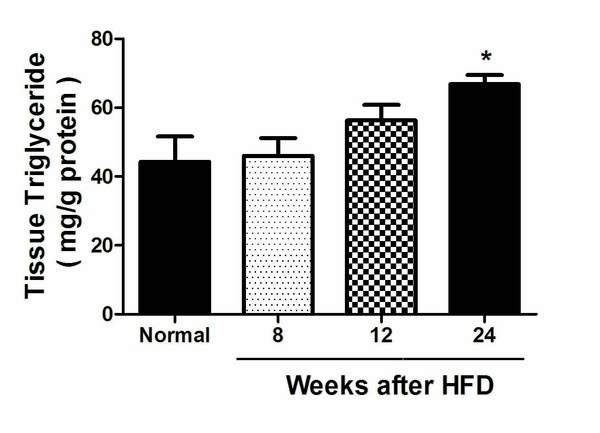
Nonalcoholic fatty liver disease (NAFLD) is one of the most prevalent chronic liver diseases worldwide, but there are few studied warning signs for early detection of the disease. Here, researchers study alterations that occur in a mouse model of NAFLD, which indicate the onset of NAFLD sooner. Earlier detection of diseases can lead to better prevention and treatment.

Read More...