Browse Articles

Stereolithography 3D-printed stents with silica and zirconia nanoparticle reinforcement for intracranial aneurysm treatment

Panda et al. | Oct 12, 2026

Stereolithography 3D-printed stents with silica and zirconia nanoparticle reinforcement for intracranial aneurysm treatment
Image credit: Panda, Jeong, and Srinivasan

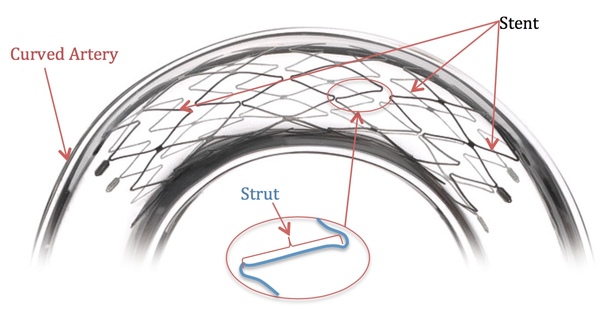
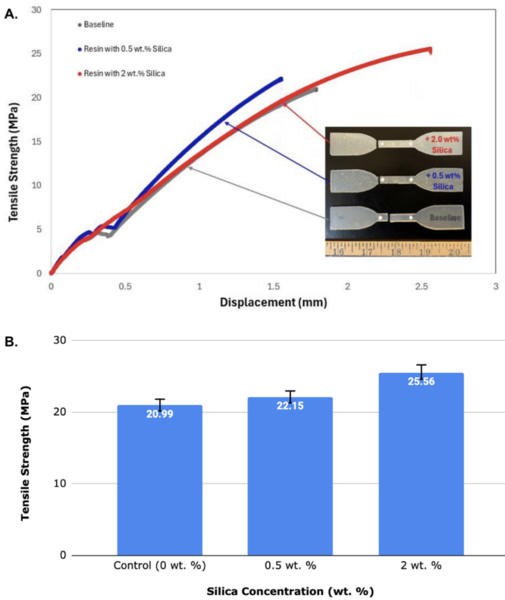
This manuscript focuses on improving the mechanical strength and radiopacity of SLA 3D-printed stent materials by incorporating nanoparticles for their application in flow-diverting stents (FDSs) used to treat aneurysms. The authors used biocompatible, bioresorbable resin formulations with varying concentrations of silica and zirconium to enhance tensile strength and radiopacity, respectively. The authors employed SEM to confirm the incorporation of nanoparticles, and CT imaging was used to assess the effect of zirconium-infused FDSs.

Read More...
Floating aquatic plants form groups faster through current

May et al. | Oct 16, 2023

Floating aquatic plants form groups faster through current
Image credit: N Band

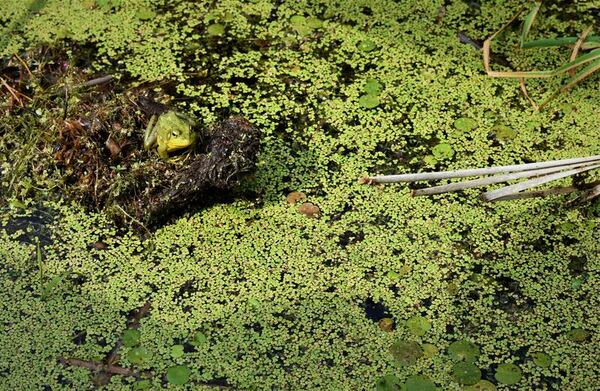
Here, the authors sought to investigate the effects of water current on the growth of colonies of duckweed, a floating plant that forms colonies in silent ponds, marshes, lakes , and streams in North America. They found that current flow mediates the formation of colonies, disrupting and recreating the colonies which provides the opportunity for reorganizations that were identified as beneficial.

Read More...

Using DNA Barcodes to Evaluate Ecosystem Health in the SWRCMS Reserve

Horton et al. | Sep 27, 2018

Using DNA Barcodes to Evaluate Ecosystem Health in the SWRCMS Reserve

Although the United States maintains millions of square kilometers of nature reserves to protect the biodiversity of the specimens living there, little is known about how confining these species within designated protected lands influences the genetic variation required for a healthy population. In this study, the authors sequenced genetic barcodes of insects from a recently established nature reserve, the Southwestern Riverside County Multi-Species Reserve (SWRCMSR), and a non-protected area, the Mt. San Jacinto College (MSJC) Menifee campus, to compare the genetic variation between the two populations. Their results demonstrated that the midge fly population from the SWRCMSR had fewer unique DNA barcode sequence changes than the MSJC population, indicating that the comparatively younger nature reserve's population had likely not yet established its own unique genetic drift changes.

Read More...

Comparison of shower filters for reducing total residual chlorine under household flow conditions

Lee et al. | Sep 19, 2026

Comparison of shower filters for reducing total residual chlorine under household flow conditions
Image credit: Micheile Henderson

This study compared two commercial shower filters and three individual filtration media to evaluate their ability to reduce total residual chlorine under household flow conditions. By identifying which materials most effectively reduce chlorine during regular shower use, this research provides practical information for consumers and offers guidance for designing more affordable and reusable shower filtration systems.

Read More...

Study of PINN sensor layout in evaluating WSS with application to patient-specific carotid flow

Nie et al. | Sep 04, 2026

Study of PINN sensor layout in evaluating WSS with application to patient-specific carotid flow

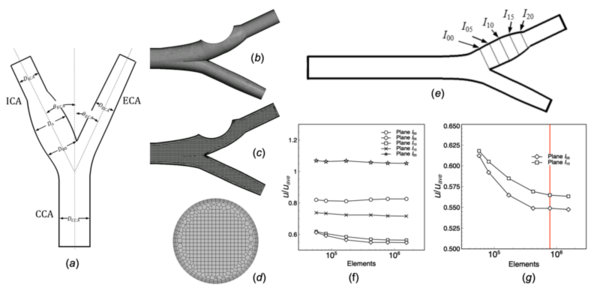
Physics‑Informed Neural Networks (PINNs) offer a promising way to estimate blood‑flow behavior in arteries, especially near the vessel wall where traditional methods struggle. In this study, students tested how sensor density and placement affect PINN accuracy in modeling carotid artery flow and found that accuracy improves up to a moderate sensor density and depends strongly on how close sensors are placed to the arterial wall. Applying the optimized configuration to a patient‑specific carotid model produced velocity predictions closely matching computational fluid dynamics results, highlighting PINNs’ potential for future personalized cardiovascular assessment.

Read More...

Do trumpet players have a greater expiratory capacity than those who do not play a wind instrument?

Homsi et al. | Feb 01, 2022

Do trumpet players have a greater expiratory capacity than those who do not play a wind instrument?

With healthy lung performance being critical to daily function and maintenance of physical health, the authors of this study explored the impact of airflow training from playing a wind instrument on respiratory system function. With careful quantification of peak expiratory flow of individuals who played the trumpet, the authors found no expiratory capacity difference between students who played the trumpet and students who did not play a wind instrument.

Read More...