Browse Articles

Comparative analysis of player ability, game size, and ideal starting positions in Nim games

Sinha et al. | Aug 02, 2026

Comparative analysis of player ability, game size, and ideal starting positions in Nim games
Image credit: Immo Wegmann

Here the authors investigated the impact of player ability versus starting positions in the game of Nim under imperfect play, hypothesizing that player skill becomes the primary determinant of outcomes as pile sizes grow. Through computational simulations and a mathematical model, they demonstrated that favorable starting positions lose their advantage over time and provide key insights to help improve reinforcement learning algorithms in abstract, complex decision-making environments.

Read More...

Examining the impact of consecutive losses on gambling: When do we decide to quit?

Kim et al. | Apr 28, 2026

Examining the impact of consecutive losses on gambling: When do we decide to quit?
Image credit: Kim, Cragun, and Kim

This article explored the question of when do people decide to stop gambling and further tries to extrapolate why people stop gambling at that point. Their study showed that people tend to quit gambling after 4 consecutive losses, significantly more than 1-3 consecutive losses or a win previous to quitting. They also found that participants commonly quit at a point value approximately 5 points greater than or less than their starting balance. The authors concluded that these results may be important in understanding how to cut down on excessive gambling or in creating policies that make it easier for people to disengage from gambling.

Read More...

Augmented Reality Chess Analyzer (ARChessAnalyzer): In-Device Inference of Physical Chess Game Positions through Board Segmentation and Piece Recognition using Convolutional Neural Networks

Mehta et al. | Jul 17, 2020

Augmented Reality Chess Analyzer (ARChessAnalyzer): In-Device Inference of Physical Chess Game Positions through Board Segmentation and Piece Recognition using Convolutional Neural Networks

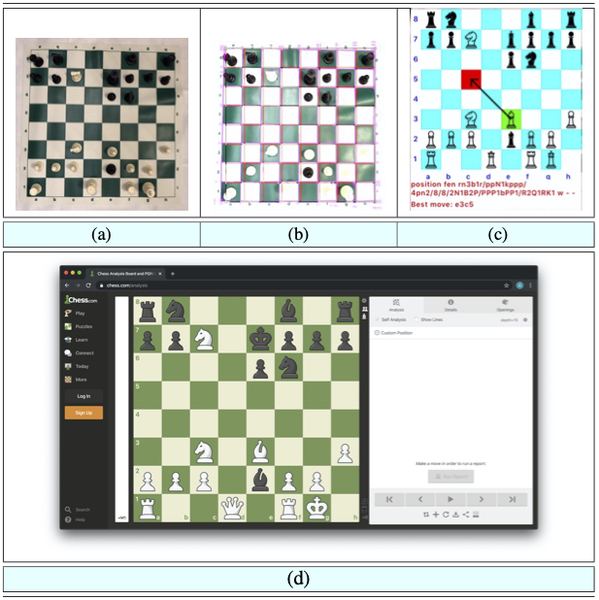
In this study the authors develop an app for faster chess game entry method to help chess learners improve their game. This culminated in the Augmented Reality Chess Analyzer (ARChessAnalyzer) which uses traditional image and vision techniques for chess board recognition and Convolutional Neural Networks (CNN) for chess piece recognition.

Read More...

FRUGGIE – A Board Game to Combat Obesity by Promoting Healthy Eating Habits in Young Children

Huprikar et al. | Jun 13, 2018

FRUGGIE – A Board Game to Combat Obesity by Promoting Healthy Eating Habits in Young Children

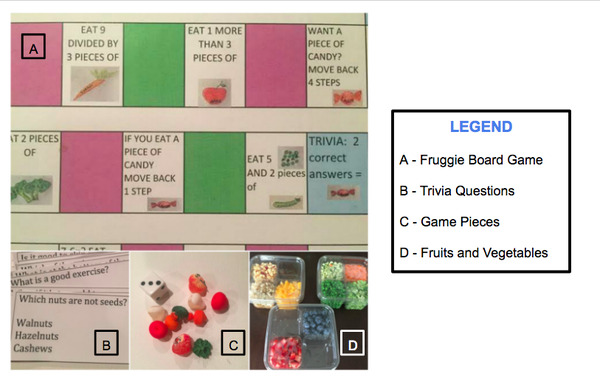
The authors created a board game to teach young children about healthy eating habits to see whether an interactive and family-oriented method would be effective at introducing and maintaining a love for fruits and veggies. Results showed that children developed a liking for fruits and vegetables, and none regressed. Half maintained their level of enjoyment for fruits and vegetables during the research period, while the other half had a positive increase. The results show that a simple interactive game can shape how young children relate to food and encourage them to maintain healthy habits.

Read More...

Reimagize – a digital card-based roleplaying game to improve adolescent girls’ body image

Kumar et al. | Oct 04, 2021

Reimagize – a digital card-based roleplaying game to improve adolescent girls’ body image

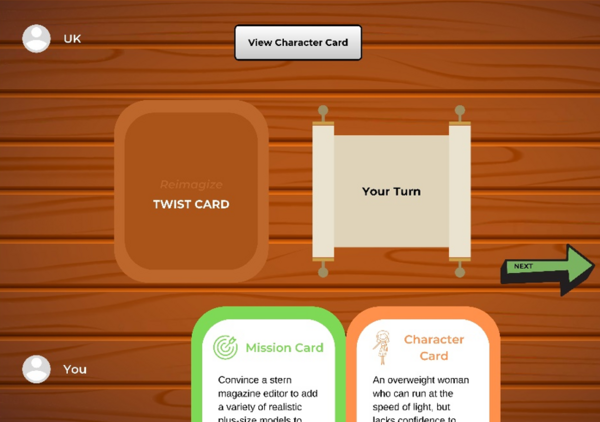
Reimagize, a role-playing with decision-making, was conjured, implementing social psychological concepts like counter-stereotyping and perspective-taking. As the game works implicitly to influence body image, it even counters image issues beyond personal body dissatisfaction. This study explored whether a digital role-playing card game, incorporating some of the most common prejudices of body image (like size prejudice, prejudices from the media, etc.) as identified by a digital survey/questionnaire completed by Indian girls aged 11-21, could counter these issues and reduce personal body dissatisfaction.

Read More...

Reddit v. Wall Street: Why Redditors beat Wall Street at its own game

Bhakar et al. | Sep 13, 2022

Reddit v. Wall Street: Why Redditors beat Wall Street at its own game

Here the authors investigated the motivation of a short squeeze of GameStop stock where users of the internet forum Reddit drove a sudden increase in GameStop stock price during the start of 2021. They relied on both qualitative and quantitative analyses where they tracked activity on the r/WallStreetBets subreddit in relation to mentions of GameStop. With these methods they found that while initially the short squeeze was driven by financial motivations, later on emotional motivations became more important. They suggest that social phenomena can be dynamic and evolve necessitating mixed method approaches to study them.

Read More...

Analyzing the relationships between years of experience and performance anxiety in teen volleyball players

Concha-Ortiz et al. | Aug 15, 2024

Analyzing the relationships between years of experience and performance anxiety in teen volleyball players
Image credit: The authors

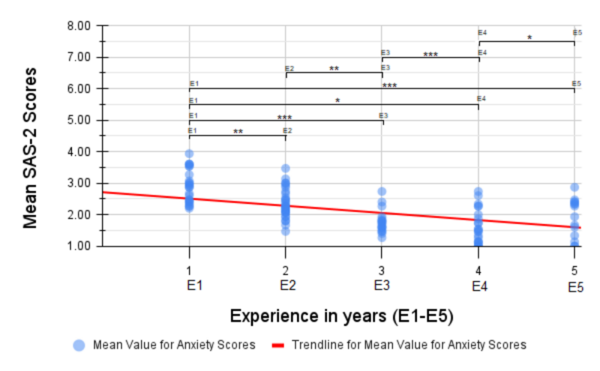
Athletes with performance anxiety may struggle to play their best and enjoy the game. Various factors may impact how much anxiety an athlete feels, including how much experience they have in the sport. Concha-Ortiz and Navins survey teenage club volleyball players to look for relationships between years of experience and performance anxiety symptoms.

Read More...

Culturally Adapted Assessment Tool for Autism Spectrum Disorder and its Clinical Significance

Das et al. | Apr 19, 2021

Culturally Adapted Assessment Tool for Autism Spectrum Disorder and its Clinical Significance

Diagnosing of Autism Spectrum Disorder (ASD) using tools developed in the West is challenging in the Indian setting due to a huge diversity in sociocultural and economic backgrounds. Here, the authors developed a home-based, audiovisual game app (Autest) suitable for ASD risk assessment in Indian children under 10 years of age. Ratings suggested that the tool is effective and can reduce social inhibition and facilitate assessment. Further usage and development of Autest can improve risk assessment and early intervention measures for children with ASD in India.

Read More...

Do Initial Strategies or Choice of Piece Color Lead to Advantages in Chess Games?

Ponnaluri et al. | Feb 07, 2017

Do Initial Strategies or Choice of Piece Color Lead to Advantages in Chess Games?

White pieces make the first move in chess games, and there are several opening strategies and consequent defense strategies that white and black pieces, respectively, can take . The author of this paper investigated whether taking a specific opening and defense strategy, as well as playing as white vs. black, can increase the chances of winning the game, by playing against various human and computer opponents.

Read More...