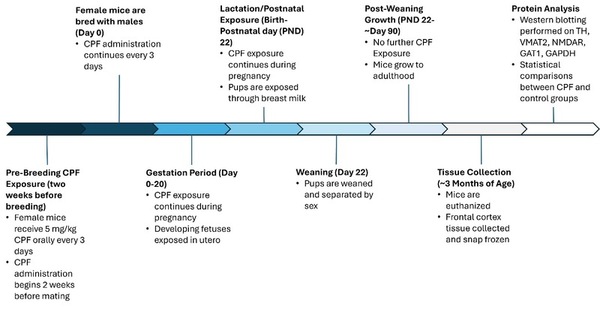
The authors test the effect of insecticide exposure on mouse neurodevelopment.
Read More...Chlorpyrifos exposure in mice leads to altered expression of key neurodevelopmental proteins
Drosophila melanogaster: A model to observe behavioral effects of mutated Foxp
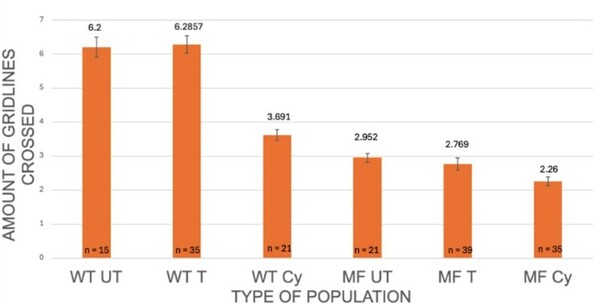
The authors looked at the effects of different treatments using flies with neurodevelopmental disorders.
Read More...Functional Network Connectivity: Possible Biomarker for Autism Spectrum Disorders (ASD)
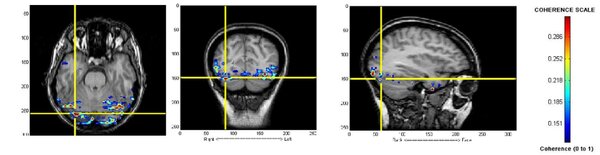
Autism spectrum disorder (ASD) is a complex neurodevelopmental disorder and is difficult to diagnose in young children. Here magnetoencephalography was used to compare the brain activity in patients with ASD to patients in a control group. The results show that patients with ASD have a high level of activity in different areas of the brain than those in the control group.
Read More...Genetic underpinnings of the sex bias in autism spectrum disorder
Here, seeking to identify a possible explanation for the more frequent diagnosis of autism spectrum disorder (ASD) in males than females, they sought to investigate a potential sex bias in the expression of ASD-associated genes. Based on their analysis, they identified 17 ASD-associated candidate genes that showed stronger collective sex-dependent expression.
Read More...Disruptions in protein-protein interactions between HTT, PRPF40B, and MECP2 are involved in Lopes-Maciel-Rodan syndrome
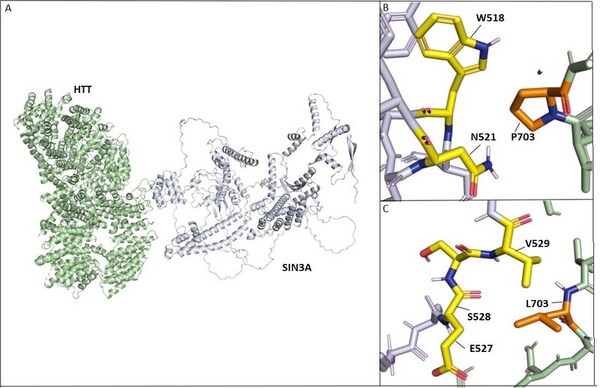
In an extensive study of gene mutations, and their resulting effect on protein-protein interactions, Desai and Stork found that HTT-PRPF40B-MECP2 interactions are weakened with progression of Lopes-Maciel-Rodan syndrome.
Read More...Mendelian randomization reveals shared genetic landscape in autism spectrum disorder and Alzheimer's disease
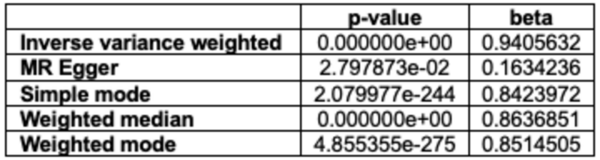
Autism Spectrum Disorder (ASD) and Alzheimer's Disease (AD) are distinct conditions, but research suggests a link, as individuals with ASD are 2.5 times more likely to develop AD. A study employing genome-wide association studies and Mendelian randomization revealed shared genetic factors, particularly in synaptic regulation pathways, that may increase the risk of AD in those with ASD. These findings provide insights into the genetic underpinnings connecting the two disorders.
Read More...Enhanced Iron and Manganese Removal Using Nanocomposite CA/PVP Membranes Doped with CNC, CNF, and HNT
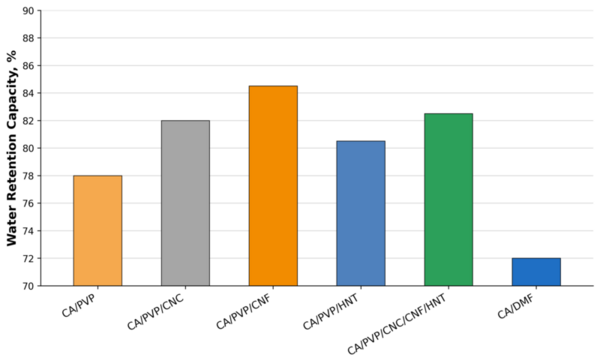
We developed new eco-friendly membranes enriched with natural nanomaterials to clean iron and manganese from drinking water. Some nanocomposite membranes achieved over 95% metal removal while maintaining water flux, suggesting improved performance compared to the undoped control group.
Read More...