Browse Articles

Mitigation of ultraviolet solar radiation involving calcite

Nare et al. | Oct 10, 2026

Mitigation of ultraviolet solar radiation involving calcite

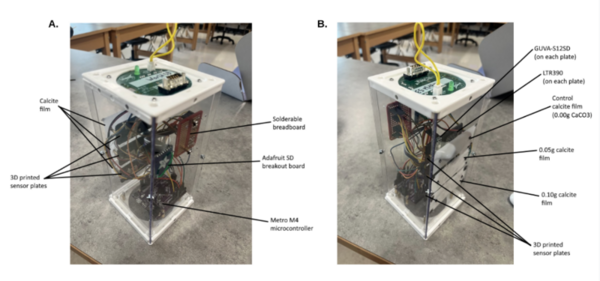
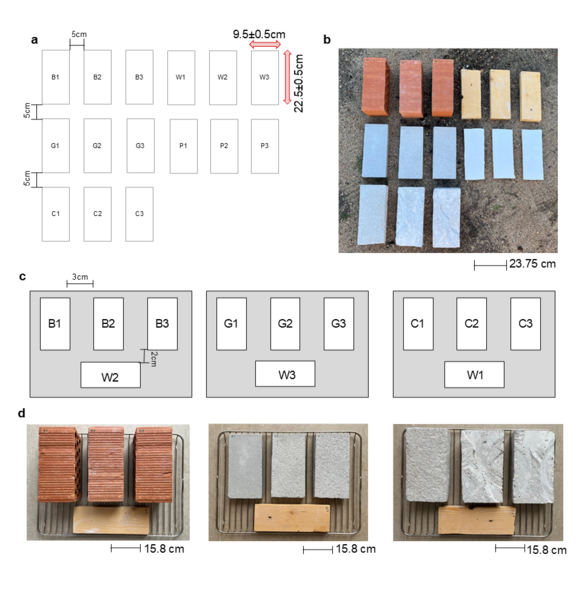
This study tested whether calcite, a safe and naturally occurring mineral, can block ultraviolet (UV) radiation when used in solar geoengineering. Students launched a high‑altitude balloon carrying UV sensors and calcite‑coated sheets to measure how much UV light passed through different calcite concentrations. Their results showed that calcite significantly reduces UV transmission, suggesting it may be a promising material for future stratospheric aerosol injection to help mitigate climate change.

Read More...
Towards an Integrated Solution for Renewable Water and Energy

Chen et al. | Jan 09, 2015

Towards an Integrated Solution for Renewable Water and Energy

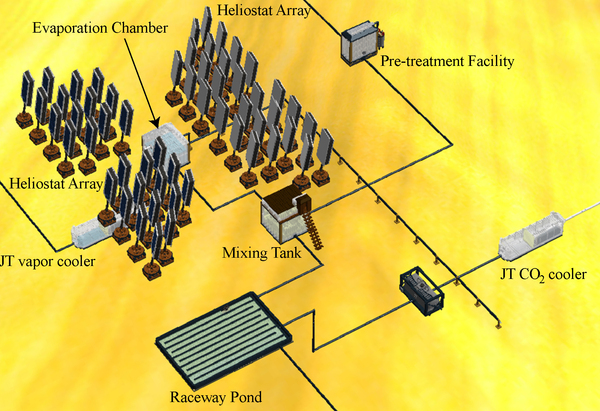
An integrated plant that would generate energy from solar power and provide clean water would help solve multiple sustainability issues. The feasibility of such a plant was investigated by looking at the efficacy of several different modules of such a plant on a small scale.

Read More...

Modelling effects of alkylamines on sea salt aerosols using the Extended Aerosols and Inorganics Model

Chang et al. | Apr 29, 2022

Modelling effects of alkylamines on sea salt aerosols using the Extended Aerosols and Inorganics Model

With monitoring of climate change and the evolving properties of the atmosphere more critical than ever, the authors of this study take sea salt aerosols into consideration. These sea salt aerosols, sourced from the bubbles found at the surface of the sea, serve as cloud condensation nuclei (CCN) and are effective for the formation of clouds, light scattering in the atmosphere, and cooling of the climate. With amines being involved in the process of CCN formation, the authors explore the effects of alkylamines on the properties of sea salt aerosols and their potential relevance to climate change.

Read More...

Nanotexturing as a method to reduce dust accumulation on solar panels

Choi et al. | Jan 30, 2025

Nanotexturing as a method to reduce dust accumulation on solar panels

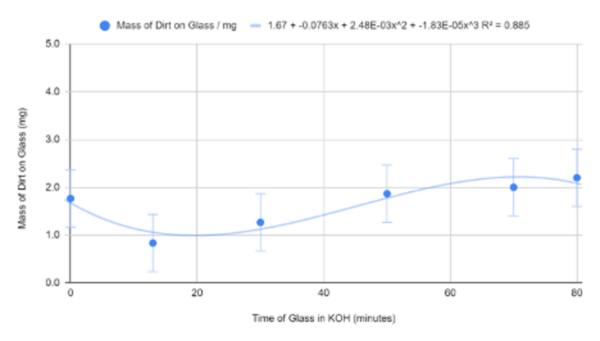
Dust accumulation on solar panels can reduce electricity output by 20–50%, posing a major challenge for solar energy collection. Instead of altering panel design, we explored a simpler approach by modifying surface energy through nanotexturing, predicting that hydrophobic surfaces would repel both water and dust. This study found that treating glass and silicone surfaces with potassium hydroxide (KOH) for 13 and 10 minutes, respectively, created optimal nanotextures (445 nm for glass, 205 nm for silicone), significantly reducing dirt accumulation and improving solar energy capture.

Read More...

Impact of light intensity and electrolyte volume on performance of photo-electrochemical (PEC) solar cell

Patel et al. | Mar 14, 2022

Impact of light intensity and electrolyte volume on performance of photo-electrochemical (PEC) solar cell

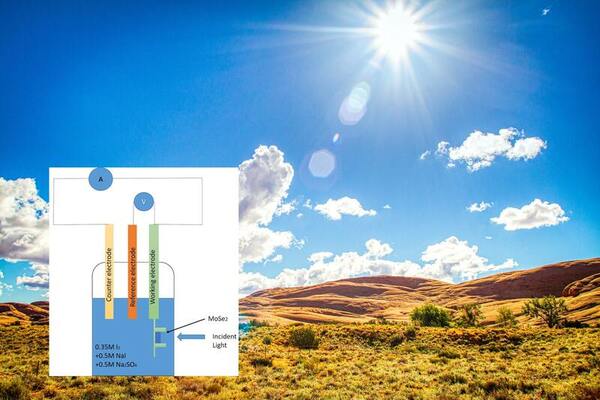
Here, seeking to develop more efficient solar cells, the authors investigated photo-electrochemical (PEC) solar cells, specifically molybdenum diselenide (MoSe2) based on its high resistance to corrosion. They found that the percentage efficiency of these PEC solar cells was proportional to light intensity–0.9 and that performance was positively influenced by increasing the electrolyte volume. They suggest that studies such as these can lead to new insight into reaction-based solar cells.

Read More...