Browse Articles

The analysis of the viral transmission and structural interactions between the HIV-1 envelope glycoprotein and the lymphocyte receptor integrin α4β7

Ganesh et al. | Apr 28, 2021

The analysis of the viral transmission and structural interactions between the HIV-1 envelope glycoprotein and the lymphocyte receptor integrin α4β7

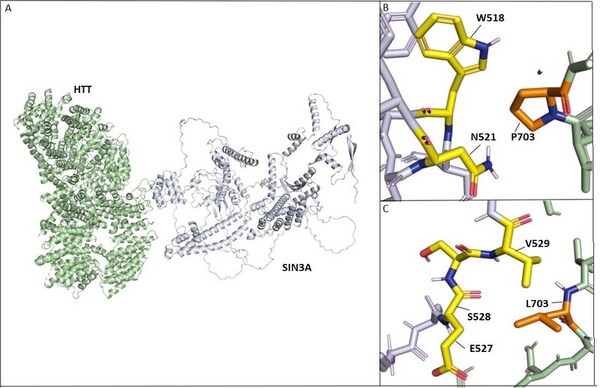
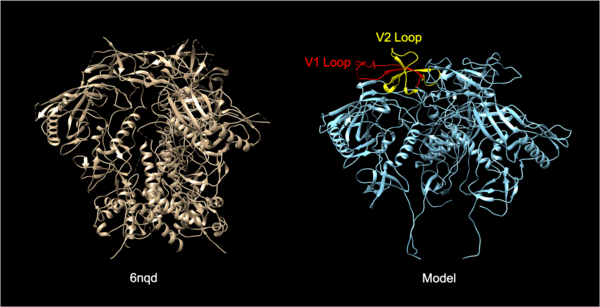
The Human Immunodeficiency Virus (HIV) infects approximately 40 million people globally, and one million people die every year from Acquired Immune Deficiency Syndrome (AIDS)-related illnesses. This study examined the interactions between the HIV-1 envelope glycoprotein gp120 and the human lymphocyte receptor integrin α4β7, the putative first long-range receptor for the envelope glycoprotein of the virus in mucosal tissues. Presented data support the claim that the V1 loop is involved in the binding between α4β7 and the HIV-1 envelope glycoprotein through molecular dockings.

Read More...

Exploring Interactions between PFAS (Per- and Polyfluoroalkyl Substances) and proteins

Lu-Yang et al. | May 16, 2026

Exploring Interactions between PFAS (Per- and Polyfluoroalkyl Substances) and proteins
Image credit: Authors

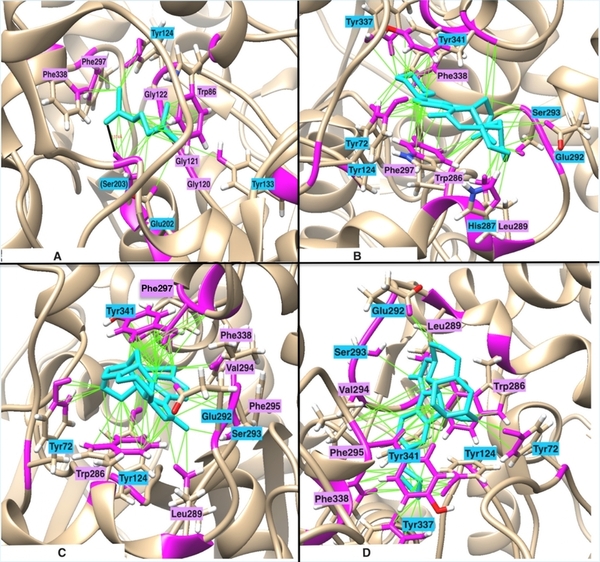
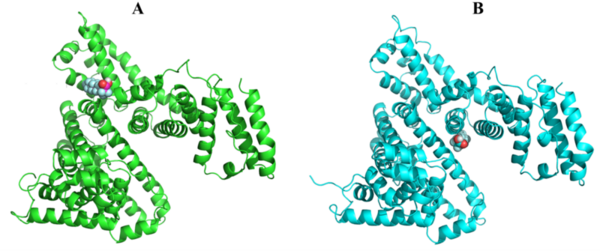
Here the authors investigated how the "forever chemical" perfluorooctanoic acid binds to bovine serum albumin (BSA) using computational software to simulate its potential impact on essential human plasma proteins. They identify a possible, high-energy binding configuration that could persistently impair protein functions, underscoring the critical need for further research into the long-term health risks of per- and poly-fluoroalkyl substances exposure.

Read More...

High-throughput virtual screening of novel dihydropyrimidine monastrol analogs reveals robust structure-activity relationship to kinesin Eg5 binding thermodynamics

Shern et al. | Jan 20, 2021

High-throughput virtual screening of novel dihydropyrimidine monastrol analogs reveals robust structure-activity relationship to kinesin Eg5 binding thermodynamics

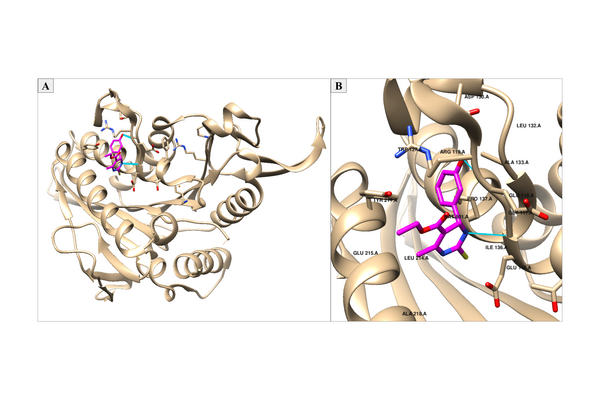
As cancer continues to take millions of lives worldwide, the need to create effective therapeutics for the disease persists. The kinesin Eg5 assembly motor protein is a promising target for cancer therapeutics as inhibition of this protein leads to cell cycle arrest. Monastrol, a small dihydropyrimidine-based molecule capable of inhibiting the kinesin Eg5 function, has attracted the attention of medicinal chemists with its potency, affinity, and specificity to the highly targeted loop5/α2/α3 allosteric binding pocket. In this work, we employed high-throughput virtual screening (HTVS) to identify potential small molecule Eg5 inhibitors from a designed set of novel dihydropyrimidine analogs structurally similar to monastrol.

Read More...

Prediction of molecular energy using Coulomb matrix and Graph Neural Network

Hazra et al. | Feb 01, 2022

Prediction of molecular energy using Coulomb matrix and Graph Neural Network

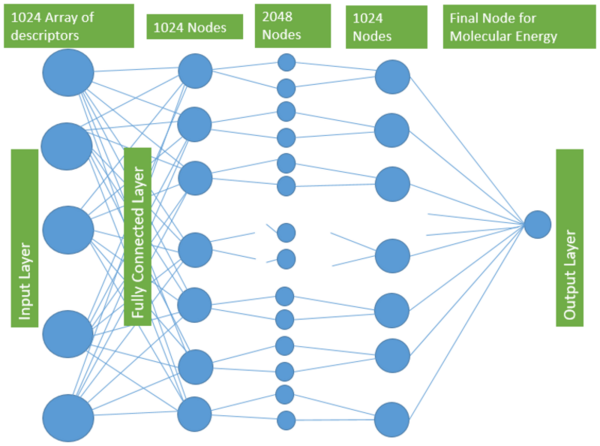
With molecular energy being an integral element to the study of molecules and molecular interactions, computational methods to determine molecular energy are used for the preservation of time and resources. However, these computational methods have high demand for computer resources, limiting their widespread feasibility. The authors of this study employed machine learning to address this disadvantage, utilizing neural networks trained on different representations of molecules to predict molecular properties without the requirement of computationally-intensive processing. In their findings, the authors determined the Feedforward Neural Network, trained by two separate models, as capable of predicting molecular energy with limited prediction error.

Read More...

Optical anisotropy of crystallized vanillin thin film: the science behind the art

Wang et al. | Jul 09, 2024

Optical anisotropy of crystallized vanillin thin film: the science behind the art
Image credit: The authors

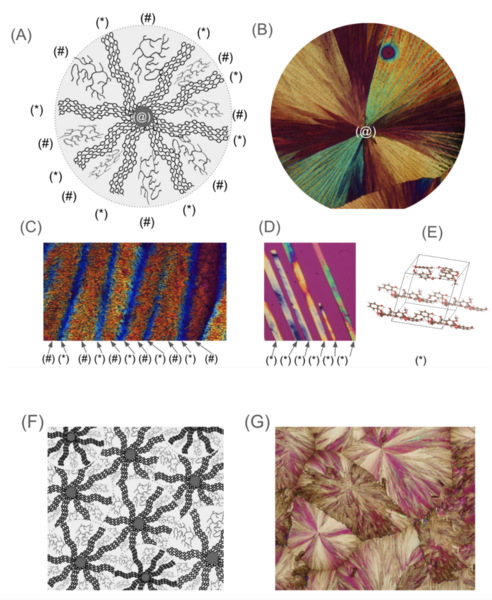
Microscopic beauty is hiding in common kitchen ingredients - even vanillin flavoring can be turned into mesmerizing artwork by crystallizing the vanillin and examining it under a polarizing microscope. Wang and Pang explore this hidden beauty by determining the optimal conditions to grow crystalline vanillin films and by creating computer simulations of chemical interactions between vanillin molecules.

Read More...

Racemic serine is less soluble than pure enantiomers due to stronger intermolecular hydrogen bonds

Ranka et al. | Nov 18, 2021

Racemic serine is less soluble than pure enantiomers due to stronger intermolecular hydrogen bonds

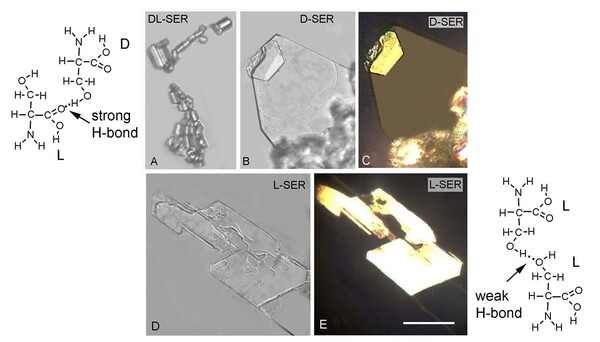
Seeking to develop a better understanding of the chemical and physical properties of amino acids that compose proteins, here the authors investigated the unusual relative insolubility of racemic mixtures of D- and L-serine compared to the solubility of pure D- or L-serine. The authors used a combination of microscopy and temperature measurements alongside previous X-ray diffraction studies to conclude that racemic DL-serine crystals consist of comparatively stronger hydrogen bond interactions compared to crystals of pure enantiomers. These stronger interactions were found to result in the unique release of heat during the crystallization of racemic mixtures.

Read More...