Evaluation of hepatotoxicity from excessive acetaminophen: physiological and histological changes
(1) Concord College, (2) Pharmaceutical Sciences, Chung-Ang University
https://doi.org/10.59720/24-252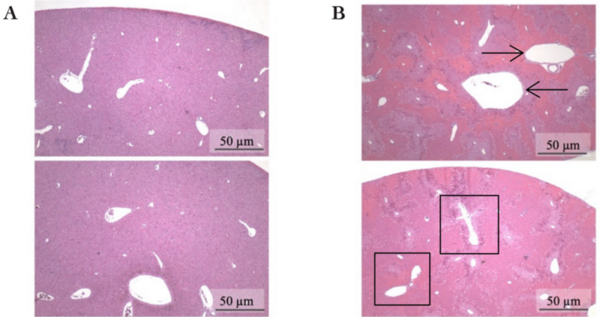
We investigated the effect of acetaminophen (APAP), a commonly used drug world-wide on drug-induced liver damage. APAP causes more drug-induced liver injury than any of the other most prescribed drugs such as statins, isoniazid, and methyldopa. APAP has no significant side effects when taken as prescribed, but if too much is taken, known as overdosing, or if taken with alcohol, it can cause severe liver damage. Although APAP-induced hepatic injury is extensively reported, the exact mechanisms by which it impacts distinct hepatic cell types remain ambiguous. Thus, to further understand this drug-induced liver injury, we reviewed indicators of liver damage using serum and liver tissue in mice treated with APAP. We hypothesized that administering high doses of APAP would result in significant toxicity in mice. By measuring the levels of aspartate aminotransferase (AST) and alanine aminotransferase (ALT) in mice treated with APAP, we found that excessive APAP is harmful to the liver. Furthermore, the liver tissue of mice treated with excessive APAP seen under a microscope demonstrated deterioration of normal liver architecture, with the presence of larger vacuoles and damaged sinusoidal structures, indicating considerable hepatotoxicity. Our results show that consuming large amounts of APAP can be detrimental to liver health.
This article has been tagged with: