Examining cognitive differences between experienced and novice entrepreneurs
(1) William A. Shine Great Neck South High School, (2) Zarb School of Business, Hofstra University
https://doi.org/10.59720/24-355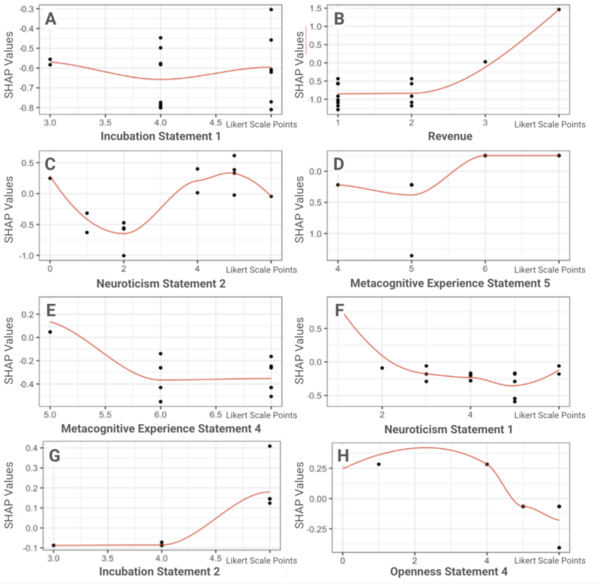
Entrepreneurship is a widely acknowledged field of study due to its positive impact on society and the economy. However, how and why experienced entrepreneurs think differently from novice ones has not been fully addressed by extant entrepreneurship research. Our study aimed to examine cognitive differences between experienced and novice entrepreneurs by using mixed methods. We first hypothesized that more experienced entrepreneurs tend to have greater risk propensity and greater entrepreneurial opportunity recognition than novice entrepreneurs and that entrepreneurs would be motivated more by internal rather than external factors further into their careers. We then conducted analyses in R on a sample of 103 surveyed and 7 interviewed entrepreneurs using XGBoost models. Our results suggested that adaptive cognition, opportunity recognition, and personality traits play large roles in distinguishing between experienced and novice entrepreneurs. In addition, we found that an excess of imagination and brainstorming could lead to inaction in the beginning stages of a venture, and spontaneity in opportunity recognition could necessitate increased support/power division. We also observed a decrease in abstract ideas, creativity, and the development of new initiatives later in a venture. Moreover, we observed that with more experience, entrepreneurs generally become less risk-averse and consider goals outside financial concerns. By advancing our understanding of entrepreneurial cognition and personalities, especially in novice entrepreneurs, our study offers insights for fostering supportive environments for venture creation.
This article has been tagged with: