Investigating the effects of glucose reintroduction on acutely starved HeLa cells
(1) Academy of Health and Medical Sciences at Somerset County Vocational and Technical High School, (2) University of Virginia
* These authors made equal contributions
https://doi.org/10.59720/25-217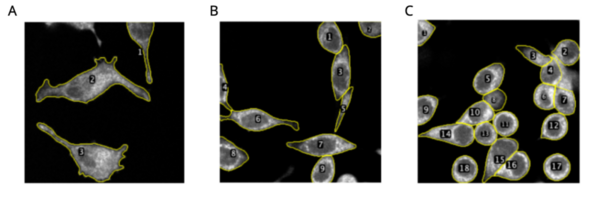
Cancer cells exhibit a high degree of metabolic flexibility that distinguishes them from their non-cancerous counterparts. Their reliance on glycolysis, even in oxygen-rich environments, is known as aerobic glycolysis (Warburg effect) and is one of these metabolic adaptations. While the Warburg effect is well-documented, its relationship to glucose availability remains unexplored. Since the Warburg effect drives cancer cells to preferentially consume glucose, acute glucose starvation directly disrupts this, yet, little is known about how HeLa cells metabolically respond when glucose is reintroduced after starvation. Understanding how cancer cells regulate their metabolic phenotype has potential implications for therapy efficacy and resistance. We hypothesized that this re-feeding would push the cells toward rapid activation of their glycolytic pathways, consistent with the Warburg effect. We used two-photon Florescence Light Imaging Microscopy to track redox-sensitive parameters of nicotinamide adenine dinucleotide phosphate (NAD[P]H) and flavin adenine dinucleotide (FAD) in three different fields of view in three states—starved, 20 minutes post–glucose introduction, and 40 minutes post–glucose introduction—for starved and non-starved cells. Most cells shifted toward a more reduced state within the first 20 minutes following glucose reintroduction due to an increase in glycolysis, supporting our initial hypothesis. However, by 40 minutes, the cells exhibited diverging responses: some remained suppressed in regards to aerobic respiration, while others recovered back to oxidative phosphorylation. This indicates that although the initial effect of re-feeding is uniform, over time, there is variance in their metabolic response. Clinically, these findings underscore the importance of accounting for metabolic heterogeneity when treating cancer, as it can completely change resistance and overall efficacy of the therapy.
This article has been tagged with: