Browse Articles

A cross-cultural analysis of consumer behavior and payment preferences: Insights from India and the United Arab Emirates

Bansal et al. | Sep 01, 2026

A cross-cultural analysis of consumer behavior and payment preferences: Insights from India and the United Arab Emirates

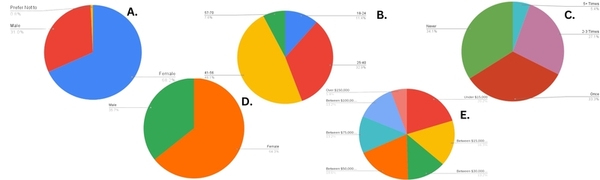
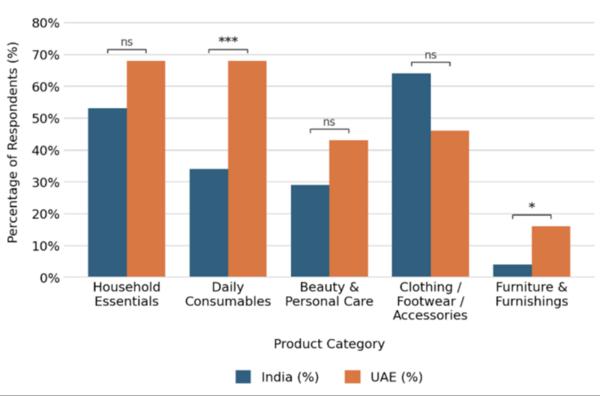
Consumers in India and the United Arab Emirates live in very different economic and cultural environments, and this study set out to measure how that shapes the way they shop and pay. Surveying 50 people in each country, they found that Indian consumers were more price-sensitive and favored cash, while UAE consumers prioritized convenience, gravitating toward credit cards, mobile wallets, and online shopping. The results offer practical insight for retailers, marketers, and policymakers working across these two fast-growing but culturally distinct markets.

Read More...


Comparing Consumer Personality and Brand Personality: Do Fashion Styles Speak of Who You Are?

Stevenson et al. | Oct 02, 2019

Comparing Consumer Personality and Brand Personality: Do Fashion Styles Speak of Who You Are?

This study investigated how fashion brand personalities are similar to people’s personalities and whether people may prefer a particular clothing brand based on their own personal traits. All together, Stevenson and Scott found that the Big Five Personality Factors are generally not related to participants’ preferred brand personalities. Generally, brands should consider different factors besides the Big Five Personality Factors for identifying potential customers.

Read More...

Unit-price anchoring affects consumer purchasing behavior

James et al. | Jan 15, 2025

Unit-price anchoring affects consumer purchasing behavior

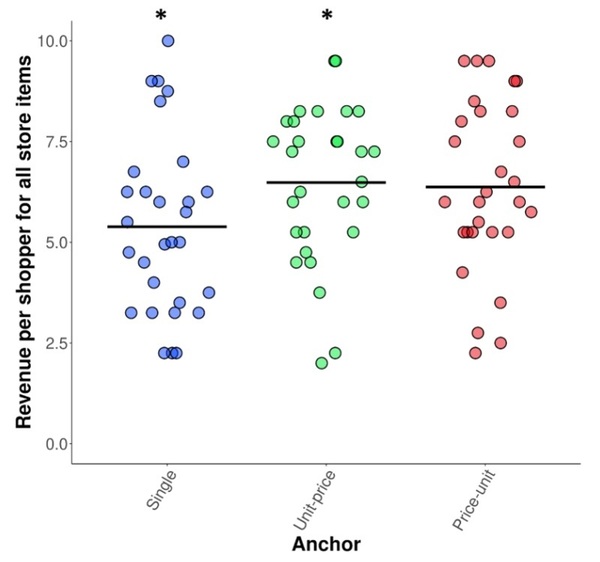
This study examines how anchoring—providing numerical suggestions like "2 for $4"—can influence consumer purchasing decisions and increase revenue. The researchers tested three types of price anchors on 29 high school students shopping in a mock store.

Read More...

The Effects of Post-Consumer Waste Polystyrene on the Rate of Mealworm Consumption

Green et al. | Nov 29, 2018

The Effects of Post-Consumer Waste Polystyrene on the Rate of Mealworm Consumption

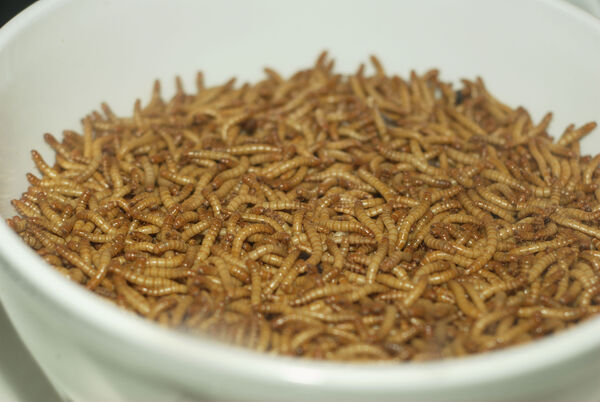
In a world where plastic waste accumulation is threatening both land and sea life, Green et al. investigate the ability of mealworms to breakdown polystyrene, a non-recyclable form of petrochemical-based polymer we use in our daily lives. They confirm that these organisms, can degrade various forms of polystyrene, even after it has been put to use in our daily lives. Although the efficiency of the degradation process still requires improvement, the good news is, the worms are tiny and themselves are biodegradable, so we can use plenty of them without worrying about space and how to get rid of them. This is very promising and certainly good news for the planet.

Read More...

Time-Efficient and Low-Cost Neural Network to detect plant disease on leaves and reduce food loss and waste

Singh et al. | Apr 24, 2023

Time-Efficient and Low-Cost Neural Network to detect plant disease on leaves and reduce food loss and waste

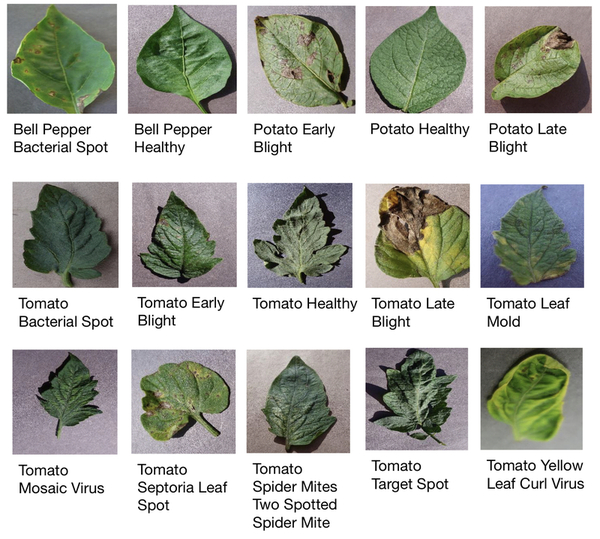
About 25% of the food grown never reaches consumers due to spoilage, and 11.5 billion pounds of produce from gardens are wasted every year. Current solutions involve farmers manually looking for and treating diseased crops. These methods of tending crops are neither time-efficient nor feasible. I used a convolutional neural network to identify signs of plant disease on leaves for garden owners and farmers.

Read More...

Differences in online reviews between different communities: An empirical study on Amazon and Goodreads

Choi et al. | May 30, 2026

Differences in online reviews between different communities:  An empirical study on Amazon and Goodreads
Image credit: Choi and Choi

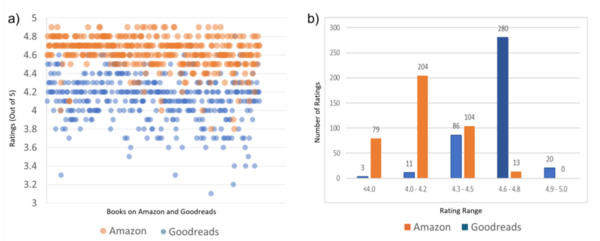
Online review platforms often provide different reviews on the same product, potentially confusing consumers. In this study, we found that the number of raters on Amazon is lower for the same book, while ratings on Amazon were higher than those on Goodreads. Furthermore, these differences in ratings and rater counts were larger for fiction books than for non‑fiction books.

Read More...

Testing Epoxy Strength: The High Strength Claims of Selleys’s Araldite Epoxy Glues

Nguyen et al. | Jul 14, 2020

Testing Epoxy Strength: The High Strength Claims of Selleys’s Araldite Epoxy Glues

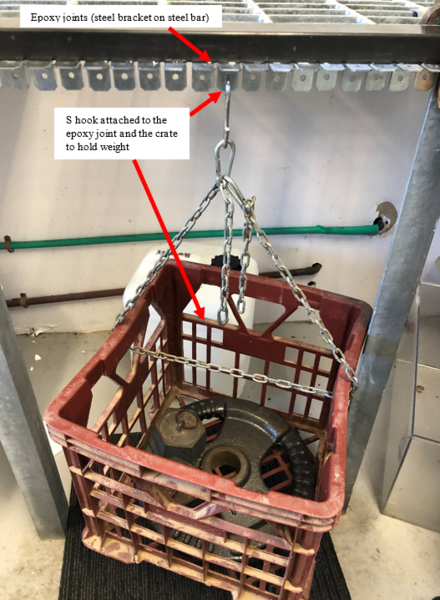
Understanding the techniques used to improve the adhesion strength of the epoxy resin is important especially for consumer applications such as repairing car parts, bonding aluminum sheeting, and repairing furniture or applications within the aviation or civil industry. Selleys Araldite epoxy makes specific strength claims emphasizing that the load or weight that can be supported by the adhesive is 72 kg/cm2. Nguyen and Clarke aimed to test the strength claims of Selley’s Araldite Epoxy by gluing two steel adhesion surfaces: a steel tube and bracket. Results showed that there is a lack of consideration by Selleys for adhesion loss mechanisms and environmental factors when accounting for consumer use of the product leading to disputable claims.

Read More...

Evaluation of Microplastics in Japanese Fish Using Visual and Chemical Dissections

Srebnik et al. | Jan 20, 2021

Evaluation of Microplastics in Japanese Fish Using Visual and Chemical Dissections

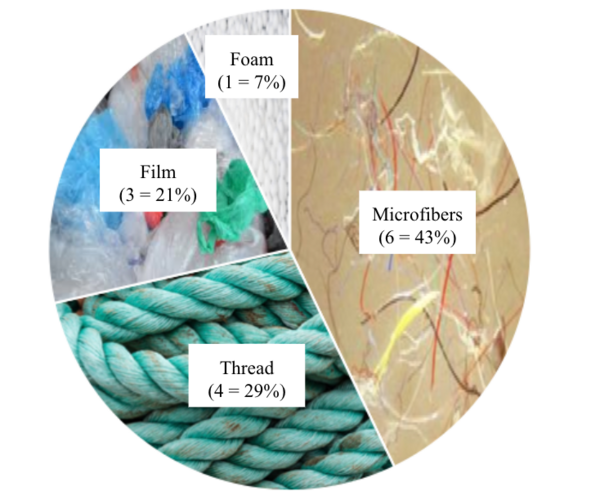
Does the overuse of plastic in Japan poses an ecological risk to marine species and their consumers? Using visual and chemical dissection, all fish in this study were found to have microplastics present in their gastrointestinal tract, including two species that are typically eaten whole in Japan. Overall, these results are concerning as previous studies have found that microplastics can carry persistent organic pollutants. It is presumed that the increasing consumption of microplastics will have negative implications on organ systems such as the liver, gut, and hormones.

Read More...