Browse Articles

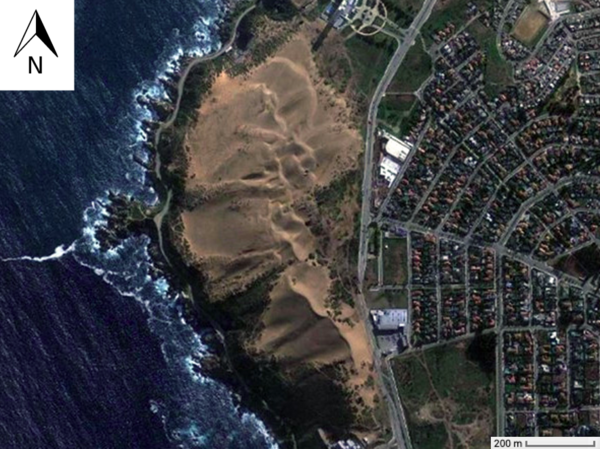
Dune flora can emerge from seed islands (Concon, Chile)

Farías Giusti-Bilz et al. | Dec 07, 2020

Dune flora can emerge from seed islands (Concon, Chile)

In the field of ecology, little is known about how plant communities originate. Through the process of characterizing dunes, mounds of sand formed by the wind, and their plant communities we can get to know the physiognomy and floristic composition of the territory. Based on the hypothesis that dune flora can emerge from seed islands: holes in the sand 6 cm deep containing a mixture of seeds, broken branches of shrubbery, and rabbit feces, during spring, the authors determined the composition of 20 seed islands in the sand dunes of Concon, Chile and measured how many seeds germinated in each one.

Read More...
Pollination Patterns by Green-Backed Firecrown Hummingbirds

Freeland et al. | May 28, 2020

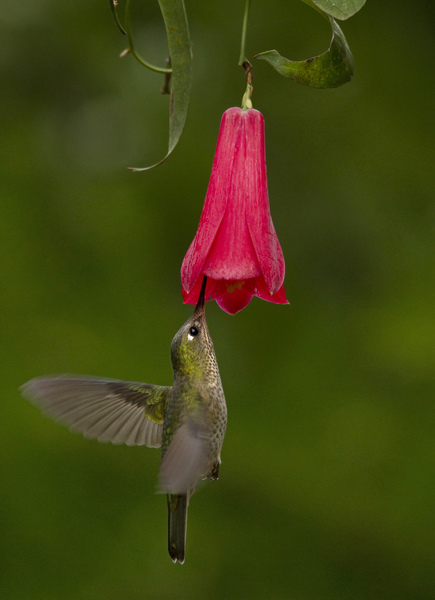
Pollination Patterns by Green-Backed Firecrown Hummingbirds

The Green-backed Firecrown hummingbird is an essential pollinator in the temperate rainforests of southern South America. However, little is known about the ecology of these birds. Authors examined the foraging patterns of these birds identifying interesting differences in foraging patterns among season, age and sex.

Read More...

The ecological mysteries of Opheodesoma spectabilis : Seasonal trends, habitat preferences, and climate responses

Watson et al. | Jul 26, 2026

The ecological mysteries of <i>Opheodesoma spectabilis</i>	: Seasonal trends, habitat preferences, and climate responses

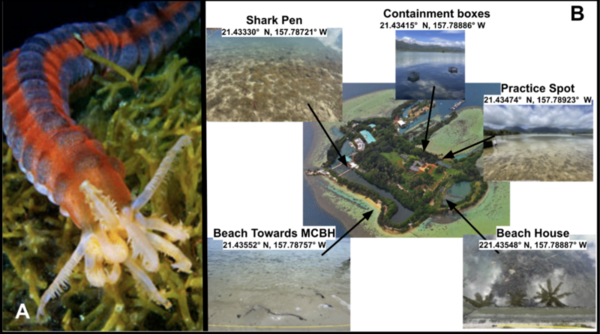
This study examines how environmental conditions influence the abundance and ecological role of the sea cucumber Opheodesoma spectabilis in Kāneʻohe Bay. Field observations and laboratory experiments showed that the species is more common in algae-dominated sandy habitats, where it improves water clarity and increases dissolved oxygen through bioturbation. However, exposure to very high temperatures caused rapid mortality, suggesting that marine heat waves could threaten this species and the ecological functions it provides.

Read More...

How are genetically modified foods discussed on TikTok? An analysis of #GMOFOODS

Basch et al. | Nov 20, 2023

How are genetically modified foods discussed on TikTok? An analysis of #GMOFOODS
Image credit: Camilo Jimenez

Here, the authors investigated engagement with #GMOFOODS, a hashtag on TikTok. They hypothesized that content focused on the negative effects of genetically modified organisms would receive more interaction driven by consumers. They found that the most common cateogry focused on the disadvantages of GMOs related to nutrition and health with the number of views determining if the video would be provided to users.

Read More...

Impact of salinity and phosphorus on growth of Phaseolus Vulgaris inoculated with Arbuscular Mycorrhizal Fungi

Matanachai et al. | Jun 16, 2022

Impact of salinity and phosphorus on growth of <em>Phaseolus Vulgaris</em> inoculated with Arbuscular Mycorrhizal Fungi

Here, recognizing a declining supply of rock phosphate, as well as its role in crop fertilization, the authors investigated a fungus that forms a symbiotic relationship with many crops. They found that symbiosis between the fungus and common bean plant increased the affinity of the plant towards absorbing nutrients as evidenced by lower root-to-shoot ratios in beans planted in soil with various concentrations of phosphorous and salinity.

Read More...

Friend or foe: Using DNA barcoding to identify arthropods found at home

Wang et al. | Mar 14, 2022

Friend or foe: Using DNA barcoding to identify arthropods found at home

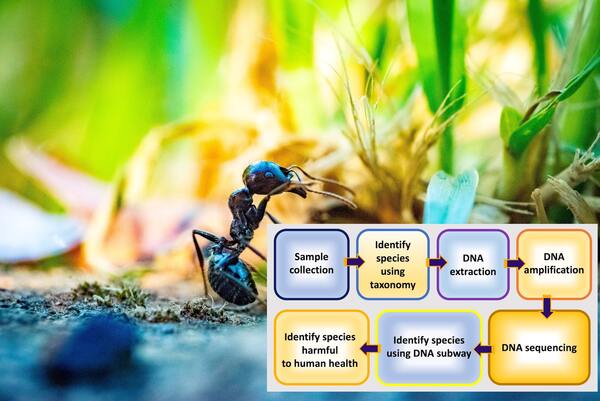
Here the authors used morphological characters and DNA barcoding to identify arthropods found within a residential house. With this method they identified their species and compared them against pests lists provided by the US government. They found that none of their identified species were considered to be pests providing evidence against the misconception that arthropods found at home are harmful to humans. They suggest that these methods could be used at larger scales to better understand and aid in mapping ecosystems.

Read More...

Spider Density Shows Weak Relationship with Vegetation Density

Ryon et al. | Jul 03, 2020

Spider Density Shows Weak Relationship with Vegetation Density

Evidence supports that spiders have many ecological benefits including insect control and predation in the food chain. In this study the authors investigate that whether the percent of vegetation coverage and spider density are correlated. They determine that despite the trend there is no statistically significant correlation.

Read More...

Do Attractants Bias the Results of Malaise Trap Research?

Martinez et al. | Jan 22, 2020

Do Attractants Bias the Results of Malaise Trap Research?

Malaise traps are commonly used to collect flying insects for a variety of research. In this study, researchers hypothesized the attractants used in these traps may create bias in insect studies that could lead to misinterpreted data. To test this hypothesis two different kinds of attractant were used in malaise traps, and insect diversity was assessed. Attractants were found to alter the dispersion of insects caught in traps. These findings can inform future malaise traps studies on insect diversity.

Read More...