Browse Articles

Improving measurement of reducing sugar content in carbonated beverages using Fehling’s reagent

Zhang et al. | Jul 21, 2020

Improving measurement of reducing sugar content in carbonated beverages using Fehling’s reagent

The sugar-rich modern diet underlies a suite of metabolic disorders, most common of which is diabetes. Accurately reporting the sugar content of pre-packaged food and drink items can help consumers track their sugar intake better, facilitating more cognisant and, eventually, moderate consumption of high-sugar items. In this article, the authors examine the effect of several variables on the accuracy of Fehling's reaction, a colorimetric reaction used to estimate sugar content.

Read More...

Efficacy of Mass Spectrometry Versus 1H Nuclear Magnetic Resonance With Respect to Denaturant Dependent Hydrogen-Deuterium Exchange in Protein Studies

Chenna et al. | Jan 22, 2020

Efficacy of Mass Spectrometry Versus 1H Nuclear Magnetic Resonance With Respect to Denaturant Dependent Hydrogen-Deuterium Exchange in Protein Studies

The misfolding of proteins leads to numerous diseases including Akzheimer’s, Parkinson’s and Type II Diabetes. Understanding of exactly how proteins fold is crucial for many medical advancements. Chenna and Englander addressed this problem by measuring the rate of hydrogen-deuterium exchange within proteins exposed to deuterium oxide in order to further elucidate the process of protein folding. Here, mass spectrometry was used to measure exchange in Cytochrome c and was compared to archived 1H NMR data.

Read More...

The Effects of Ultraviolet Light on Escherichia coli

Kodoth et al. | Sep 07, 2015

The Effects of Ultraviolet Light on <em>Escherichia coli</em>

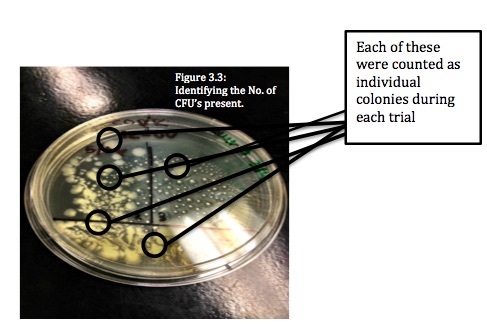
In this study E. coli bacteria was exposed to small UV lights currently used in school laboratories to see the effect on colony growth. This project explores how UV radiation methods could be applied in common households to inhibit bacterial growth.

Read More...

The effects of a high-sucrose diet on the survival of Drosophila melanogaster from a bacterial infection

Warwick et al. | May 22, 2026

The effects of a high-sucrose diet on the survival of <i>Drosophila melanogaster</i> from a bacterial infection

Excess sucrose consumption has been associated with several health problems, including inflammation and potential negative effects on immune function. However, the exact relationship between sucrose intake and immunity remains unclear, especially during bacterial infections. This study examined how sucrose intake affected the survival of fruit flies following oral infection with the bacterial pathogen Serratia marcescens.

Read More...

Influence of induction heating on static recrystallization kinetics of AISI 4130 steel

Chen et al. | Apr 30, 2026

Influence of induction heating on static recrystallization kinetics of AISI 4130 steel

This article investigates whether induction heating can speed up static recrystallization in AISI 4130 steel compared with traditional radiant heating. It was found that induction-heated samples recrystallized faster, softened more quickly, and showed earlier microstructural changes like grain nucleation and pearlite spheroidization, suggesting induction heating could be a more efficient alternative for industrial metal heat treatments.

Read More...

The effect of lead oxide concentrations on the bioluminescence intensity of Panellus stipticus

Park et al. | Mar 02, 2026

The effect of lead oxide concentrations on the bioluminescence intensity of <i>Panellus stipticus</i>

Here the authors investigate the potential of the bioluminescent fungus Panellus stipticus to serve as a sustainable bioindicator for environmental lead contamination. Their findings demonstrate that higher lead concentrations cause a measurable decrease in fungal bioluminescence intensity over time suggesting that the fungus could be an effective tool for detecting lead in an environment.

Read More...

Paralyzing effects of CO2 and hypothermia on Madagascar hissing and dubia cockroaches

Gapon et al. | Dec 08, 2024

Paralyzing effects of CO<sub>2</sub> and hypothermia on Madagascar hissing and dubia cockroaches
Image credit: Jesper Aggergaard

Here the authors sought to find a more ethical and efficient way to temporary paralyze a cockroach by comparing the results of two methods. By comparing immobilization through immersion in cold water and exposure to a 100 % CO2 environment, they found that cockroaches could be immobilized and recovered significantly faster when exposed to CO2.

Read More...