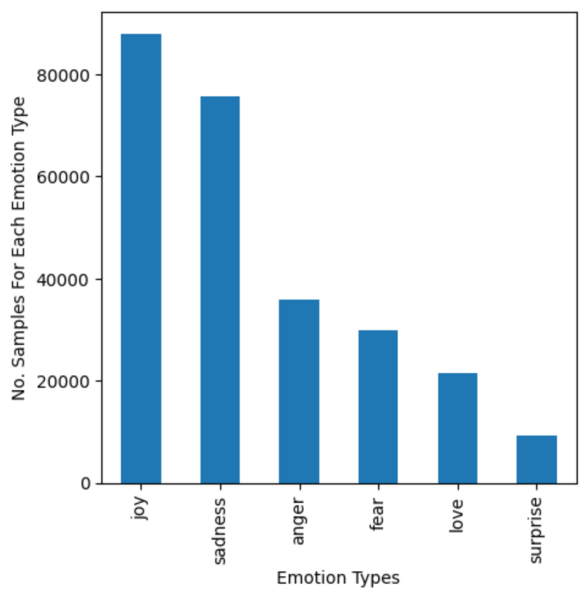
The authors train a neural network to detect text-based emotions including joy, sadness, anger, fear, love, and surprise.
Read More...Training neural networks on text data to model human emotional understanding
The authors train a neural network to detect text-based emotions including joy, sadness, anger, fear, love, and surprise.
Read More...Part of speech distributions for Grimm versus artificially generated fairy tales

Here, the authors wanted to explore mathematical paradoxes in which there are multiple contradictory interpretations or analyses for a problem. They used ChatGPT to generate a novel dataset of fairy tales. They found statistical differences between the artificially generated text and human produced text based on the distribution of parts of speech elements.
Read More...Identifying Neural Networks that Implement a Simple Spatial Concept

Modern artificial neural networks have been remarkably successful in various applications, from speech recognition to computer vision. However, it remains less clear whether they can implement abstract concepts, which are essential to generalization and understanding. To address this problem, the authors investigated the above vs. below task, a simple concept-based task that honeybees can solve, using a conventional neural network. They found that networks achieved 100% test accuracy when a visual target was presented below a black bar, however only 50% test accuracy when a visual target was presented below a reference shape.
Read More...Tomato disease identification with shallow convolutional neural networks

Plant diseases can cause up to 50% crop yield loss for the popular tomato plant. A mobile device-based method to identify diseases from photos of symptomatic leaves via computer vision can be more effective due to its convenience and accessibility. To enable a practical mobile solution, a “shallow” convolutional neural networks (CNNs) with few layers, and thus low computational requirement but with high accuracy similar to the deep CNNs is needed. In this work, we explored if such a model was possible.
Read More...A cost-effective IoT-based intelligent indoor air quality monitoring

Poor air quality is associated with negative effects on human health but can be difficult to measure in an accurate and cost-effective manner. The authors design and test a monitor for measuring indoor air quality using low-cost components.
Read More...Deep residual neural networks for increasing the resolution of CCTV images
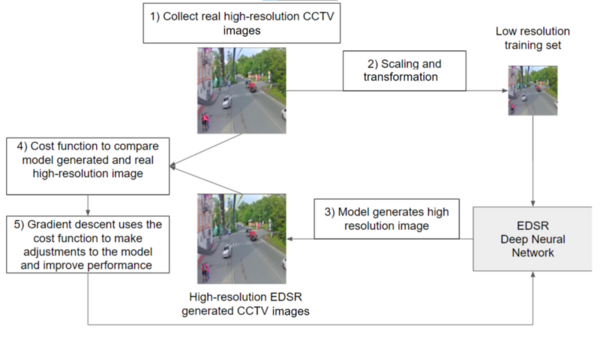
In this study, the authors hypothesized that closed-circuit television images could be stored with improved resolution by using enhanced deep residual (EDSR) networks.
Read More...Simple solving heuristics improve the accuracy of sudoku difficulty classifiers
Evaluating key factors in emotion detection models for AI-driven personalized bibliotherapy
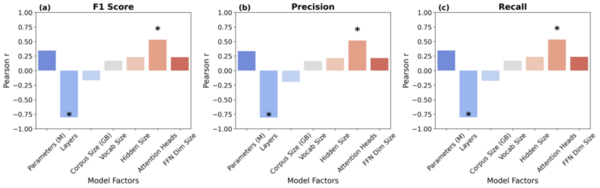
This study evaluates the potential of natural language processing (NLP) models in an emotion-driven bibliotherapy framework to improve mental health challenges.
Read More...Testing the Impact of a Geometric Curvature Variable on the Accuracy of Econometric Forecasting Models
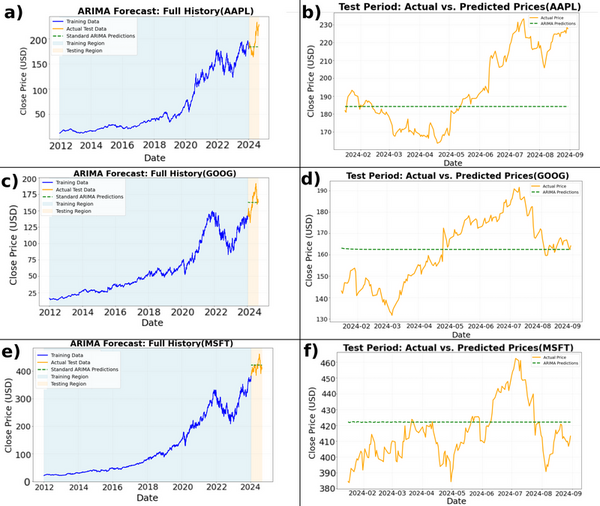
Classical financial forecasting models often fail to capture the complex, nonlinear dynamics of the stock market. This study demonstrates that incorporating a single variable to represent the 'geometric curvature' of a time series dramatically improves the accuracy of standard econometric forecasts. Our findings highlight that geometric properties are a significant predictive factor, opening new avenues for more powerful financial modeling.
Read More...Class distinctions in automated domestic waste classification with a convolutional neural network

Domestic waste classification using convolutional neural network
Read More...