Browse Articles

Impact of study partner status and group membership on commitment device effectiveness among college students

Gupta et al. | Jun 03, 2022

Impact of study partner status and group membership on commitment device effectiveness among college students

Here seeking to identify a possible solution to procrastination among college students, the authors used an online experiment that involved the random assignment of study partners that they shared their study time goal with. These partners were classified by status and group membership. The authors found that status and group membership did not significantly affect the likelihood of college students achieving their committed goals, and also suggest the potential of soft commitment devices that take advantage of social relationships to reduce procrastination.

Read More...

The Impact of Effective Density and Compressive Strength on the Structure of Crumpled Paper Balls

Chu et al. | Nov 19, 2020

The Impact of Effective Density and Compressive Strength on the Structure of Crumpled Paper Balls

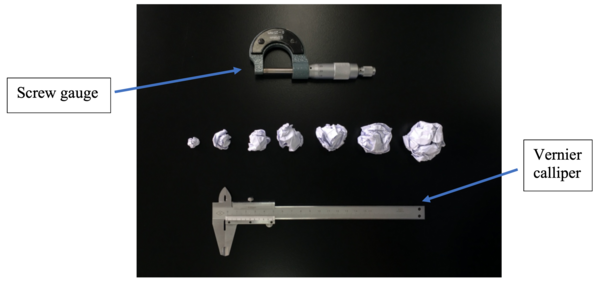
Crumpling is the process whereby a sheet of paper undergoes deformation to yield a three-dimensional structure comprising a random network of ridges and facets with variable density. The authors hypothesized that the more times a paper sheet is crumpled, the greater its compressive strength. Their results show a relatively strong linear relationship between the number of times a paper sheet is crumpled and its compressive strength.

Read More...

Examining the impact of consecutive losses on gambling: When do we decide to quit?

Kim et al. | Apr 28, 2026

Examining the impact of consecutive losses on gambling: When do we decide to quit?
Image credit: Kim, Cragun, and Kim

This article explored the question of when do people decide to stop gambling and further tries to extrapolate why people stop gambling at that point. Their study showed that people tend to quit gambling after 4 consecutive losses, significantly more than 1-3 consecutive losses or a win previous to quitting. They also found that participants commonly quit at a point value approximately 5 points greater than or less than their starting balance. The authors concluded that these results may be important in understanding how to cut down on excessive gambling or in creating policies that make it easier for people to disengage from gambling.

Read More...