The authors looked into eco-friendly alternatives for insulating material. They ultimately found that a polyurethane derived from eggshells was an effective insulator and further research into it is warranted.
Read More...Investigating sustainable insulation materials: Analysis of biofoams and petroleum-derived foams
The authors looked into eco-friendly alternatives for insulating material. They ultimately found that a polyurethane derived from eggshells was an effective insulator and further research into it is warranted.
Read More...Efficient synthesis of superabsorbent beads using photopolymerization with a low-cost method
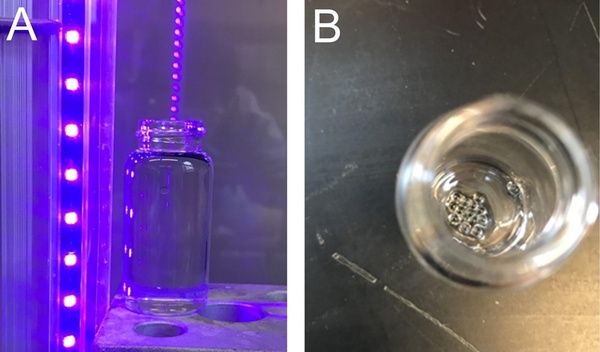
Superabsorbent beads are remarkable, used throughout our daily lives for various practical applications. These beads, as suggested by their name, possess a unique ability to absorb and retain large quantities of liquids. This characteristic of absorbency makes them essential throughout the medical field, agriculture, and other critical industries as well as in everyday products. To create these beads, the process of photopolymerization is fast growing in favor with distinct advantages of cost efficiency, speed, energy efficiency, and mindfulness towards the environment. In this article, researchers explore the pairing of cheap monomers with accessible equipment for creation of superabsorbent beads via the photopolymerization process. This research substantially demonstrates the successful application of photopolymerization in producing highly absorbent beads in a low-cost context, thereby expanding the accessibility of this process for creating superabsorbent beads in both research and practical applications.
Read More...Effects of Coolant Temperature on the Characteristics of Soil Cooling Curve
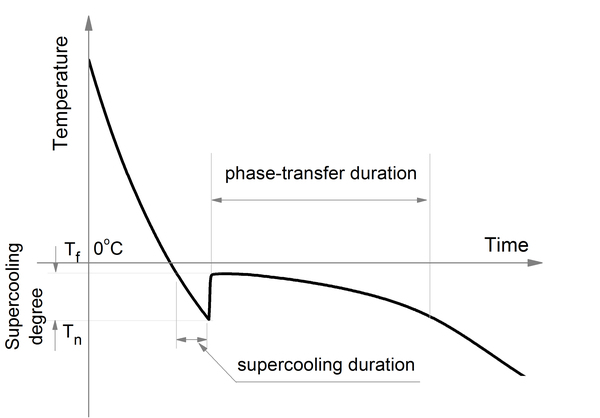
In this article, the authors investigate whether coolant temperature affects soil cooling curves of soil with otherwise identical properties. The coolant temperature is representative of environmental temperature, and the authors hypothesized that differences in this temperature would not affect the freezing temperature of soil. Their findings validated their hypothesis providing helpful information relevant to understanding how frost heaves happen and how to predict their occurrence more accurately.
Read More...The development of FeO(OH) nanoparticles to extract synthetic motor oil from freshwater
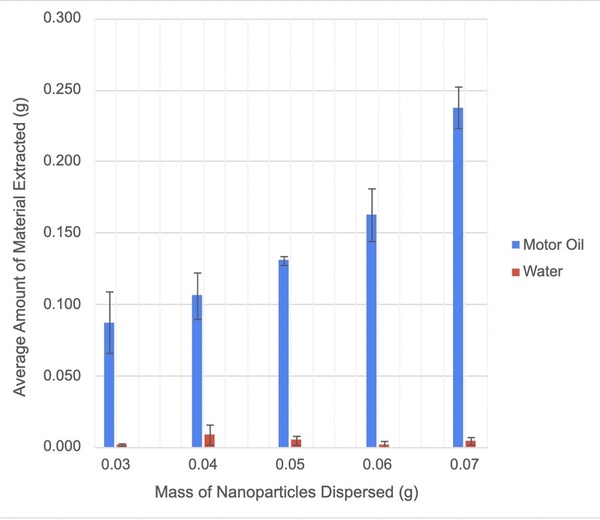
This study aimed to combat widespread hydrocarbon residue persistently polluting global water sources by developing and testing the ability of modified iron(III) oxide-hydroxide (FeO(OH)) nanoparticles to remove small amounts of motor oil from freshwater
Read More...Near-infrared activation of environmentally-friendly gold and silver nanoparticles for unclogging arteries
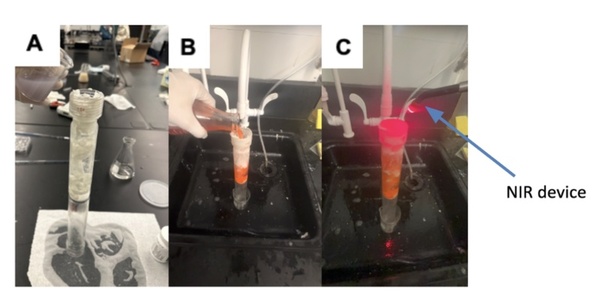
Coronary artery disease, the leading cause of death worldwide, results from cholesterol build-up in coronary arteries, limiting blood and oxygen flow to the heart. This study investigated the use of gold and silver nanoparticles coated with aspirin and activated by near-infrared light to improve blood flow in a clogged artery model. The nanoparticles increased simulated blood flow rates, demonstrating potential as a less invasive and more targeted treatment for cardiovascular disease.
Read More...Examination of the underlying chemical physics of the Mpemba effect in water and other liquids

Counterintuitive in nature, the Mpemba effect asserts that hot liquid freezes faster than cold liquid. While noted throughout history by scientific minds like Aristotle, the phenomenon remains in contention with varying hypotheses for the effect proposed alongside the effect’s rise in popularity. Contributing to the research efforts surrounding the Mpemba effect, the authors in this article explore the effect in different liquids ranging in physical properties and intermolecular forces to determine potential parameters attributable to producing the Mpemba effect.
Read More...A new hybrid cold storage material
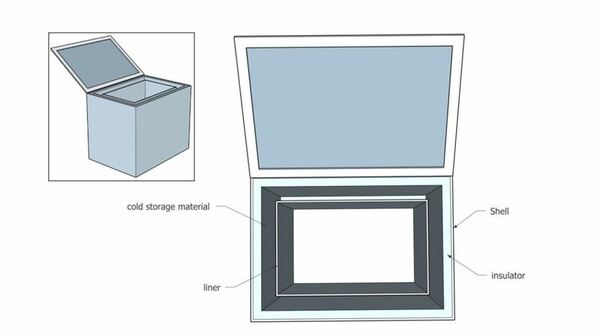
With low-temperature transportation being critical for the progress of research and medical services by preserving biological samples and vaccines, the optimization of cold storage materials is more critical now than ever. The exclusive use of dry ice has its limitations. Notably, it proves insufficient for cold storage during long-range transportation necessary for the delivery of specimens to rural areas. In this article, the authors have proposed a new means of cold storage through the combination of dry ice and ethanol. Upon thorough analysis, the authors have determined their new method as considerably better than the use of pure dry ice across many characteristics, including cold storage capacity, longevity of material, and financial and environmental feasibility.
Read More...Examining Heat Recovery from Electric Light Bulbs Using Thermoelectric Generators
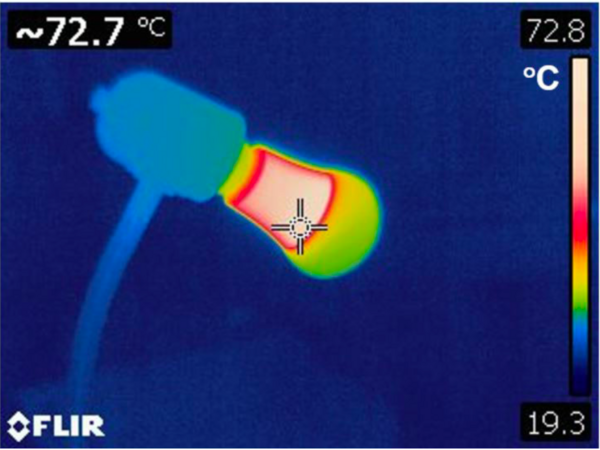
Here the author investigates how much heat energy is output and recovered from a conventional electric light bulb.
Read More...The effectiveness of glass fines on the fire resistance of mycelium-based biocomposites
What is the optimal fuel for space flight? Efficiency, cost, and environmental impact

Here, the authors sought to investigate the efficiency, cost, and environmental impact of several possible propellants that are or could be used for space flight. By deriving three novel equations, they identified harm, energy, and cost scores for each fuel, suggesting that considering each factor will be essential to the ongoing growth of the space industry.
Read More...