Browse Articles

Investigating auxin import and export proteins in Chlorella vulgaris

Wang et al. | Apr 19, 2025

Investigating auxin import and export proteins in <i>Chlorella vulgaris</i>

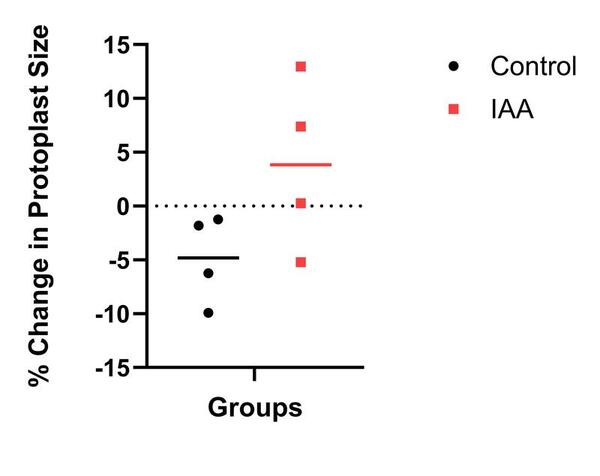
This study explores auxin signaling in Chlorella vulgaris, a green alga with potential for sustainable biofuel and food production. Evidence from protoplast swelling experiments suggests that C. vulgaris secretes auxin and possesses auxin import proteins, highlighting previously uncharacterized signaling pathways. These findings could support more efficient cultivation and resource extraction strategies.

Read More...


Assessing and Improving Machine Learning Model Predictions of Polymer Glass Transition Temperatures

Ramprasad et al. | Mar 18, 2020

Assessing and Improving Machine Learning Model Predictions of Polymer Glass Transition Temperatures

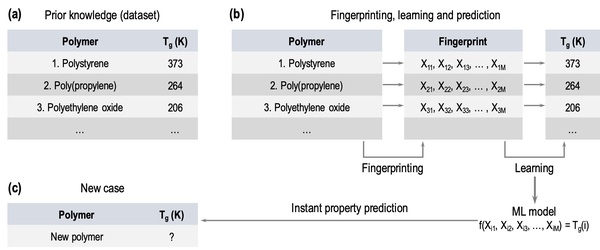
In this study, the authors test whether providing a larger dataset of glass transition temperatures (Tg) to train the machine-learning platform Polymer Genome would improve its accuracy. Polymer Genome is a machine learning based data-driven informatics platform for polymer property prediction and Tg is one property needed to design new polymers in silico. They found that training the model with their larger, curated dataset improved the algorithm's Tg, providing valuable improvements to this useful platform.

Read More...

Overcoming The Uncanny Valley Through Shared Stressful Experience with a Humanoid Robot

Bing et al. | Jun 12, 2018

Overcoming The Uncanny Valley Through Shared Stressful Experience with a Humanoid Robot

The "Uncanny Valley" is a phenomenon in which humans feel discomfort in the presence of objects that are almost, but not quite, human-like. In this study, the authors tested whether this phenomenon could be overcome by sharing a stressful experience with a humanoid robot. They found that human subjects more readily accepted a robot partner that they had previously shared a stressful experience with, suggesting a potential method for increasing the effectiveness of beneficial human-robot interactions by reducing the Uncanny Valley effect.

Read More...

Propagation of representation bias in machine learning

Dass-Vattam et al. | Jun 10, 2021

Propagation of representation bias in machine learning

Using facial recognition as a use-case scenario, we attempt to identify sources of bias in a model developed using transfer learning. To achieve this task, we developed a model based on a pre-trained facial recognition model, and scrutinized the accuracy of the model’s image classification against factors such as age, gender, and race to observe whether or not the model performed better on some demographic groups than others. By identifying the bias and finding potential sources of bias, his work contributes a unique technical perspective from the view of a small scale developer to emerging discussions of accountability and transparency in AI.

Read More...