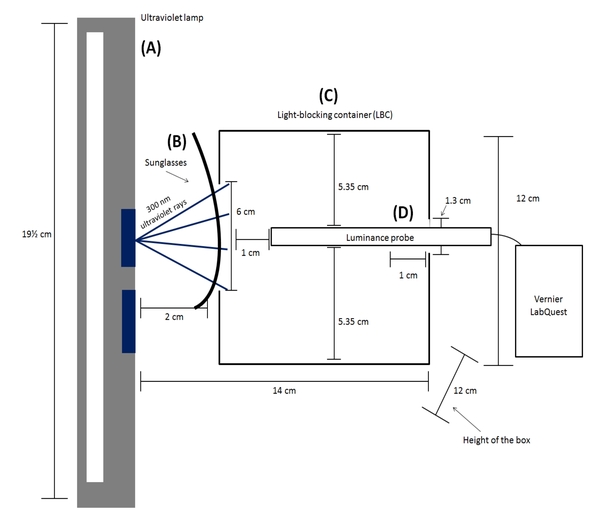
The authors investigated the impact of light pollution on astrophotography.
Read More...The impact of light pollution on astrophotography and visual astronomy in varying environments
AI-designed mini-protein targeting claudin-5 to enhance blood–brain barrier integrity
The authors employ computational protein design to identify a mini-protein with the potential to enhance binding of the tight junction protein, claudin-5, at the blood-blood barrier with therapeutic potential for neurodegenerative diseases.
Read More...A comparison of starches and plasticizers for biopolymer synthesis and degradation
Investigating the effects of mutations of amino acids on the protein expression of CDK2 cancer gene
Ethanol levels in foods ensuing culinary preparation
The authors investigated alcohol content of foods during preparation and when ready to serve to determine how much alcohol remained in the food.
Read More...A comparative study of food labels in the United States and India: Adherence to Codex Alimentarius guidelines
This study investigated how well food labels from 280 different brands across multiple food and drink categories in India and the US adhered to recommended nutritional labeling standards as outlined by the Codex Alimentarius.
Read More...Investigating auxin import and export proteins in Chlorella vulgaris
This study explores auxin signaling in Chlorella vulgaris, a green alga with potential for sustainable biofuel and food production. Evidence from protoplast swelling experiments suggests that C. vulgaris secretes auxin and possesses auxin import proteins, highlighting previously uncharacterized signaling pathways. These findings could support more efficient cultivation and resource extraction strategies.
Read More...The effect of Poisson sprinkling methods on causal sets in 1+1-dimensional flat spacetime
The causal set theory (CST) is a theory of the small-scale structure of spacetime, which provides a discrete approach to describing quantum gravity. Studying the properties of causal sets requires methods for constructing appropriate causal sets. The most commonly used approach is to perform a random sprinkling. However, there are different methods for sprinkling, and it is not clear how each commonly used method affects the results. We hypothesized that the methods would be statistically equivalent, but that some noticeable differences might occur, such as a more uniform distribution for the sub-interval sprinkling method compared to the direct sprinkling and edge bias compensation methods. We aimed to assess this hypothesis by analyzing the results of three different methods of sprinkling. For our analysis, we calculated distributions of the longest path length, interval size, and paths of various lengths for each sprinkling method. We found that the methods were statistically similar. However, one of the methods, sub-interval sprinkling, showed some slight advantages over the other two. These findings can serve as a point of reference for active researchers in the field of causal set theory, and is applicable to other research fields working with similar graphs.
Read More...A comparative study on the long-term effects of music and sports activities on cognitive skills of children
The study explores how music and sports impact cognitive development in young children, particularly in relation to learning disorders like ADHD and dyslexia.
Read More...Correlation between particulate matter concentrations and COPD hospitalization rates in Massachusetts
Air pollution is thought to increase the prevalence of health conditions like chronic obstructive pulmonary disease (COPD). Ganeshwaran and Ropiak investigate this relationship by determining whether there is a correlation between between one type of air pollution (fine particulate matter concentrations) and COPD hospitalization rates in Massachusetts.
Read More...