The authors looked at renewable energy generators and the ability to utilize green roofs as a solution to climate change.
Read More...Integrating microbial fuel cell with sedum green roof for stormwater retention and renewable energy generation
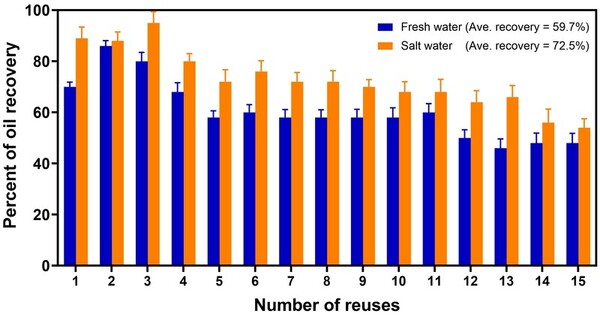
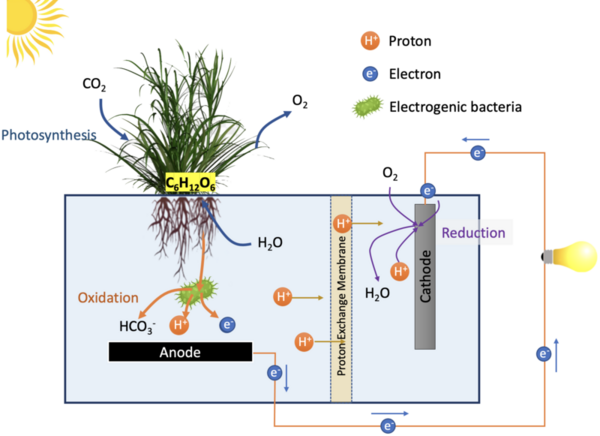
The authors looked at renewable energy generators and the ability to utilize green roofs as a solution to climate change.
Read More...Use of yogurt bacteria as a model surrogate to compare household cleaning solutions
While resources on the safety of household cleaning products are plentiful, measures of efficacy of these cleaning chemicals against bacteria and viruses remain without standardization in the consumer market. The COVID pandemic has exasperated this knowledge gap, stoking the growth of misinformation and misuse surrounding household cleaning chemicals. Arriving at a time dire for sanitization standardization, the authors of this paper have created a quantifying framework for consumers by comparing a wide range of household cleaning products in their efficacy against bacteria generated by a safe and easily replicable yogurt model.
Read More...A novel in vitro blood-brain barrier model using 3D bioprinter: A pilot study
The authors looked at how a 3D bioprinter could be used to model the blood brain barrier.
Read More...Analyzing resilience in a sample population as a novel qualifier for triage in psychological first aid
While serving as an immediate address for psychological safety and stability, psychological first aid (PFA) currently lacks the incorporation of triage. Without triage, patients cannot be prioritized in correspondence to condition severity that is often called for within emergency conditions. To disentangle the relevance of a potential triage system to PFA, the authors of this paper have developed a method to quantify resilience - a prominent predictor of the capability to recover from a disaster. With this resilience index, they have quantified resilience of differing age, race, and sex demographics to better inform the practice of PFA and potential demographic prioritization via a triage system.
Read More...Interleukin family (IL-2 and IL-1β) as predictive biomarkers in Indian cancer patients: A proof of concept study
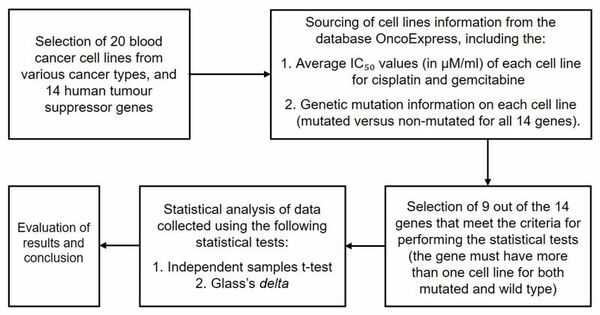
Here, recognizing that the immune response to cancer results in biomarkers that can be used to assess the immune status of cancer patients, the authors investigated the concentrations of key cytokines (TH1 and TH2 cytokines) in healthy controls and cancer patients. They identified significant changes in resting and activated cytokine profiles, suggesting that data of biomarkers such as these could serve as a starting point for further treatment with regard to a patient's specific immune profile.
Read More...Structure-activity relationship of berberine and G4 DNA reveals aromaticity’s effect on binding affinity
Berberine is a natural quaternary alkaloid that has anti-microbial and anti-cancer effects. This compound can bind to Guanine Quadruplex (G4) DNA secondary complexes to help inhibit cancer cell proliferation. In this study, the authors investigate whether incorporating large aromatic rings helps to stabilize berberine-G4 interactions.
Read More...Exponential regression analysis of the Canadian Zero Emission Vehicle market’s effects on climate emissions in 2030
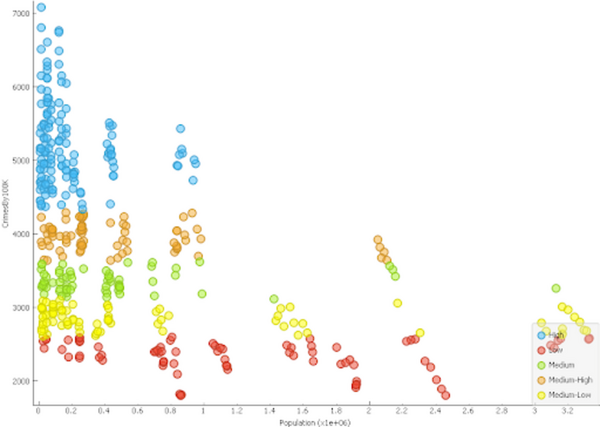
Here, the authors explored how the sale and use of electric vehicles could reduce emissions from the transport industry in Canada. By fitting the sale of total of electric vehicles with an exponential model, the authors predicted the number of electric vehicle sales through 2030 and related that to the average emission for such vehicles. Ultimately, they found that the sale and use of electric vehicles alone would likely not meet the 45% reduction in emissions from the transport industry suggested by the Canadian government
Read More...Deciphering correlation and causation in risk factors for heart disease with Mendelian randomization
Here, seeking to identify the risk of coronary artery disease (CAD), a major cause of cardiovascular disease, the authors used Mendelian randomization. With this method they identified several traits such as blood pressure readings, LDL cholesterol and BMI as significant risk factors. While other traits were not found to be significant risk factors.
Read More...Distribution of prophages in the Streptococcus bacteria genus and their role in increasing host pathogenicity
The authors investigated prophages present in Streptococcus bacteria that may increase their survival in different environments.
Read More...Hybrid Quantum-Classical Generative Adversarial Network for synthesizing chemically feasible molecules
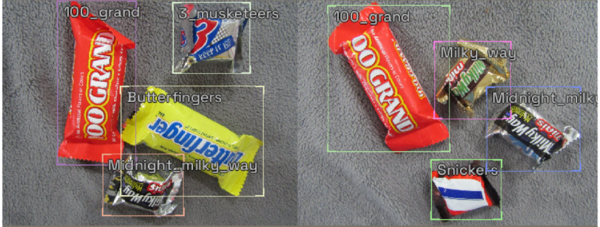
Current drug discovery processes can cost billions of dollars and usually take five to ten years. People have been researching and implementing various computational approaches to search for molecules and compounds from the chemical space, which can be on the order of 1060 molecules. One solution involves deep generative models, which are artificial intelligence models that learn from nonlinear data by modeling the probability distribution of chemical structures and creating similar data points from the trends it identifies. Aiming for faster runtime and greater robustness when analyzing high-dimensional data, we designed and implemented a Hybrid Quantum-Classical Generative Adversarial Network (QGAN) to synthesize molecules.
Read More...