Here, seeking to understand the effects of emotion on memory recall, the authors used a study of 30 teenagers, comparing their ability to recall details from information or narrative writing. They found improved recall of narrative writing, suggesting emotional response can contribute to improved memory recall.
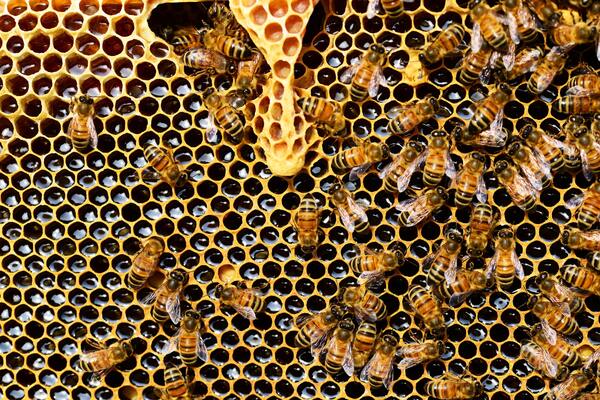
In this study, Donnellan and colleagues investigated how environmental pollution may be affecting honey samples from Chicago apiaries. They found no significant correlation between heavy metal concentration in honey to distance from local industries, suggesting a minimal effect of proximity to industrial pollution on honey contamination.
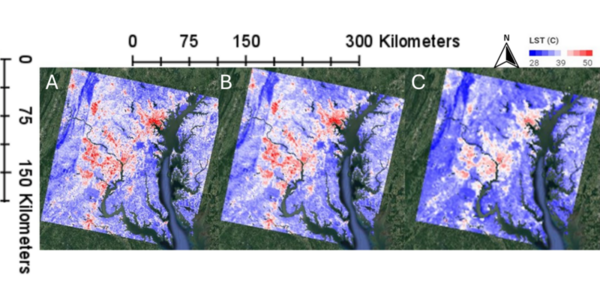
Image credit: Meister, Horvath, and Brown de Colstoun
This manuscript investigates the urban heat island (UHI) effect by utilizing two satellite datasets: Landsat (high spatial resolution, lower temporal resolution) and MODIS (lower spatial resolution, high temporal resolution). The authors hypothesized that Landsat would provide better spatial detail, while MODIS would better capture temporal variations. Their analysis in the Washington D.C.–Baltimore region supports these hypotheses, demonstrating that Landsat offers finer spatial details, whereas MODIS provides more consistent seasonal patterns and better detects heatwave frequencies.
Here, seeking to better understand how facial features provide important visual cues to help convey emotions, the authors evaluated the accuracy and reaction time of participants in regards to experimental photographs where a person's eyebrows were obscured and ones where they were not. Their findings revealed that removing eyebrows resulted in a significant decrease in a participant's ability to recognize anger, with adolescents most likely to misidentify emotions.
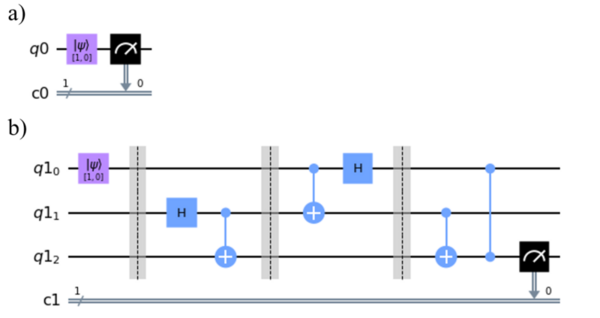
In quantum computing, noise disrupts experimental results, particularly affecting the quantum teleportation algorithm used to transfer qubit states. This study explores how noise impacts this algorithm across different platforms—a perfect simulation, a noisy simulation, and real hardware.
Chemicals used in fertilizers and pesticides often end up in nearby bodies of water due to runoff and may have negative impacts on these important ecosystems. In this study, the authors use water containing different nitrogen levels to investigate the effect on the growth of the English daisy.
Sequence accessibility is an important factor affecting gene expression. Sequence accessibility or openness impacts the likelihood that a gene is transcribed and translated into a protein and performs functions and manifests traits. There are many potential factors that affect the accessibility of a gene. In this study, our hypothesis was that the content of nucleotides in a genetic sequence predicts its accessibility. Using a machine learning linear regression model, we studied the relationship between nucleotide content and accessibility.
Microplastic pollution is a pressing environmental issue, particularly in the context of its potential impacts on ecosystems and human health. In this study, we explored the ability of plants, specifically those cultivated for human consumption, to absorb microplastics from their growing medium. We found no evidence of microplastic absorption in both intact and mechanically damaged roots. This outcome suggests that microplastics larger than 10 μm may not be readily absorbed by the root systems of leafy crops such as lettuce (L. sativa).
Here, seeking to better understand on the effects of social isolation during the COVID-19 pandemic, the authors used a survey during April and May of 2020 of participants primarily in Long Island, NY to assess the physical and mental health of the general population. They found negative impacts to physical health and increases in depressive symptoms and feelings of loneliness across all groups. More significant increases in negative mental health symptoms were observed in younger age groups and amongst women.