Browse Articles

Covalently Entrapping Catalase into Calcium Alginate Worm Pieces Using EDC Carbodiimide as a Crosslinker.

Suresh et al. | Mar 31, 2019

Covalently Entrapping Catalase into Calcium Alginate Worm Pieces Using EDC Carbodiimide as a Crosslinker.

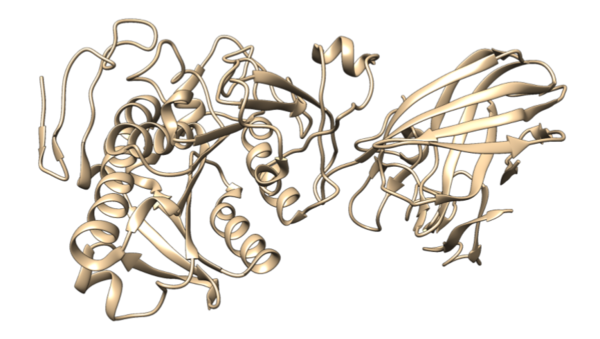
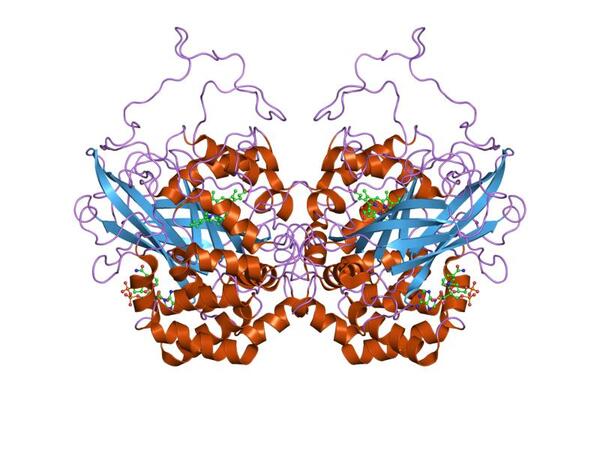
Catalase is a biocatalyst used to break down toxic hydrogen peroxide into water and oxygen in industries such as cheese and textiles. Improving the efficiency of catalase would help us to make some industrial products, such as cheese, less expensively. The best way to maintain catalase’s conformation, and thus enhance its activity, is to immobilize it. The primary goal of this study was to find a new way of immobilizing catalase.

Read More...
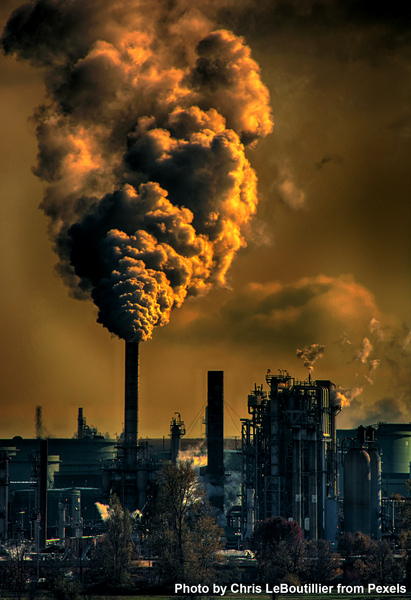
The determinants and incentives of corporate greenhouse gas emission reduction

Liu et al. | Jun 04, 2021

The determinants and incentives of corporate greenhouse gas emission reduction

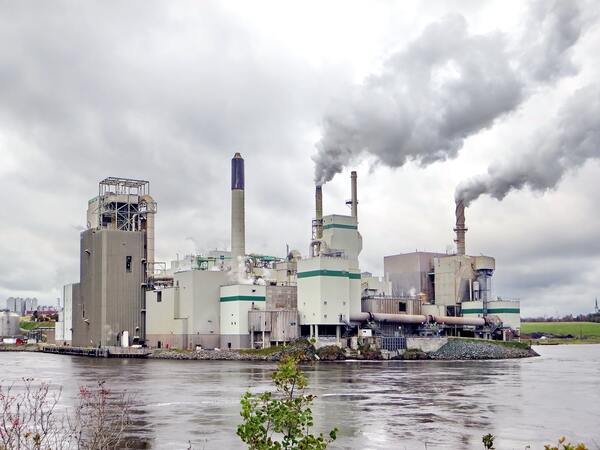
This study used hand-collected Greenhouse gas (GHG) emissions data from the Environmental Protection Agency (EPA) and aimed to understand the determinants and incentives of GHG emissions reduction. It explored how companies’ financials, Chief Executive Officer (CEO) compensation, and corporate governance affected GHG emissions. Results showed that companies reporting GHG emissions were wide-spread among the 48 industries represented by two-digit Standard Industrial Classification (SIC) codes.

Read More...

How has California’s Shelter-in-Place Order due to COVID-19 and the Resulting Reduction in Human Activity Affected Air and Water Quality?

Everitt et al. | Feb 15, 2021

How has California’s Shelter-in-Place Order due to COVID-19 and the Resulting Reduction in Human Activity Affected Air and Water Quality?

As the world struggled to grapple with the emerging COVID-19 pandemic in 2020, many countries instated policies to help minimize the spread of the virus among residents. This inadvertently led to a decrease in travel, and in some cases, industrial output, two major sources of pollutants in today's world. Here, the authors investigate whether California's shelter-in-place policy was associated with a measurable decrease in water and air pollution in that state between June and July of 2020, compared to the preceeding five years. Their findings suggest that, by some metrics, air quality improved within certain areas while water quality was relatively unchanged. Overall, these findings suggest that changing human behavior can, indeed, help reduce the level of air pollutants that compromise air quality.

Read More...

Spectroscopic Kinetic Monitoring and Molecular Dynamics Simulations of Biocatalytic Ester Hydrolysis in Non-Aqueous Solvent

Chen et al. | Dec 20, 2020

Spectroscopic Kinetic Monitoring and Molecular Dynamics Simulations of Biocatalytic Ester Hydrolysis in Non-Aqueous Solvent

Lipases are a common class of enzymes that catalyze the breakdown of lipids. Here the authors characterize the the activity of pancreatic lipase in different organic solvents using a choloremetric assay, as well as using molecular dynamic simulations. They report that the activity of pancreatic lipase in 5% methanol is more than 25% higher than in water, despite enzyme stability being comparable in both solvents. This suggests that, for industrial applications, using pancreatic lipase in 5% methanol solution might increase yield, compared to just water.

Read More...

Two Wrongs Could Make a Right: Food Waste Compost Accelerated Polystyrene Consumption of Tenebrio molitor

Fu et al. | Jul 13, 2020

Two Wrongs Could Make a Right: Food Waste Compost Accelerated Polystyrene Consumption of <em>Tenebrio molitor</em>

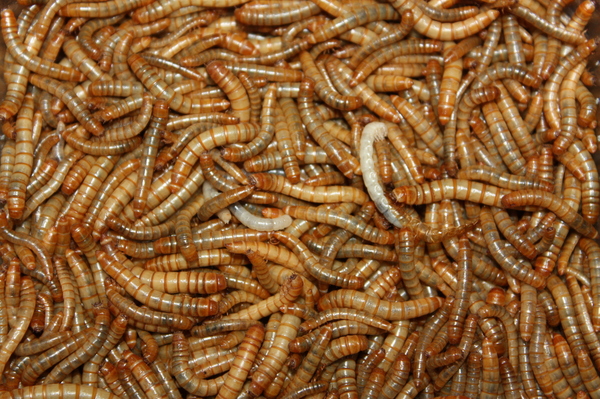
Expanded polystyrene (EPS) is a plastic used to make food containers and packing materials that poses a threat to the environment. Mealworms can degrade EPS, but at a slow rate. Here, researchers assessed the impact of food waste compost and oats on the speed of EPS consumption by mealworms, superworms, and waxworms. A positive correlation was found between food waste compost supplementation and EPS consumption, especially by mealworms, indicating a potential industrial application.

Read More...

The Development and Maximization of a Novel Photosynthetic Microbial Fuel Cell Using Rhodospirillum rubrum

Gomez et al. | Mar 02, 2014

The Development and Maximization of a Novel Photosynthetic Microbial Fuel Cell Using <em>Rhodospirillum rubrum</em>

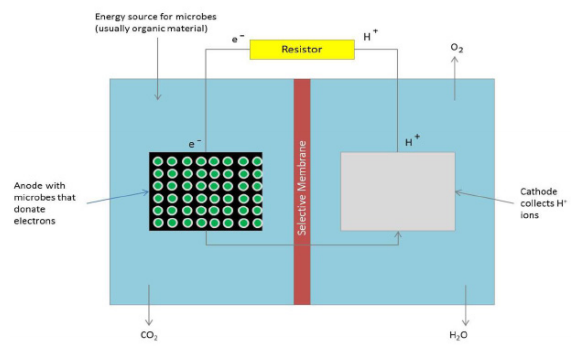
Microbial fuel cells (MFCs) are bio-electrochemical systems that utilize bacteria and are promising forms of alternative energy. Similar to chemical fuel cells, MFCs employ both an anode (accepts electrons) and a cathode (donates electrons), but in these devices the live bacteria donate the electrons necessary for current. In this study, the authors assess the functionality of a photosynthetic MFC that utilizes a purple non-sulfur bacterium. The MFC prototype they constructed was found to function over a range of environmental conditions, suggesting its potential use in industrial models.

Read More...

The impact of greenhouse gases, regions, and sectors on future temperature anomaly with the FaIR model

Kosaraju et al. | Jul 29, 2024

The impact of greenhouse gases, regions, and sectors on future temperature anomaly with the FaIR model

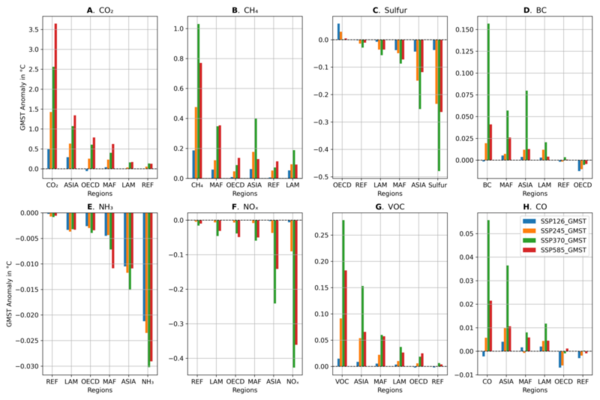
This study explores how different economic sectors, geographic regions, and greenhouse gas types might affect future global mean surface temperature (GMST) anomalies differently from historical patterns. Using the Finite Amplitude Impulse Response (FaIR) model and four Shared Socioeconomic Pathways (SSPs) — SSP126, SSP245, SSP370, and SSP585 — the research reveals that future contributions to GMST anomalies.

Read More...

Effects of Ocean Acidification on the Photosynthetic Ability of Chaetoceros gracilis in the Monterey Bay

Harvell et al. | Jan 16, 2020

Effects of Ocean Acidification on the Photosynthetic Ability of <i>Chaetoceros gracilis</i> in the Monterey Bay

In this article, Harvell and Nicholson hypothesized that increased ocean acidity would decrease the photosynthetic ability of Chaetoceros gracilis, a diatom prolific in Monterey Bay, because of the usually corrosive effects of carbonic acid on both seashells and cells’ internal structures. They altered pH of algae environments and measured the photosynthetic ability of diatoms over four days by spectrophotometer. Overall, their findings indicate that C. gracilis may become more abundant in Monterey Bay as the pH of the ocean continues to drop, potentially contributing to harmful algal blooms.

Read More...

A model for angle evolution in conical piles formed using the fixed funnel method

Capaldi et al. | Jul 20, 2026

A model for angle evolution in conical piles formed using the fixed funnel method

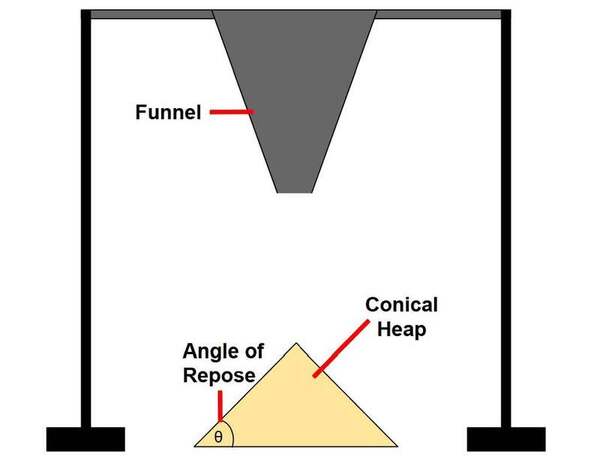
When granular materials are poured onto a surface, they form conical piles whose slopes increase before reaching a stable angle of repose. We found that this angle evolution follows a previously unrecognized two-phase exponential growth pattern that is conserved across granular materials with diverse particle properties. The parameters of this model correlate with particle friction and are influenced by deposition conditions, providing a quantitative framework for describing pile formation.

Read More...