Browse Articles

Machine learning on crowd-sourced data to highlight coral disease

Narayan et al. | Jul 26, 2021

Machine learning on crowd-sourced data to highlight coral disease

Triggered largely by the warming and pollution of oceans, corals are experiencing bleaching and a variety of diseases caused by the spread of bacteria, fungi, and viruses. Identification of bleached/diseased corals enables implementation of measures to halt or retard disease. Benthic cover analysis, a standard metric used in large databases to assess live coral cover, as a standalone measure of reef health is insufficient for identification of coral bleaching/disease. Proposed herein is a solution that couples machine learning with crowd-sourced data – images from government archives, citizen science projects, and personal images collected by tourists – to build a model capable of identifying healthy, bleached, and/or diseased coral.

Read More...

The effect of the consumption of the probiotic B. infantis on ethanol withdrawal symptoms in planaria (Dugesia dorotocephala)

McCandless et al. | Mar 16, 2021

The effect of the consumption of the probiotic B. infantis on ethanol withdrawal symptoms in planaria (Dugesia dorotocephala)

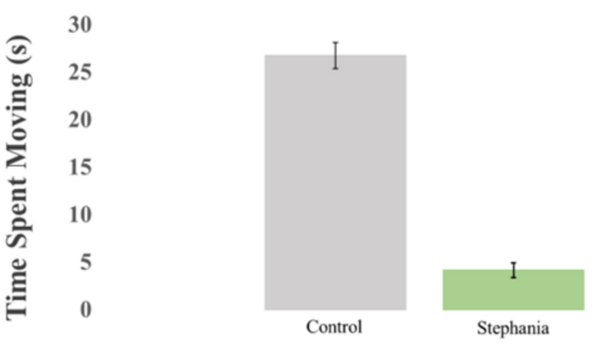
Alcohol use disorder is a chronic, relapsing disease that affects millions of Americans every day. There are limited treatment options for alcohol dependence and alcohol withdrawal symptoms, including depression and anxiety. Previous studies have shown that probiotics can decrease depression in rodents during maternal separation and anxiety in humans. Therefore, we hypothesized that the ethanol-withdrawn planaria who consumed probiotics would have decreased withdrawal symptoms as measured by increased motility compared to the ethanol-withdrawn planaria that were not fed probiotics. The ethanol-withdrawn planaria had a statistically significant decrease in motility compared to the control group, while the planaria that consumed probiotics had no statistically significant change in motility compared to the control group.

Read More...

The Protective Antioxidant Effects of Sulforaphane on Germinating Radish Seeds Treated with Hydrogen Peroxide

Dasuri et al. | Feb 19, 2021

The Protective Antioxidant Effects of Sulforaphane on Germinating Radish Seeds Treated with Hydrogen Peroxide

Free radical chain reactions result when atoms containing unpaired electrons bind with biomolecules and alter their biological functions, contributing to the progression of diseases such as atherosclerosis, cancer, and diabetes. Antioxidants, such as vitamin E and sulforaphane, are effective neutralizers of free radicals and prevent cellular damage. This present study is conducted to determine the relative effectiveness of sulforaphane against free radicals generated by hydrogen peroxide (H2O2) compared with the known antioxidant vitamin E.

Read More...

The effects of stress on the bacterial community associated with the sea anemone Diadumene lineata

Cahill et al. | Feb 15, 2021

The effects of stress on the bacterial community associated with the sea anemone Diadumene lineata

In healthy ecosystems, organisms interact in a relationship that helps maintain one another's existence. Stress can disrupt this interaction, compromising the survival of some of the members of such relationships. Here, the authors investigate the effect of stress on the interaction between anemones and their microbiome. Their study suggests that stress changes the composition of the surface microbiome of the anemone D. lineata, which is accompanied by an increase in mucus secretion. Future research into the composition of this stress-induced mucus might reveal useful antimicrobial properties.

Read More...

Computational Structure-Activity Relationship (SAR) of Berberine Analogs in Double-Stranded and G-Quadruplex DNA Binding Reveals Both Position and Target Dependence

Sun et al. | Dec 18, 2020

Computational Structure-Activity Relationship (SAR) of Berberine Analogs in Double-Stranded and G-Quadruplex DNA Binding Reveals Both Position and Target Dependence

Berberine, a natural product alkaloid, and its analogs have a wide range of medicinal properties, including antibacterial and anticancer effects. Here, the authors explored a library of alkyl or aryl berberine analogs to probe binding to double-stranded and G-quadruplex DNA. They determined that the nature of the substituent, the position of the substituent, and the nucleic acid target affect the free energy of binding of berberine analogs to DNA and G-quadruplex DNA, however berberine analogs did not result in net stabilization of G-quadruplex DNA.

Read More...

Testing the Effects of Resveratrol, Apigenin, and Glucosamine to Effectively Reduce Prostate Cancer Cell Proliferation, Migration Levels, and Increase Apoptosis

Yang et al. | Apr 16, 2020

Testing the Effects of Resveratrol, Apigenin, and Glucosamine to Effectively Reduce Prostate Cancer Cell Proliferation, Migration Levels, and Increase Apoptosis

The current five-year survival rate of metastasized prostate cancer is only 30% and occurs in every one in nine men. Researchers have shown that people with a type of dwarfism called Laron’s Syndrome are immune to cancer due to their low levels of insulin-like growth factor-1 (IGF-1). For this reason, experimentally modifying the level of IGF-1 could provide better insight into whether lowering the levels of IGF-1 in prostate cancer cell lines (e.g. PC-3) could be an effective treatment to reduce their rates of proliferation and migration and increase apoptosis. We selected three compounds, which researchers have shown decrease IGF-1 levels, to test and combine to determine which is the most promising.

Read More...