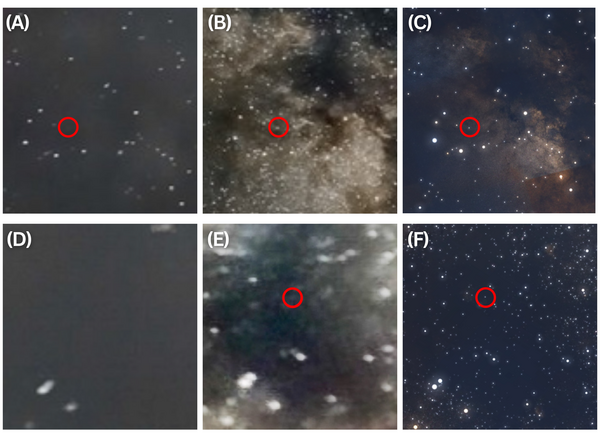
The authors investigated the impact of light pollution on astrophotography.
Read More...The impact of light pollution on astrophotography and visual astronomy in varying environments
Predicting the spread speed of red imported fire ants under different temperature conditions in China
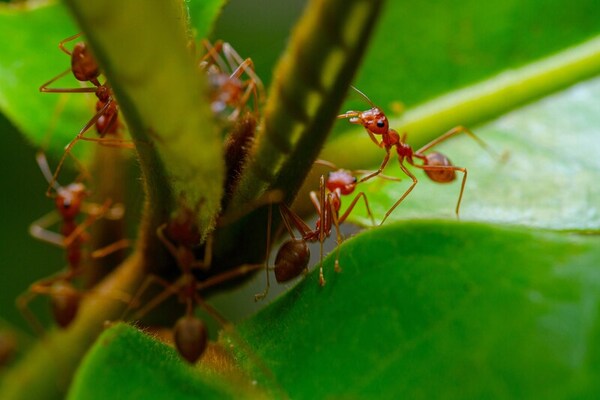
The authors looked at non-natural factors that influenced the spread rate of fire ants in multiple cities in China.
Read More...Investigating intertidal sediment sorting and median particle diameter variation on an eroding beach face
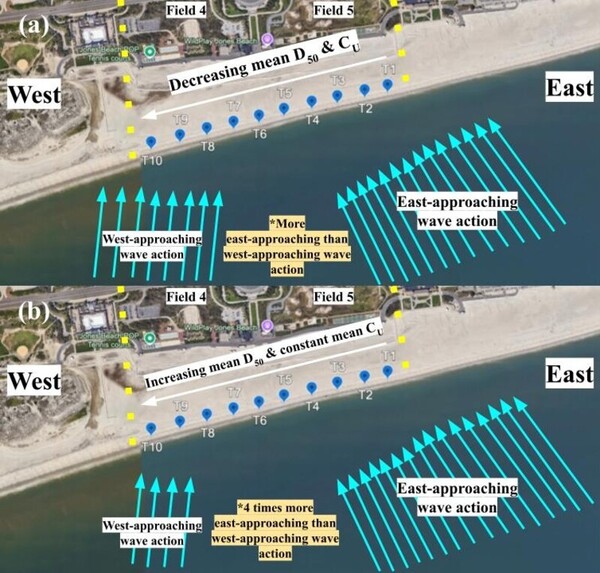
The authors looked at beach nourishment (a way to combat erosion on coasts) and resulting grain size distribution. Their work is important to understand the dynamics of erosion and it's relation to wave action and the implications this has for efforts to mitigate coastal erosion.
Read More...Nature’s reset: The effect of native and invasive plant forage on honey bee nutrition and survival
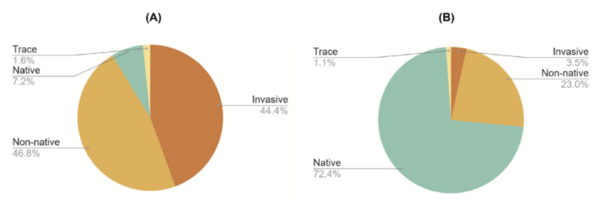
The authors looked at survival of honey bees over the winter in regards to native and invasive plant availability. They found that native plants provided greater survivability and overall health compared to environments where there was an abundance of invasive plants.
Read More...The Effect of Anubias barteri Plant Species on Limiting Freshwater Acidification
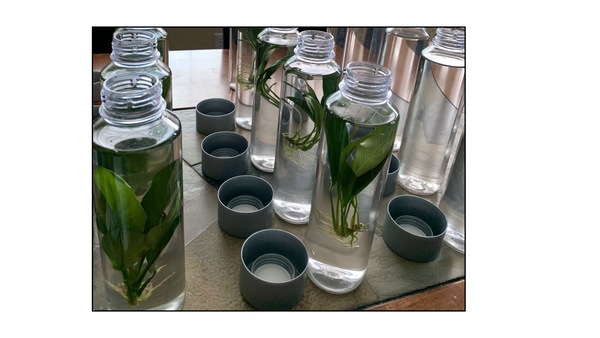
Research relating to freshwater acidification is minimal, so the impact of aquatic plants, Anubias barteri var. congensis and Anubias barteri var. nana, on minimizing changes in pH was explored in an ecosystem in Northern California. Creek water samples, with and without the aquatic plants, were exposed to dry ice to simulate carbon emissions and the pH was monitored over an eight-hour period. There was a 25% difference in the observed pH based on molar hydrogen ion concentration between the water samples with plants and those without plants, suggesting that aquatic plants have the potential to limit acidification to some extent. These findings can guide future research to explore the viable partial solution of aquatic plants in combating freshwater acidification.
Read More...The Effects of Post-Consumer Waste Polystyrene on the Rate of Mealworm Consumption
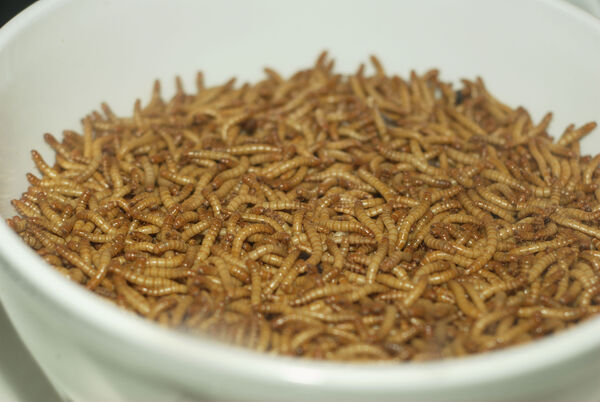
In a world where plastic waste accumulation is threatening both land and sea life, Green et al. investigate the ability of mealworms to breakdown polystyrene, a non-recyclable form of petrochemical-based polymer we use in our daily lives. They confirm that these organisms, can degrade various forms of polystyrene, even after it has been put to use in our daily lives. Although the efficiency of the degradation process still requires improvement, the good news is, the worms are tiny and themselves are biodegradable, so we can use plenty of them without worrying about space and how to get rid of them. This is very promising and certainly good news for the planet.
Read More...The effect of nanosilver particles on the lifespan of Daphnia magna in pond water
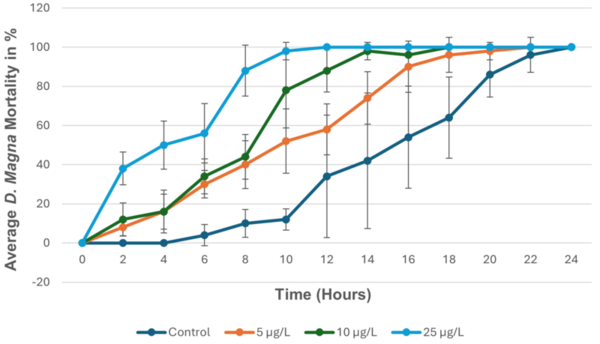
The authors looked at how nanosilver particles may negatively impact the pond water environment. They used D. magna as an indicator species to look at the impact of different concentrations of nanosilver particles.
Read More...Synthesis of sodium alginate composite bioplastic films
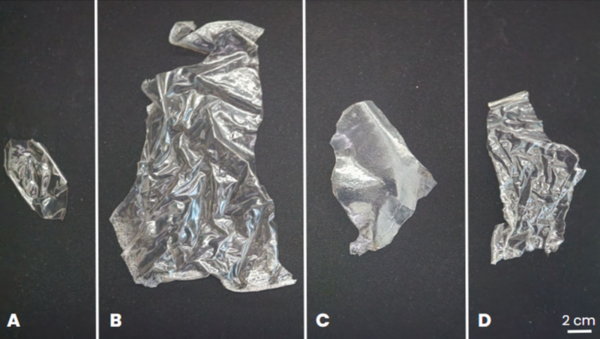
The authors looked at the development of biodegradable bioplastic and its features compared to PET packaging films. They were able to develop a biodegradable plastic with sodium alginate that dissolved in water and degrade in microbial conditions while also being transparent and flexible similar to current plastic films.
Read More...Effects of polyethylene microplastics on the growth of Arabidopsis thaliana & Phaseolus vulgaris and their soil
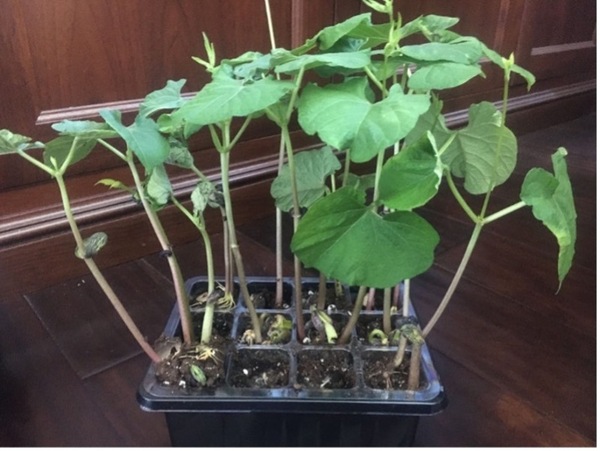
In this study, the authors investigate whether microplastics affect terrestrial plant growth and soil quality.
Read More...Impacts of COVID-19 on daily water use: Have people started using more water?
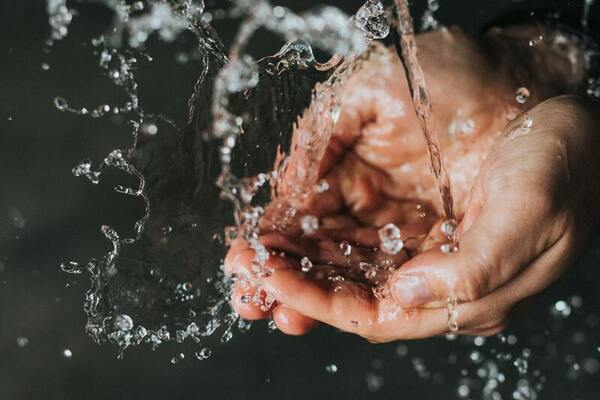
In this study, the authors investigated whether water usage changed in São Paulo during the COVID-19 quarantine and explored reasons why.
Read More...