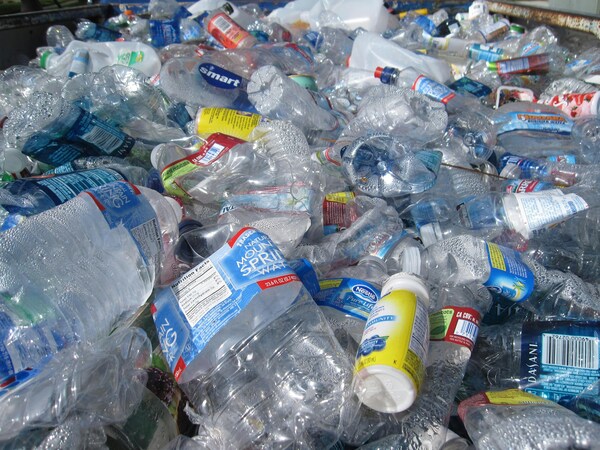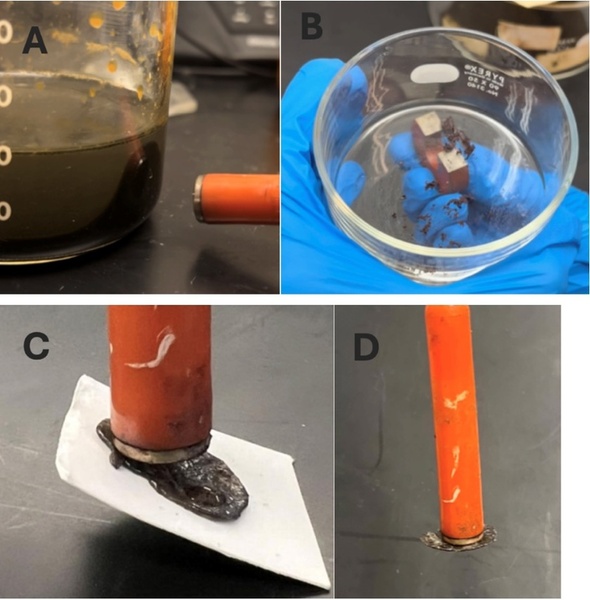
Investigation of the potential of waxworm saliva, the secretion of Galleria mellonella, for plastic degradation.
Read More...Browse Articles
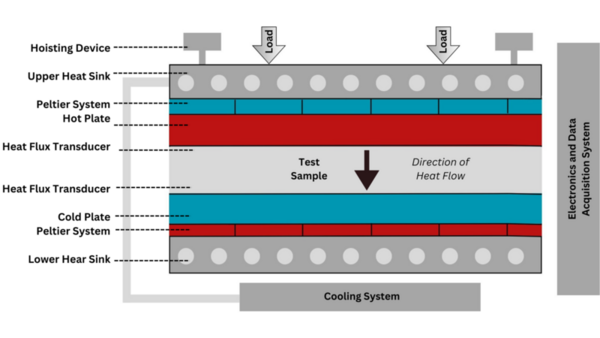
Investigating sustainable insulation materials: Analysis of biofoams and petroleum-derived foams
The authors looked into eco-friendly alternatives for insulating material. They ultimately found that a polyurethane derived from eggshells was an effective insulator and further research into it is warranted.
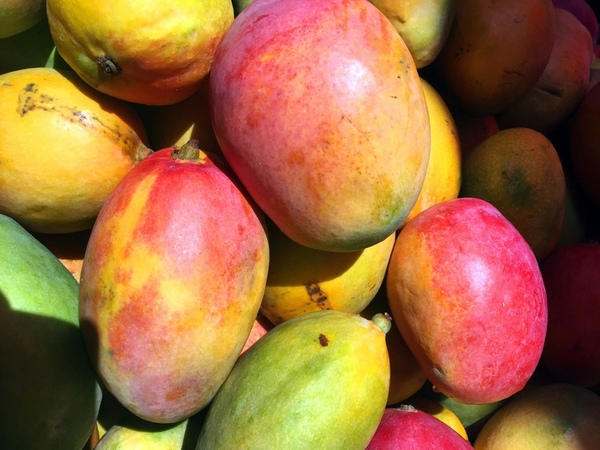
Read More...Development of novel biodegradable bioplastics for packaging film using mango peels
Here the authors explored the development of biodegradable bioplastic films derived from mango peels as a sustainable solution to plastic pollution and greenhouse gas emissions from fruit waste. They optimized the film's mechanical properties and water resistance through adjusting processing conditions and incorporating plasticizers and a hydrophobic coating, ultimately demonstrating its potential as a bacteriostatic and biodegradable alternative to conventional plastic food wrap.
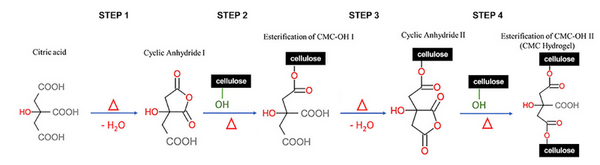
Read More...Utilizing sorbitol to improve properties of cellulose-based biodegradable hydrogels
Hydrogels are commonly used in medicine, pharmaceuticals, and agriculture. Hydrogels absorb water by swelling and re-release this water by diffusion. This study sought to synthesize a biodegradable, cellulose-based hydrogel that is more effective at absorbing and re-releasing water than those produced by current methods. We tested the compressive strength of both the dry and swollen gels and the tensile strength of the swollen gels to elucidate the gel structure.
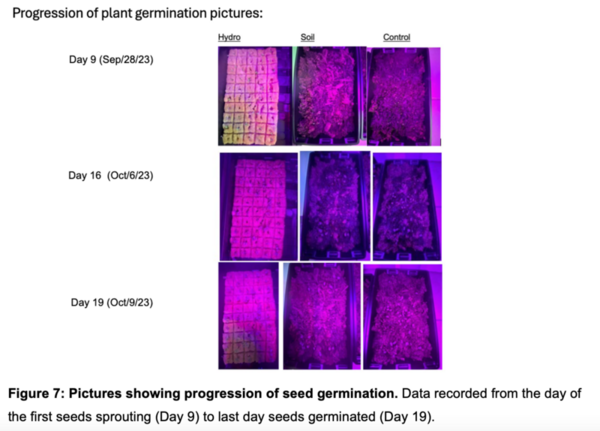
Read More...An exploration of western mosquitofish as the animal component in an aquaponic farming system
Aquaponics (the combination of aquatic plant farming with fish production) is an innovative farming practice, but the fish that are typically used, like tilapia, are expensive and space-consuming to cultivate. Medina and Alvarez explore other options test if mosquitofish are a viable option in the aquaponic cultivation of herbs and microgreens.
Read More...Lactic acid bacteria protect the growth of Solanum lycopersicum from Sodium dodecyl sulfate
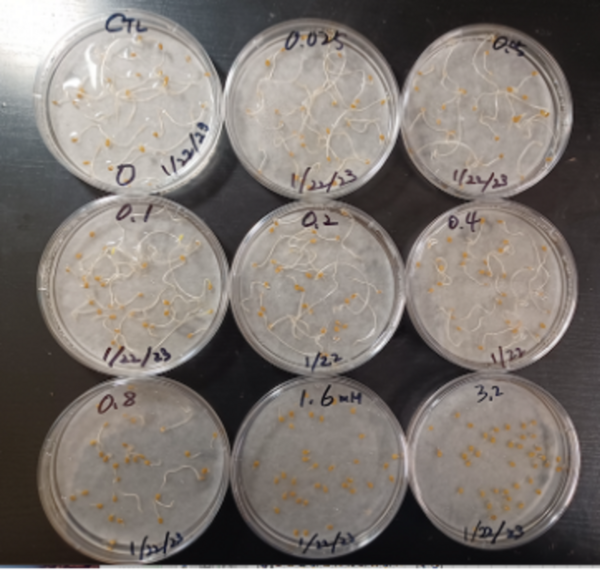
Sodium dodecyl sulfate (SDS), a detergent component, can harm plant growth when it contaminates soil and waterways. Authors explored the potential of lactic acid bacteria (LAB) to mitigate SDS-induced stress on plants.
Read More...Slowing ice melting from thermal radiation using sustainable, eco-friendly eggshells
The authors looked at the ability of eggshells to slow ice melting. They found that eggshells were able to increase ice melting time when crushed showing that they were an effective thermal barrier.
Read More...The impact of greenhouse gases, regions, and sectors on future temperature anomaly with the FaIR model
This study explores how different economic sectors, geographic regions, and greenhouse gas types might affect future global mean surface temperature (GMST) anomalies differently from historical patterns. Using the Finite Amplitude Impulse Response (FaIR) model and four Shared Socioeconomic Pathways (SSPs) — SSP126, SSP245, SSP370, and SSP585 — the research reveals that future contributions to GMST anomalies.
Read More...Investigating ecosystem resiliency in different flood zones of south Brooklyn, New York
With climate change and rising sea levels, south Brooklyn is exposed to massive flooding and intense precipitation. Previous research discovered that flooding shifts plant species distribution, decreases soil pH, and increases salt concentration, nitrogen, phosphorus, and potassium levels. The authors predicted a decreasing trend from Zone 1 to 6: high-pH, high-salt, and high-nutrients in more flood-prone areas to low-pH, low-salt, and low-nutrient in less flood-prone regions. They performed DNA barcoding to identify plant species inhabiting flood zones with expectations of decreasing salt tolerance and moisture uptake by plants' soil from Zones 1-6. Furthermore, they predicted an increase in invasive species, ultimately resulting in a decrease in biodiversity. After barcoding, they researched existing information regarding invasiveness, ideal soil, pH tolerance, and salt tolerance. They performed soil analyses to identify pH, nitrogen (N), phosphorus (P), and potassium (K) levels. For N and P levels, we discovered a general decreasing trend from Zone 1 to 6 with low and moderate statistical significance respectively. Previous studies found that soil moisture can increase N and P uptake, helping plants adopt efficient resource-use strategies and reduce water stress from flooding. Although characteristics of plants were distributed throughout all zones, demonstrating overall diversity, the soil analyses hinted at the possibility of a rising trend of plants adapting to the increase in flooding. Future expansive research is needed to comprehensively map these trends. Ultimately, investigating trends between flood zones and the prevalence of different species will assist in guiding solutions to weathering climate change and protecting biodiversity in Brooklyn.
Read More...A comparison of the water quality between Chinatown and Bayside: two demographically different regions
The authors looked at differences in water quality between Chinatown and Bayside. They wanted to look at the racial and economic demographics of each region and how that correlated to access to clean drinking water. Ultimately they did not find any significant differences in water quality, but identified important future directions for this work.
Read More...