Browse Articles

Antibacterial properties of household spices and toothpaste against oral bacteria

Toliver et al. | Apr 24, 2023

Antibacterial properties of household spices and toothpaste against oral bacteria

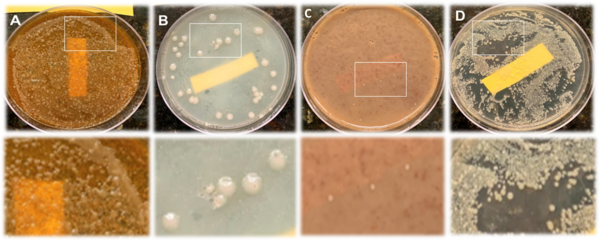
Bacteria cause tooth decay, plaque, bad breath, and other diseases. Despite being cleaned with water and toothpaste, oral bacteria live on our toothbrushes. Bacterial growth has been shown to be inhibited by different toothpastes and common household spices. This study tested how different toothpastes and common household spices, including cinnamon, cumin, nutmeg, and ground white pepper, can inhibit bacteria from growing on toothbrushes

Read More...

A Crossover Study Comparing the Effect of a Processed vs. Unprocessed Diet on the Spatial Learning Ability of Zebrafish

Banga et al. | Sep 18, 2022

A Crossover Study Comparing the Effect of a Processed vs. Unprocessed Diet on the Spatial Learning Ability of Zebrafish

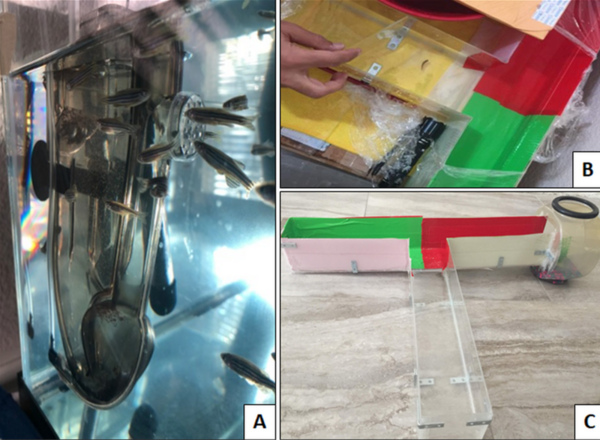
The authors compared the short-term effects of processed versus unprocessed food on spatial learning and survival in zebrafish, given the large public concern regarding processed foods. By randomly assigning zebrafish to a diet of brine shrimp flakes (processed) or live brine shrimp (unprocessed), the authors show while there is no immediate effect on a fish's decision process between the two diets, there are significant correlations between improved learning and stress response with the unprocessed diet.

Read More...

Sri Lankan Americans’ views on U.S. racial issues are influenced by pre-migrant ethnic prejudice and identity

Gunawardena et al. | Apr 18, 2022

Sri Lankan Americans’ views on U.S. racial issues are influenced by pre-migrant ethnic prejudice and identity

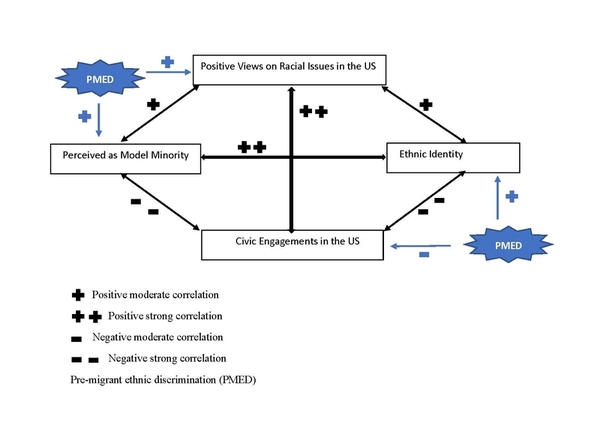
In this study, the authors examined how Sri Lankan Americans (SLAs) view racial issues in the U.S. The main hypothesis is that SLAs, as a minority in the U.S., are supportive of the Black Lives Matter movement and its political goal, challenging the common notion that SLAs are anti-Black. The study found that a majority of SLAs believe the U.S. has systemic racism, favor BLM, and favor affirmative action. IT also found that Tamil SLAs have more favorable views of BLM and affirmative action than Sinhalese SLAs.

Read More...

The Perks of Watching a Movie: How the Portrayal of Anxiety and Depression in Film Affects Teenagers’ Perception of Anxiety and Depressive Disorders

Wolcott et al. | Sep 11, 2021

The Perks of Watching a Movie: How the Portrayal of Anxiety and Depression in Film Affects Teenagers’ Perception of Anxiety and Depressive Disorders

In film, anxiety and depressive disorders are often depicted inaccurately. When viewers are exposed to these inaccurate portrayals, they collect misinformation about the disorders, as well as people who live with them, leading to stigma. This study used a mixed-method descriptive approach to analyze 16 teenagers’ attitudes towards people with anxiety and depression. Results found that while participants understood how these portrayals create stigma, they did not attribute this to misinformation. These results can be used to help both the film industry and the movie-going public better understand the effects of inaccurate storytelling and the extent to which it informs public perception

Read More...

The Effects of Post-Consumer Waste Polystyrene on the Rate of Mealworm Consumption

Green et al. | Nov 29, 2018

The Effects of Post-Consumer Waste Polystyrene on the Rate of Mealworm Consumption

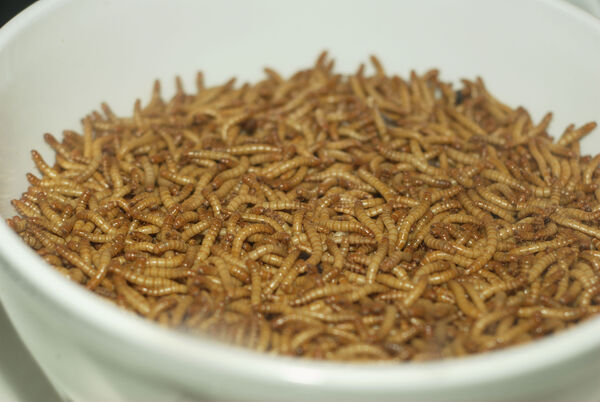
In a world where plastic waste accumulation is threatening both land and sea life, Green et al. investigate the ability of mealworms to breakdown polystyrene, a non-recyclable form of petrochemical-based polymer we use in our daily lives. They confirm that these organisms, can degrade various forms of polystyrene, even after it has been put to use in our daily lives. Although the efficiency of the degradation process still requires improvement, the good news is, the worms are tiny and themselves are biodegradable, so we can use plenty of them without worrying about space and how to get rid of them. This is very promising and certainly good news for the planet.

Read More...

Simulations of Cheetah Roaming Demonstrate the Effect of Safety Corridors on Genetic Diversity and Human-Cheetah Conflict

Acton et al. | Apr 02, 2018

Simulations of Cheetah Roaming Demonstrate the Effect of Safety Corridors on Genetic Diversity and Human-Cheetah Conflict

Ecological corridors are geographic features designated to allow the movement of wildlife populations between habitats that have been fragmented by human landscapes. Corridors can be a pivotal aspect in wildlife conservation because they preserve a suitable habitat for isolated populations to live and intermingle. Here, two students simulate the effect of introducing a safety corridor for cheetahs, based on real tracking data on cheetahs in Namibia.

Read More...

The Development and Maximization of a Novel Photosynthetic Microbial Fuel Cell Using Rhodospirillum rubrum

Gomez et al. | Mar 02, 2014

The Development and Maximization of a Novel Photosynthetic Microbial Fuel Cell Using <em>Rhodospirillum rubrum</em>

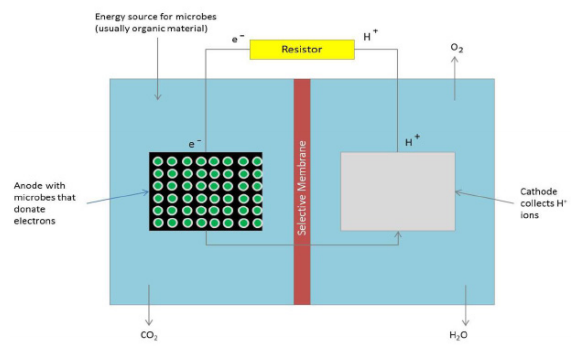
Microbial fuel cells (MFCs) are bio-electrochemical systems that utilize bacteria and are promising forms of alternative energy. Similar to chemical fuel cells, MFCs employ both an anode (accepts electrons) and a cathode (donates electrons), but in these devices the live bacteria donate the electrons necessary for current. In this study, the authors assess the functionality of a photosynthetic MFC that utilizes a purple non-sulfur bacterium. The MFC prototype they constructed was found to function over a range of environmental conditions, suggesting its potential use in industrial models.

Read More...

Interaction of light with water under clear and algal bloom conditions

Ramesh et al. | Feb 01, 2024

Interaction of light with water under clear and algal bloom conditions
Image credit: Liz Harrell

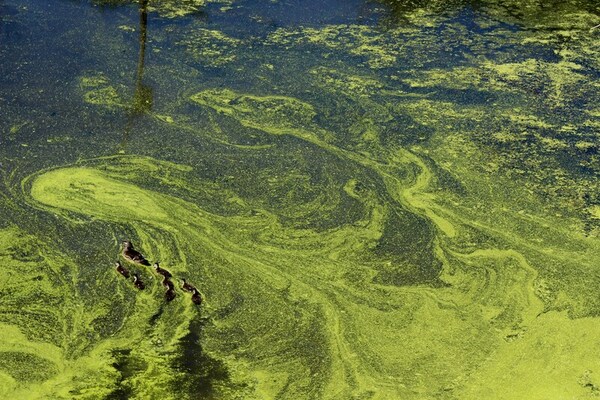
Here, recognizing the potential harmful effects of algal blooms, the authors used satellite images to detect algal blooms in water bodies in Wyoming based on their reflectance of near infrared light. They found that remote monitoring in this way may provide a useful tool in providing early warning and advisories to people who may live in close proximity.

Read More...

The effects of algaecides on Spirulina major and non-target organism Daphnia magna

Halepete et al. | Oct 09, 2023

The effects of algaecides on <i>Spirulina major</i> and non-target organism <i>Daphnia magna</i>
Image credit: The authors

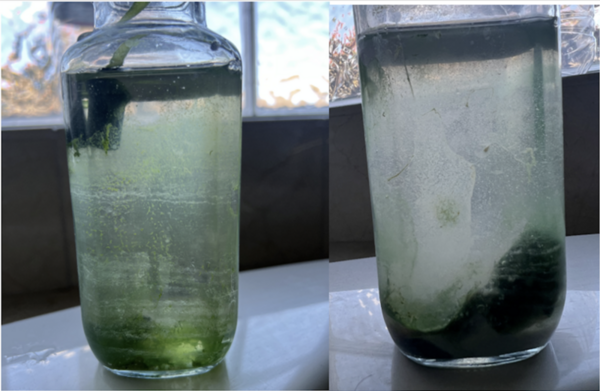
Algal blooms pose a threat to ecosystems, but the methods used to combat these blooms might harm more than just the algae. Halepete, Graham, and Lowe-Schmahl demonstrate negative effects of anti-algae treatments on a cyanobacterium (Spirulina major), and the water fleas (Daphnia magna) that live alongside these cyanobacteria.

Read More...

A machine learning approach for abstraction and reasoning problems without large amounts of data

Isik et al. | Jun 25, 2022

A machine learning approach for abstraction and reasoning problems without large amounts of data

While remarkable in its ability to mirror human cognition, machine learning and its associated algorithms often require extensive data to prove effective in completing tasks. However, data is not always plentiful, with unpredictable events occurring throughout our daily lives that require flexibility by artificial intelligence utilized in technology such as personal assistants and self-driving vehicles. Driven by the need for AI to complete tasks without extensive training, the researchers in this article use fluid intelligence assessments to develop an algorithm capable of generalization and abstraction. By forgoing prioritization on skill-based training, this article demonstrates the potential of focusing on a more generalized cognitive ability for artificial intelligence, proving more flexible and thus human-like in solving unique tasks than skill-focused algorithms.

Read More...