Browse Articles

In silico modeling of emodin’s interactions with serine/threonine kinases and chitosan derivatives

Suresh et al. | Jan 10, 2022

<i>In silico</i> modeling of emodin’s interactions with serine/threonine kinases and chitosan derivatives

Here, through protein-ligand docking, the authors investigated the effect of the interaction of emodin with serine/threonine kinases, a subclass of kinases that is overexpressed in many cancers, which is implicated in phosphorylation cascades. Through molecular dynamics theyfound that emodin forms favorable interactions with chitosan and chitosan PEG (polyethylene glycol) copolymers, which could aid in loading drugs into nanoparticles (NPs) for targeted delivery to cancerous tissue. Both polymers demonstrated reasonable entrapment efficiencies, which encourages experimental exploration of emodin through targeted drug delivery vehicles and their anticancer activity.

Read More...
Comparative study on three machine learning models in novel autonomous drone-based detection of invasive plant Brassica nigra

Ho et al. | Jul 05, 2026

Comparative study on three machine learning models in novel autonomous drone-based detection of invasive plant <em>Brassica nigra</em>

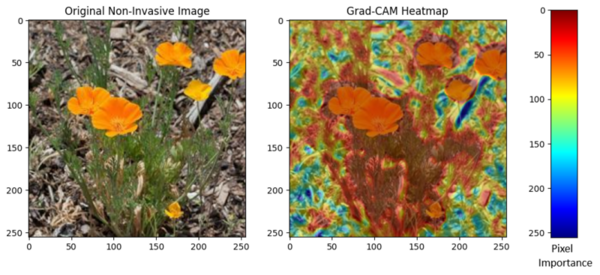
Autonomous drone imaging combined with machine learning offers a promising approach for early detection of invasive species. In this study, students built an autonomous drone and compared three models: CNN, SGDC, and XGBoost, to identify Brassica nigra from aerial footage. Their results show that CNNs most effectively recognize key visual features, demonstrating strong potential for supporting conservation and invasive plant management.

Read More...

Determining viability of image processing models for forensic analysis of hair for related individuals

Wang et al. | Feb 04, 2025

Determining viability of image processing models for forensic analysis of hair for related individuals
Image credit: Taylor Smith

Here, the authors used machine learning to analyze microscopic images of hair, quantifying various features to distinguish individuals, even within families where traditional DNA analysis is limited. The Discriminant Analysis (DA) model achieved the highest accuracy (88.89%) in identifying individuals, demonstrating its potential to improve the reliability of hair evidence in forensic investigations.

Read More...

Monitoring drought using explainable statistical machine learning models

Cheung et al. | Oct 28, 2024

Monitoring drought using explainable statistical machine learning models

Droughts have a wide range of effects, from ecosystems failing and crops dying, to increased illness and decreased water quality. Drought prediction is important because it can help communities, businesses, and governments plan and prepare for these detrimental effects. This study predicts drought conditions by using predictable weather patterns in machine learning models.

Read More...

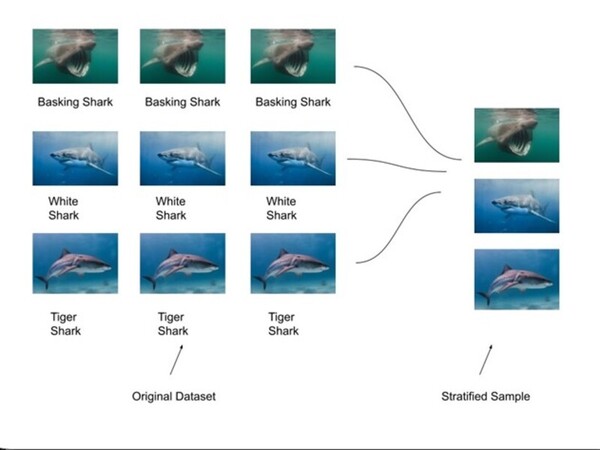
Identifying shark species using an AlexNet CNN model

Sarwal et al. | Sep 23, 2024

Identifying shark species using an AlexNet CNN model

The challenge of accurately identifying shark species is crucial for biodiversity monitoring but is often hindered by time-consuming and labor-intensive manual methods. To address this, SharkNet, a CNN model based on AlexNet, achieved 93% accuracy in classifying shark species using a limited dataset of 1,400 images across 14 species. SharkNet offers a more efficient and reliable solution for marine biologists and conservationists in species identification and environmental monitoring.

Read More...