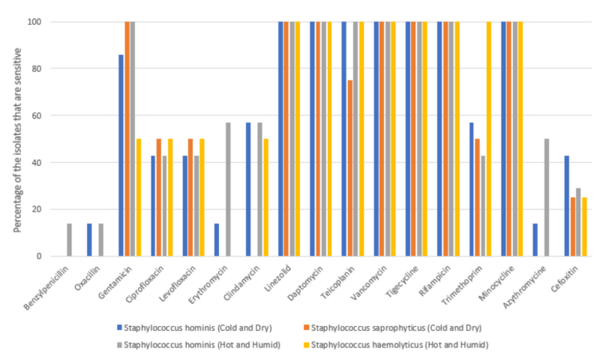
The authors looked how different working conditions impacted the microbiome of the human skin.
Read More...Effect of environmental factors on bacterial flora of normal human skin
The authors looked how different working conditions impacted the microbiome of the human skin.
Read More...Examination of the underlying chemical physics of the Mpemba effect in water and other liquids
Counterintuitive in nature, the Mpemba effect asserts that hot liquid freezes faster than cold liquid. While noted throughout history by scientific minds like Aristotle, the phenomenon remains in contention with varying hypotheses for the effect proposed alongside the effect’s rise in popularity. Contributing to the research efforts surrounding the Mpemba effect, the authors in this article explore the effect in different liquids ranging in physical properties and intermolecular forces to determine potential parameters attributable to producing the Mpemba effect.
Read More...Slowing ice melting from thermal radiation using sustainable, eco-friendly eggshells
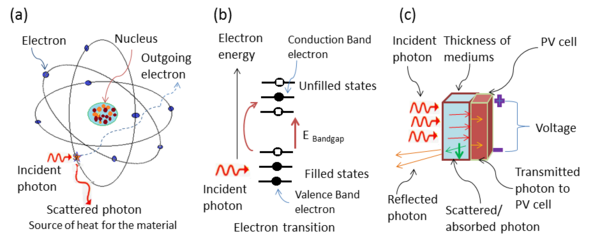
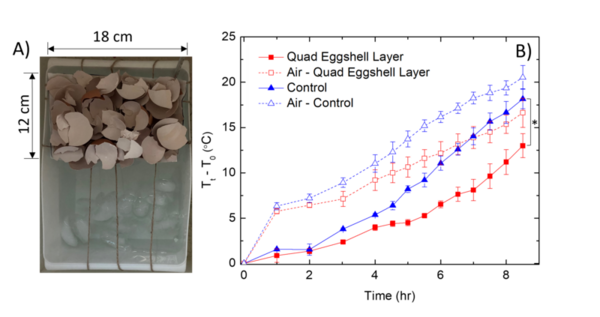
The authors looked at the ability of eggshells to slow ice melting. They found that eggshells were able to increase ice melting time when crushed showing that they were an effective thermal barrier.
Read More...Thermoelectric cooling in greenhouses: Implications for small-holder production
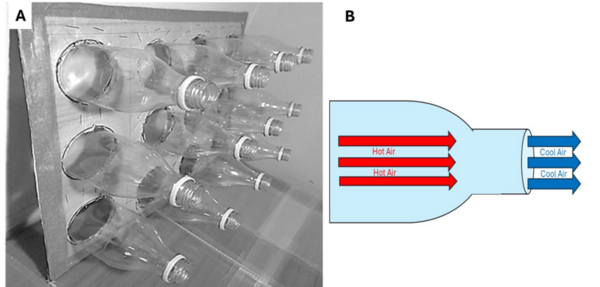
The authors set to test a system that would help with the dehumidification and overall management of greehouses.
Read More...Modelling effects of alkylamines on sea salt aerosols using the Extended Aerosols and Inorganics Model
With monitoring of climate change and the evolving properties of the atmosphere more critical than ever, the authors of this study take sea salt aerosols into consideration. These sea salt aerosols, sourced from the bubbles found at the surface of the sea, serve as cloud condensation nuclei (CCN) and are effective for the formation of clouds, light scattering in the atmosphere, and cooling of the climate. With amines being involved in the process of CCN formation, the authors explore the effects of alkylamines on the properties of sea salt aerosols and their potential relevance to climate change.
Read More...Variation, relationship, and trade-offs of leaf traits in large and small deciduous broadleaf tree species
The authors access a panel of leaf traits across ten deciduous tree species to explore adaptive strategies between large and small trees.
Read More...Monitoring drought using explainable statistical machine learning models
Droughts have a wide range of effects, from ecosystems failing and crops dying, to increased illness and decreased water quality. Drought prediction is important because it can help communities, businesses, and governments plan and prepare for these detrimental effects. This study predicts drought conditions by using predictable weather patterns in machine learning models.
Read More...Creating a drought prediction model using convolutional neural networks
Droughts kill over 45,000 people yearly and affect the livelihoods of 55 million others worldwide, with climate change likely to worsen these effects. However, unlike other natural disasters (hurricanes, etc.), there is no early detection system that can predict droughts far enough in advance to be useful. Bora, Caulkins, and Joycutty tackle this issue by creating a drought prediction model.
Read More...Contribution of environmental factors to genetic variation in the Pacific white-sided dolphin
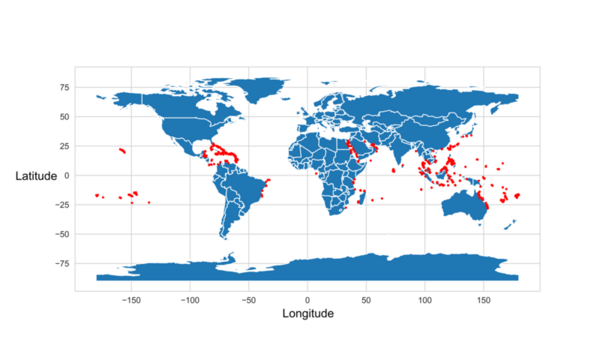
Here the authors sought to understand the effects of different variables that may be tied to pollution and climate change on genetic variation of Pacific white-sided dolphins, a species that is currently threatened by water pollution. Based on environmental data collected alongside a genetic distance matrix, they found that ocean currents had the most significant impact on the genetic diversity of Pacific white-sided dolphins along the Japanese coast.
Read More...Defying chemical tagging: inhomogeneities in the wide binary system HIP 34407/HIP 34426
This assessed the hypothesis that stars in wide binary systems are chemically homogeneous because of their shared origin. Abundances of the HIP 34407/HIP 34426 binary were obtained by analyzing high-resolution spectra of the system. Discrepancies found in the system’s elemental abundances might be an indicator of the presence of rocky planets around this star. Thus, the differences found in chemical composition might demonstrate limitations in the assumptions of chemical tagging.
Read More...