Browse Articles

Hybrid Quantum-Classical Generative Adversarial Network for synthesizing chemically feasible molecules

Sikdar et al. | Jan 10, 2023

Hybrid Quantum-Classical Generative Adversarial Network for synthesizing chemically feasible molecules

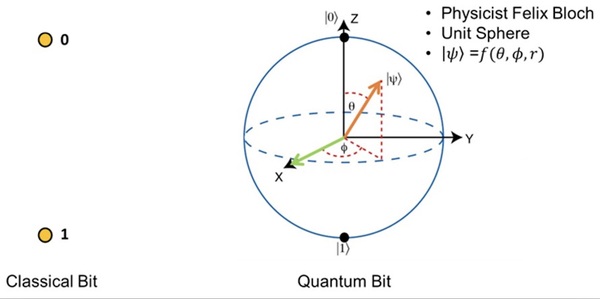
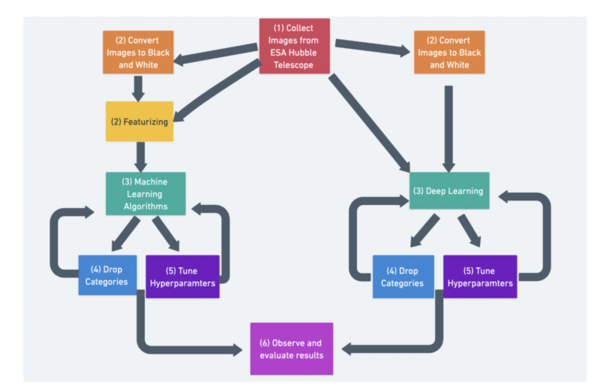
Current drug discovery processes can cost billions of dollars and usually take five to ten years. People have been researching and implementing various computational approaches to search for molecules and compounds from the chemical space, which can be on the order of 1060 molecules. One solution involves deep generative models, which are artificial intelligence models that learn from nonlinear data by modeling the probability distribution of chemical structures and creating similar data points from the trends it identifies. Aiming for faster runtime and greater robustness when analyzing high-dimensional data, we designed and implemented a Hybrid Quantum-Classical Generative Adversarial Network (QGAN) to synthesize molecules.

Read More...

Spectrophotometric comparison of 4-Nitrophenyl carbonates & carbamates as base-labile protecting groups

Kocalar et al. | Dec 12, 2022

Spectrophotometric comparison of 4-Nitrophenyl carbonates & carbamates as base-labile protecting groups

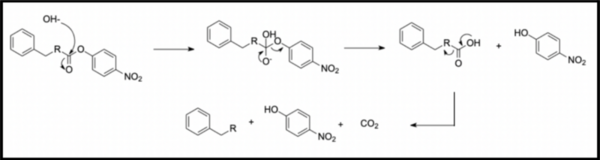
In organic synthesis, protecting groups are derivatives of reactive functionalities that play a key role in ensuring chemoselectivity of chemical transformations. To protect alcohols and amines, acid-labile tert-butyloxycarbonyl protecting groups are often employed but are avoided when the substrate is acid-sensitive. Thus, orthogonal base-labile protecting groups have been in demand to enable selective deprotection and to preserve the reactivity of acid-sensitive substrates. To meet this demand, we present 4-nitrophenyl carbonates and carbamates as orthogonal base-labile protecting group strategies.

Read More...

Buttermilk and baking soda increase pancake fluffiness by liberating carbon dioxide

Rojas et al. | Sep 18, 2022

Buttermilk and baking soda increase pancake fluffiness by liberating carbon dioxide

Here, seeking a better understanding of what determines the fluffiness of a pancake, the authors began by considering a chemical reaction that results in the production of carbon dioxide gas from recipe ingredients, specifically sodium bicarbonate or baking soda. The substitution of homemade buttermilk for milk and adding more baking soda was found to result in significantly fluffier pancakes.

Read More...

A potentially underestimated source of CO2 and other greenhouse gases in agriculture

Corcimaru et al. | May 18, 2022

A potentially underestimated source of CO<sub>2</sub> and other greenhouse gases in agriculture

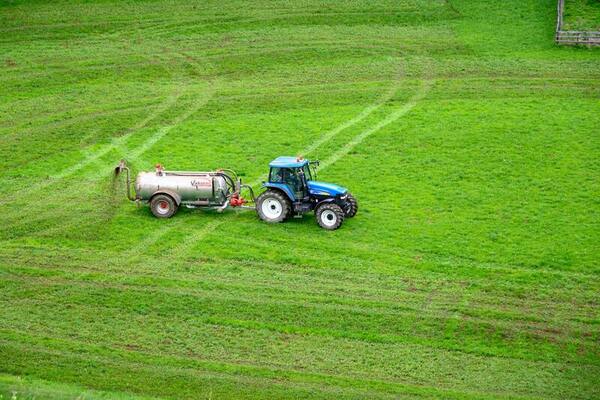
Here the authors investigated the role of agricultural fertilizers as potential contributors to greenhouse gas emissions. In contrast to the typical investigations that consider microbiological processes, the authors considered purely chemical processes. Based on their results they found that as much as 20.41% of all CO2 emission from land-based activities could be a result of mineral nitrogen fertilizers.

Read More...

The effect of wild orange essential oil on ascorbic acid decay in freshly squeezed orange juice

Sebek et al. | Feb 25, 2022

The effect of wild orange essential oil on ascorbic acid  decay in freshly squeezed orange juice

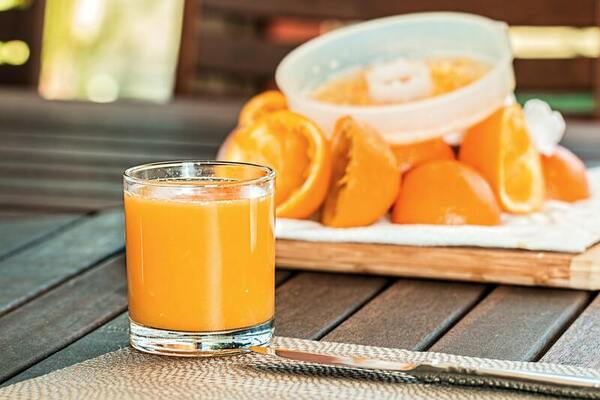
The goal of this project was to see if the addition of wild orange essential oil to freshly squeezed orange juice would help to slow down the decay of ascorbic acid when exposed to various temperatures, allowing vital nutrients to be maintained and providing a natural alternative to the chemical additives in use in industry today. The authors hypothesized that the addition of wild orange essential oil to freshly squeezed orange juice would slow down the rate of oxidation when exposed to various temperatures, reducing ascorbic acid decay. On average, wild orange EO slowed down ascorbic acid decay in freshly squeezed orange juice by 15% at the three highest temperatures tested.

Read More...

Impact of Soil Productivity on the Growth of Two Meyer Lemon Trees

Shen et al. | Dec 14, 2020

Impact of Soil Productivity on the Growth of Two Meyer Lemon Trees

Here, the authors aimed to apply home soil testing to identify the cause of the growth differences between two lemon trees. They hypothesized that differences in physical and chemical soil characteristics were influencing differences in soil productivity and plant growth. Overall, the study demonstrated the effectiveness of home soil testing to characterize soils and help homeowners solve common gardening problems.

Read More...

Breaking the Ice: A Scientific Take on the Ice Melting Abilities of Household Salts

Sehgal et al. | Dec 04, 2017

Breaking the Ice: A Scientific Take on the Ice Melting Abilities of Household Salts

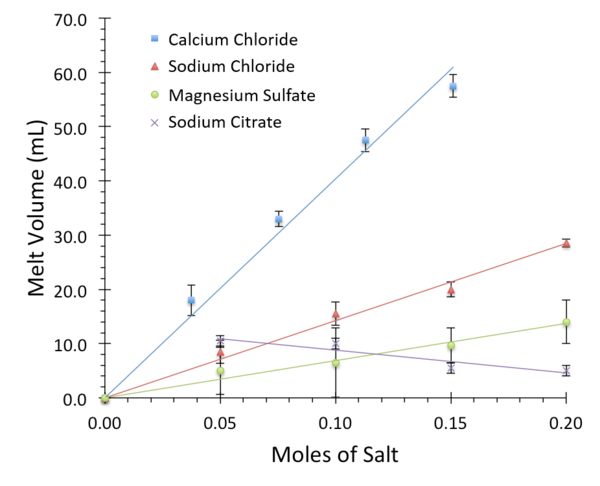
The use of salt to melt ice is a common and important practice to keep roadways safe during winter months. However, various subtypes of salt differ in their chemical and physical properties, as well as their environmental impact. In this study, the authors measure the effectiveness of different salts at disrupting ice structures and identify calcium chloride as the most effective.

Read More...

The Development and Maximization of a Novel Photosynthetic Microbial Fuel Cell Using Rhodospirillum rubrum

Gomez et al. | Mar 02, 2014

The Development and Maximization of a Novel Photosynthetic Microbial Fuel Cell Using <em>Rhodospirillum rubrum</em>

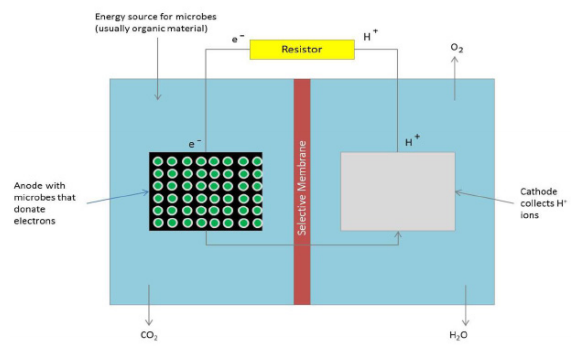
Microbial fuel cells (MFCs) are bio-electrochemical systems that utilize bacteria and are promising forms of alternative energy. Similar to chemical fuel cells, MFCs employ both an anode (accepts electrons) and a cathode (donates electrons), but in these devices the live bacteria donate the electrons necessary for current. In this study, the authors assess the functionality of a photosynthetic MFC that utilizes a purple non-sulfur bacterium. The MFC prototype they constructed was found to function over a range of environmental conditions, suggesting its potential use in industrial models.

Read More...

Fluorescein or Green Fluorescent Protein: Is It Possible to Create a Sensor for Dehydration?

Joshi et al. | Dec 09, 2019

Fluorescein or Green Fluorescent Protein: Is It Possible to Create a Sensor for Dehydration?

Currently there is no early dehydration detection system using temperature and pH as indicators. A sensor could alert the wearer and others of low hydration levels, which would normally be difficult to catch prior to more serious complications resulting from dehydration. In this study, a protein fluorophore, green fluorescent protein (GFP), and a chemical fluorophore, fluorescein, were tested for a change in fluorescence in response to increased temperature or decreased pH. Reversing the pH change did not restore GFP fluorescence, but that of fluorescein was re-established. This finding suggests that fluorescein could be used as a reusable sensor for a dehydration-related pH change.

Read More...

Androgen Diffusion Patterns in Soil: Potential Watershed Impacts

Corson et al. | Jan 24, 2019

Androgen Diffusion Patterns in Soil: Potential Watershed Impacts

Androgens are natural or synthetic steroid hormones that control secondary male sex characteristics. Androgens are excreted in cattle urine and feces, and can run off or seep into nearby waters, negatively impacting aquatic life and potentially polluting human water sources. Here, the authors investigated the effectiveness of soil as a natural barrier against androgen flow into vulnerable waterways. Their results, obtained by testing diffusion patterns of luminol, an androgen chemical analog, indicated that soil is a poor barrier to androgen diffusion.

Read More...