Browse Articles

Assessing Spanish interpretation in community healthcare: a study of patient satisfaction

Yon et al. | Jun 22, 2026

Assessing Spanish interpretation in community healthcare: a study of patient satisfaction
Image credit: Yon and Jones

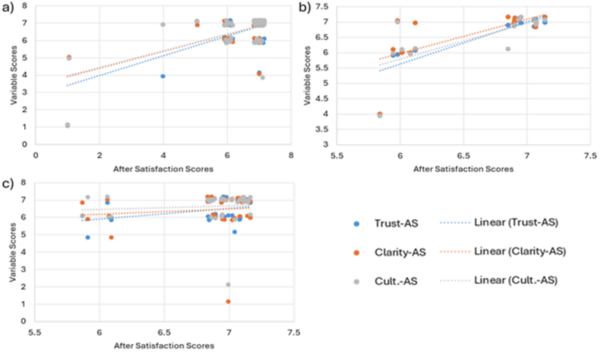
This manuscript explores the use of Spanish language translators in an outpatient clinic in New Jersey. The authors surveyed patients before and after in person, video, and telephone appointments to determine which modality was most acceptable to the patients. The authors found that the three modalities did not differ in patient satisfaction, but that patients were grateful for translations services and that patient trust may be expanded by the use of these services and by focuses of translator soft skills.

Read More...

The Role of Corresponding Race, Gender, and Species as Incentives for Charitable Giving

Antonides-Jensen et al. | Jul 31, 2019

The Role of Corresponding Race, Gender, and Species as Incentives for Charitable Giving

Inherent bias is often the unconscious driver of human behavior, and the first step towards overcoming these biases is our awareness of them. In this article the authors investigate whether race, gender or species affect the choice of charity by middle class Spaniards. Their conclusions serve as a starting point for further studies that could help charities refine their campaigns in light of these biases effectively transcending them or taking advantage of them to improve their fundraising attempts.

Read More...

The Effect of Lyrical and Instrumental Music on Reading Comprehension Tasks

Herring et al. | Nov 01, 2018

The Effect of Lyrical and Instrumental Music on Reading Comprehension Tasks

Herring and Scott investigated how specific types of background music affected 8th and 9th graders' performance on a reading comprehension task. In the study, their results indicated that music with English lyrics led to lower reading comprehension scores, while foreign language and instrumental music was comparable to no music at all. The authors therefore recommend that teachers avoid playing English language music for students completing reading tasks in order to minimize distractions and improve work efficiency.

Read More...

Are Age and Sex Related to Emotion Recognition Ability in Children and Teenagers?

Gallego-García et al. | Feb 23, 2018

Are Age and Sex Related to Emotion Recognition Ability in Children and Teenagers?

Humans have a natural ability to recognize emotional cues from the facial expressions of others, as a crucial evolutionary trait to navigate social interactions. This ability likely develops through normal development and social experience, but it is unclear how much influence age and sex have in emotional facial recognition (EFR). In this study, the authors investigate EFR in children and teenagers, and look at whether accurate emotional recognition does occur more in males or females.

Read More...