Assessing Spanish interpretation in community healthcare: a study of patient satisfaction
(1) Mainland Regional High School
https://doi.org/10.59720/25-148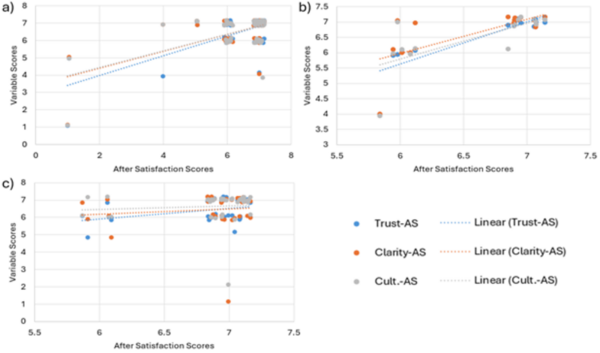
With the growing population of limited English proficiency individuals in the United States, interpretation services in healthcare settings have become increasingly important to ensure equitable access to quality care. This study investigates which Spanish interpretation model (e.g., in-person, video remote, telephonic, bilingual provider) best enhances adult Spanish-speaking satisfaction in outpatient community healthcare settings. We hypothesized that in-person Spanish interpretation models would best enhance patient satisfaction in community healthcare compared to other methods of interpretation, such as video remote, telephonic, and bilingual provider models. We implemented a triangulated mixed-methods design, utilizing the expectation disconfirmation model, additional variable (trust, clarity, and cultural understanding) Likert scales, and a qualitative free-text option. Through the analysis of 167 complete responses, we found satisfaction did not significantly differ between models, thereby failing to reject the null hypothesis. Alternatively, we found satisfaction to highly correlate with the variables of trust, clarity, and cultural understanding. Additionally, an unexpected theme of patient gratitude—termed the “gratefulness factor”— emerged from the qualitative analysis. These findings suggest that focusing on soft skill training for providers may enhance the patient experience, as perceived kindness and interpersonal care may lead to higher satisfaction.
This article has been tagged with: