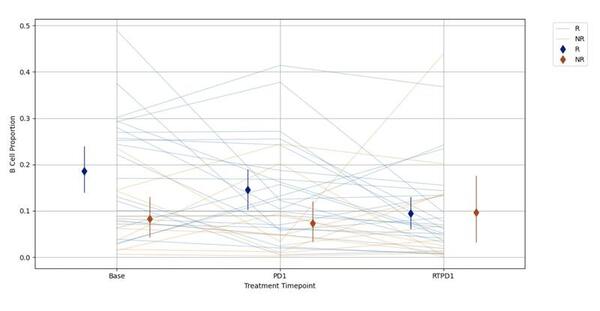
This study used single-cell RNA sequencing to examine whether B cells can predict response to pembrolizumab and radiation therapy in patients with triple-negative breast cancer.
Read More...B cell dynamics as predictive markers in triple-negative breast cancer treated with Pembrolizumab & radiation
This study used single-cell RNA sequencing to examine whether B cells can predict response to pembrolizumab and radiation therapy in patients with triple-negative breast cancer.
Read More...Application of gene therapy for reversing T-cell dysfunction in cancer
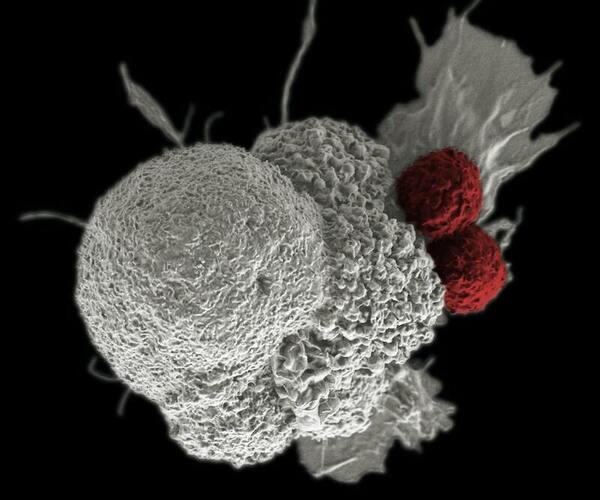
Since cancer cells inhibit T-cell activity, the authors investigated a method to reverse T-cell disfunction with gene therapy, so that the T-cells would become effective once again in fighting cancer cells. They used the inhibition of proprotein convertases (PCSK1) in T cells and programmed death-ligand 1 (CD274) in cancer cells. They observed the recovery of IL-2 expression in Jurkat cells, with increased recovery noted in a co-culture sample. This study suggests a novel strategy to reactivate T cells.
Read More...Significance of Tumor Growth Modeling in the Behavior of Homogeneous Cancer Cell Populations: Are Tumor Growth Models Applicable to Both Heterogeneous and Homogeneous Populations?
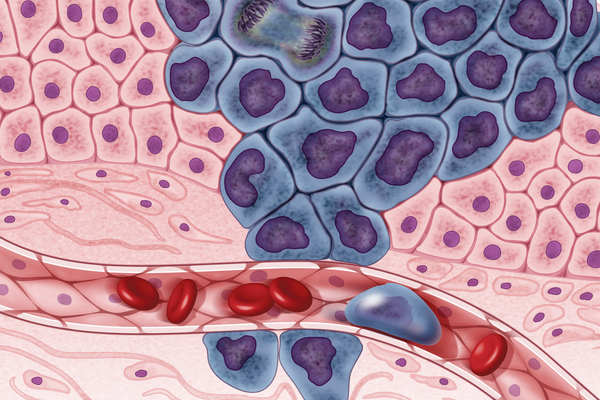
This study follows the process of single-cloning and the growth of a homogeneous cell population in a superficial environment over the course of six weeks with the end goal of showing which of five tumor growth models commonly used to predict heterogeneous cancer cell population growth (Exponential, Logistic, Gompertz, Linear, and Bertalanffy) would also best exemplify that of homogeneous cell populations.
Read More...Comparing the Effects of Different Natural Products on Reducing Tumor Growth in a Drosophila Model
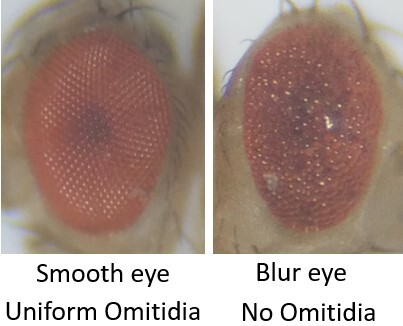
In this work, the authors compared the effects of common natural products, including sesame, cinnamon, garlic, moringa and turmeric on tumor growth in Drosophila eyes. The data showed that these natural products cannot be used to reduce tumor growth once it has completely formed. However, the data suggested that some natural products can reduce cancer cell growth when tumors are treated early.
Read More...Assessing machine learning model efficacy for brain tumor MRI classification: a multi-model approach
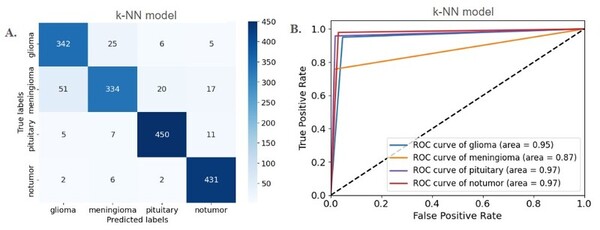
This manuscript explores the performance of five different machine learning models in classifying brain tumors from a dataset of MRI scans. The authors find that several of the models showed >90% accuracy. Thus, the authors suggest that machine learning models demonstrate potential for effective implementation in clinical settings, including as a diagnostic tool that can be used to complement the expertise of neuroradiologists.
Read More...Conversion of Mesenchymal Stem Cells to Cancer-Associated Fibroblasts in a Tumor Microenvironment: An in vitro Study
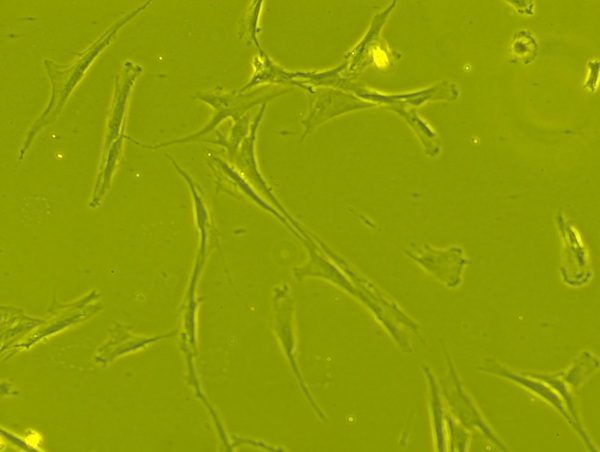
Mesenchymal stem cells(MSCs) play a role in tumor formation by differentiating into cancer associated fibroblasts (CAFs) which enable metastasis of tumors. The process of conversion of MSCs into CAFs is not clear. In this study, authors tested the hypothesis that cancers cells secrete soluble factors that induce differentiation by culturing bone marrow mesenchymal stem cells in media conditioned by a breast cancer cell line.
Read More...Citrate and lactate drive glioblastoma progression via activation of tumor-associated macrophages
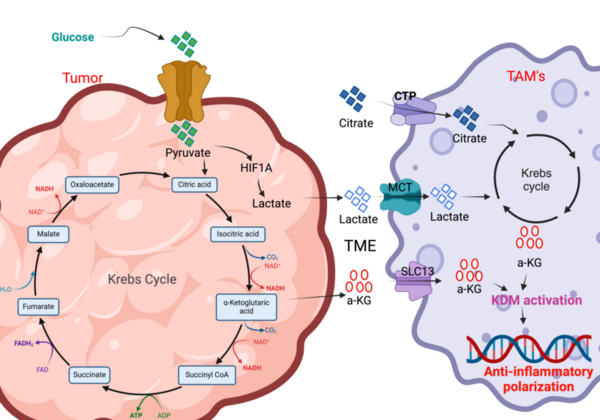
The authors looked at the impact of citrate and lactate on glioblastoma progression. Their results provide important insights for future immunotherapies aimed at treating glioblastoma.
Read More...Evaluating the clinical applicability of neural networks for meningioma tumor segmentation on 3D MRI
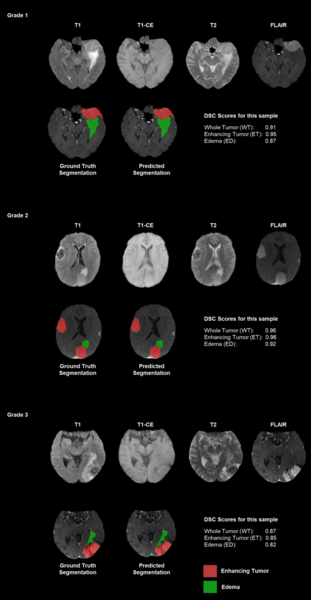
Authors emphasize the challenges of manual tumor segmentation and the potential of deep learning models to enhance accuracy by automatically analyzing MRI scans.
Read More...Testing Simarouba amara’s therapeutic effects against weedicide-induced tumor-like morphology in planarians
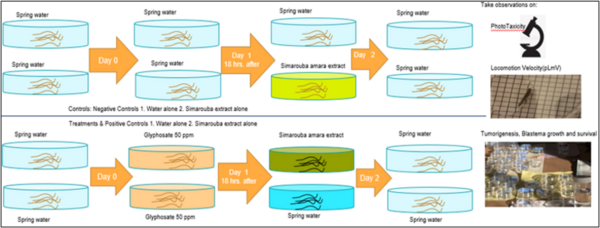
According to the World Health Organization, cancer is a leading cause of death globally. The disease’s prevalence is rapidly increasing in association with factors including the increased use of pesticides and herbicides, such as glyphosate, which is one of the most widely used herbicide ingredients. Natural antioxidants and phytochemicals are being tested as anti-cancer agents due to their antiproliferative, antioxidative, and pro-apoptotic properties. Thus, we aimed to investigate the potential role of S. amara extract as a therapeutic agent against glyphosate-induced toxicity and tumor-like morphologies in regenerating and homeostatic planaria (Dugesia dorotocephala).
Read More...A comparative analysis of machine learning approaches to predict brain tumors using MRI
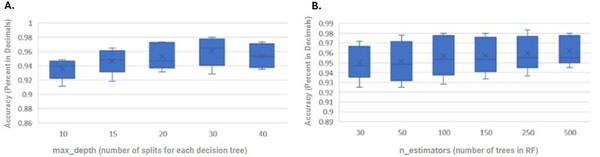
The authors use machine learning on MRI images of brain tissue to predict tumor onset as an avenue for early detection of brain cancer.
Read More...