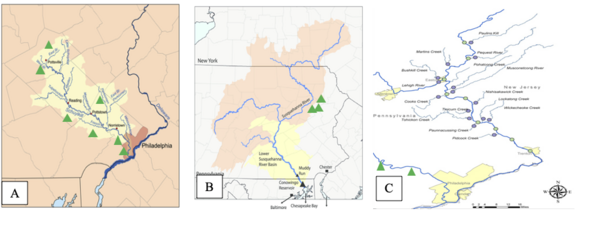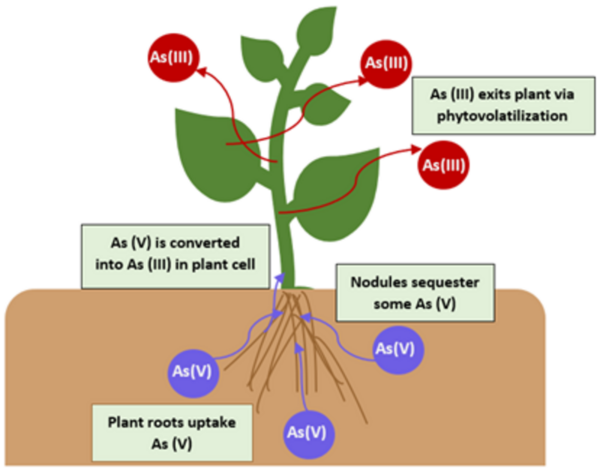
Arsenic contamination in rice, caused by the use of arsenic-laden groundwater for irrigation, is a growing global concern, affecting over 150 million people. To address this, researchers hypothesized that genetically modifying rice plants with arsenic-resistant genes could reduce arsenic uptake and allow the plants to detoxify arsenic, making them safer to consume.
Read More...Browse Articles
A model for angle evolution in conical piles formed using the fixed funnel method
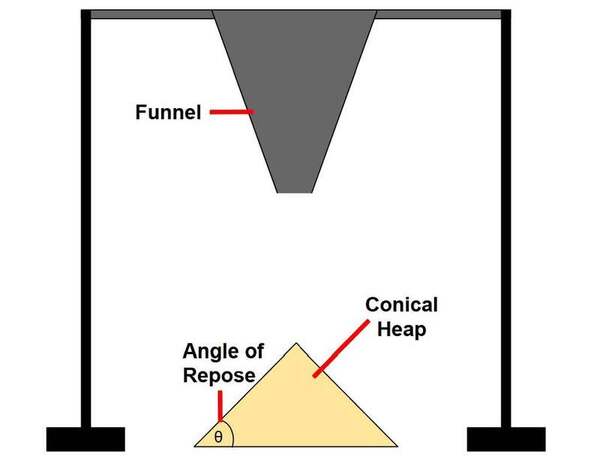
When granular materials are poured onto a surface, they form conical piles whose slopes increase before reaching a stable angle of repose. We found that this angle evolution follows a previously unrecognized two-phase exponential growth pattern that is conserved across granular materials with diverse particle properties. The parameters of this model correlate with particle friction and are influenced by deposition conditions, providing a quantitative framework for describing pile formation.
Read More...Integration of iron oxide nanoparticles into high-density polyethylene for sustainable cup coatings
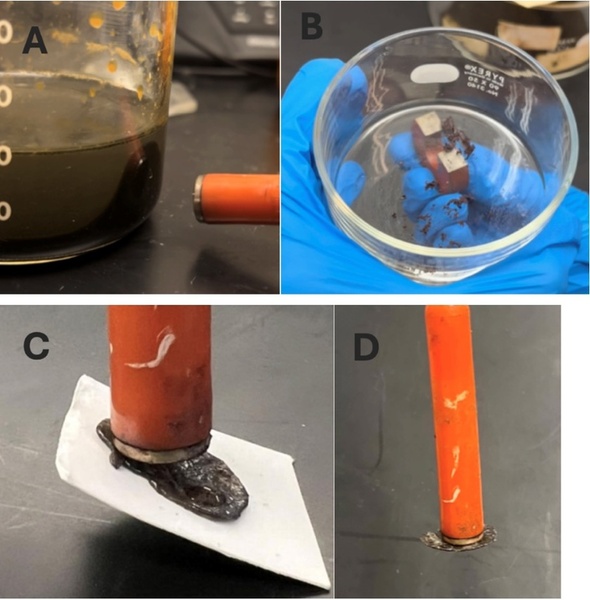
Here the authors propose integrating magnetic iron (II) oxide nanoparticles into the high-density polyethylene linings of disposable paper cups to create a waterproof, magnetically responsive composite liner. Their findings demonstrate that these nanoparticles successfully bond with the plastic layer without disrupting its structural integrity, offering a viable method to improve plastic recovery through magnetic recycling and mitigate global microplastic pollution.
Read More...Assessing the possibility of using entomopathogenic fungi for mosquito control in Hawaii
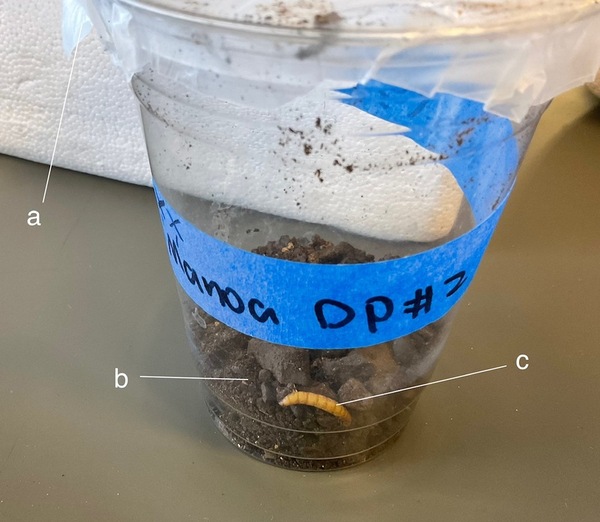
Fungi that attack and kill insects have promise for targeting mosquitoes without the harmful environmental impacts of chemicals like DDT. To find out whether fungi might be effective in controlling mosquitoes in Hawaii, Jiang and Chan test the effects of Hawaiian fungal isolates on mosquito larvae.
Read More...Application of arbuscular mycorrhizal fungi to inhibit nitrogen uptake of weeds within crop fields
In this study, the ability of arbuscular mycorrhizal fungi to limit the growth of an agricultural weed Cirsium arvense is tested. This has important implications for developing natural herbicides.
Read More...A novel bioreactor system to purify contaminated runoff water
In this study, the authors engineer a cost-effective and bio-friendly water purification system using limestone, denitrifying bacteria, and sulfate-reducing bacteria. They evaluated its efficacy with samples from Eastern PA industrial sites.
Read More...Effects of Various Environmental Factors on Stomatal Density, Area, and Potential Conductance Index
In this study, the authors investigate the combinatorial effects of CO2 plus other environmental factors including salinity, temperature, acidity, and drought on how effectively plants can transport water and carbon through their stomata.
Read More...Development of novel biodegradable bioplastics for packaging film using mango peels
Here the authors explored the development of biodegradable bioplastic films derived from mango peels as a sustainable solution to plastic pollution and greenhouse gas emissions from fruit waste. They optimized the film's mechanical properties and water resistance through adjusting processing conditions and incorporating plasticizers and a hydrophobic coating, ultimately demonstrating its potential as a bacteriostatic and biodegradable alternative to conventional plastic food wrap.
Read More...Characterization of Drought Tolerance in Arabidopsis Mutant fry1-6
In a world where water shortage is becoming an increasing concern, and where population increase seems inevitable, food shortage is an overwhelming concern for many. In this paper, the authors aim to characterize a drought-resistant strain of A. thaliana, investigating the cause for its water resistance. These and similar studies help us learn how plants could be engineered to improve their ability to flourish in a changing climate.
Read More...Friend or Foe: Investigating the Relationship between a Corn Crop and a Native Ragweed Population
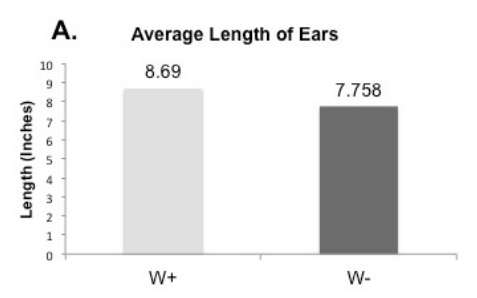
Farmers will need to increase crop yields to feed the world's growing population efficiently. The authors here investigate the effects of growing corn in the presence or absence of ragweed, an invasive weed found in many fields and gardens. Surprisingly, the authors found that corn grown in the presence of weeds grew taller and were more productive than corn that had weeds removed. This may help gardeners rethink the necessity of weeding, and may point a way to improve farm yields in the future.
Read More...