Browse Articles

Assessing machine learning model efficacy for brain tumor MRI classification: a multi-model approach

Dhingra et al. | Mar 14, 2026

Assessing machine learning model efficacy for brain tumor MRI classification: a multi-model approach
Image credit: Dhingra and Dhingra

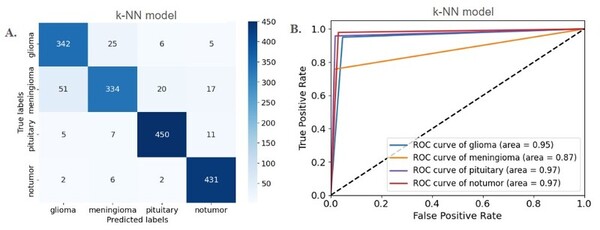
This manuscript explores the performance of five different machine learning models in classifying brain tumors from a dataset of MRI scans. The authors find that several of the models showed >90% accuracy. Thus, the authors suggest that machine learning models demonstrate potential for effective implementation in clinical settings, including as a diagnostic tool that can be used to complement the expertise of neuroradiologists.

Read More...

Functional Network Connectivity: Possible Biomarker for Autism Spectrum Disorders (ASD)

Wang et al. | Feb 23, 2015

Functional Network Connectivity: Possible Biomarker for Autism Spectrum Disorders (ASD)

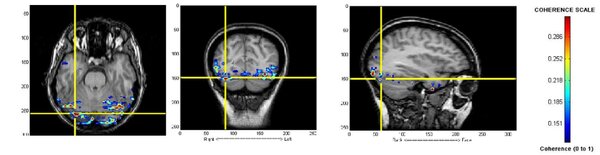
Autism spectrum disorder (ASD) is a complex neurodevelopmental disorder and is difficult to diagnose in young children. Here magnetoencephalography was used to compare the brain activity in patients with ASD to patients in a control group. The results show that patients with ASD have a high level of activity in different areas of the brain than those in the control group.

Read More...

The use of computer vision to differentiate valley fever from lung cancer via CT scans of nodules

El Kereamy et al. | Nov 12, 2024

The use of computer vision to differentiate valley fever from lung cancer via CT scans of nodules

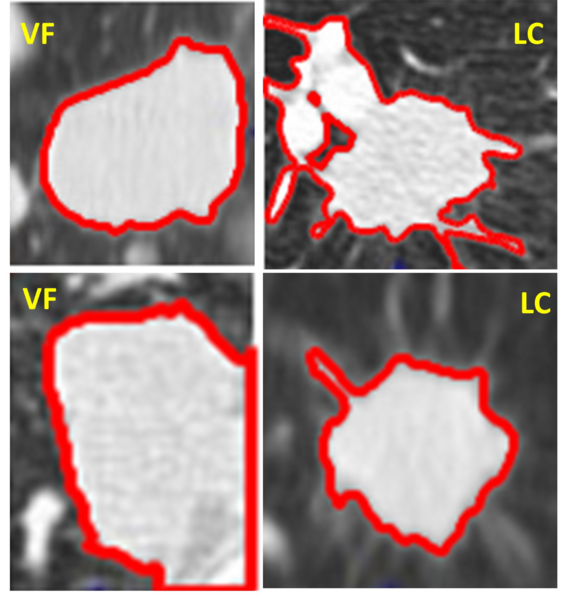
Pulmonary diseases like lung cancer and valley fever pose serious health challenges, making accurate and rapid diagnostics essential. This study developed a MATLAB-based software tool that uses computer vision techniques to differentiate between these diseases by analyzing features of lung nodules in CT scans, achieving higher precision than traditional methods.

Read More...

The impact of genetic analysis on the early detection of colorectal cancer

Agrawal et al. | Aug 24, 2023

The impact of genetic analysis on the early detection of colorectal cancer

Although the 5-year survival rate for colorectal cancer is below 10%, it increases to greater than 90% if it is diagnosed early. We hypothesized from our research that analyzing non-synonymous single nucleotide variants (SNVs) in a patient's exome sequence would be an indicator for high genetic risk of developing colorectal cancer.

Read More...

Development of a Novel Treatment Strategy to Treat Parkinsonian Neurodegeneration by Targeting Both Lewy Body Aggregation and Dopaminergic Neuronal Degradation in a Drosophila melanogaster Model

Sama et al. | Sep 25, 2019

Development of a Novel Treatment Strategy to Treat Parkinsonian Neurodegeneration by Targeting Both Lewy Body Aggregation and Dopaminergic Neuronal Degradation in a <em>Drosophila melanogaster</em> Model

In this article the authors address the complex and life quality-diminishing neurodegenerative disease known as Parkinson's. Although genetic and/or environmental factors contribute to the etiology of the disease, the diagnostic symptoms are the same. By genetically modifying fruit flies to exhibit symptoms of Parkinson's disease, they investigate whether drugs that inhibit mitochondrial calcium uptake or activate the lysosomal degradation of proteins could improve the symptoms of Parkinson's these flies exhibit. The authors report the most promising outcome to be that when both types of drugs were used together. Their data provides encouraging evidence to support further investigation of the utility of such drugs in the treatment of human Parkinson's patients.

Read More...

Large-scale brain network connectivity under anxiety induced by naturalistic story listening

Chang et al. | Jun 03, 2026

Large-scale brain network connectivity under anxiety induced by naturalistic story listening

This study found that anxiety induced by a suspenseful story increased communication between the brain’s salience, default mode, and central executive networks, with the central executive network acting as a bridge during peak tension. These findings suggest that anxiety alters large-scale brain connectivity patterns and may help inform future diagnostic tools and personalized treatments for anxiety disorders.

Read More...

POC-MON: A Novel and Cost-Effective Pocket Lemon Sniff Test (PLST) for Early Detection of Major Depressive Disorder

Cruz et al. | Jul 07, 2020

POC-MON: A Novel and Cost-Effective Pocket Lemon Sniff Test (PLST) for Early Detection of Major Depressive Disorder

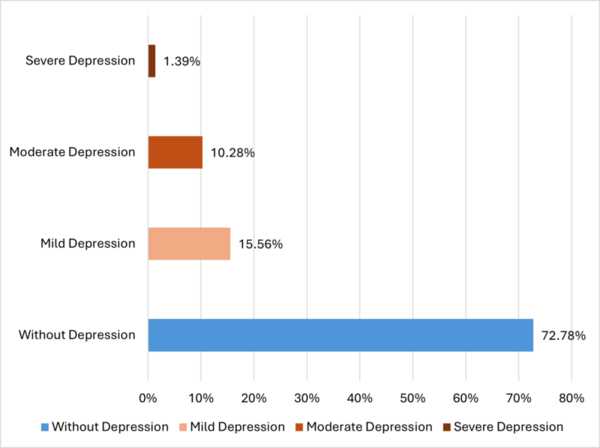
Effective treatment of depression requires early detection. Depressive symptoms overlap with olfactory regions, which led to several studies of the correlation between sense of smell and depression. The alarming rise of depression, its related crimes, suicides, and lack of inexpensive, quick tools in detecting early depression — this study aims in demonstrating decreased olfaction and depression correlation. Forty-two subjects (ages 13-83) underwent POC-MON (Pocket Lemon) assessment — an oven-dried lemon peel sniff test, subjected to distance measurement when odor first detected (threshold) and completed Patient Health Questionnaires (PHQ-9). POC-MON and PHQ-9 scores yielded a correlation of 20% and 18% for the right and left nostrils, respectively. Among male (n=17) subjects, the average distance of POC-MON and PHQ-9 scores produced a correlation of 14% and 16% for the right and left nostrils, respectively. Females (n=25) demonstrated a correlation of 28% and 21% for the right and left nostrils, respectively. These results suggest the correlation between olfaction and depression in diagnosing its early-stage, using a quick, inexpensive, and patient-friendly tool — POC-MON.

Read More...

QuitPuff: A Simple Method Using Saliva to Assess the Risk of Oral Pre-Cancerous Lesions and Oral Squamous Cell Carcinoma in Chronic Smokers

Shamsher et al. | Mar 27, 2019

QuitPuff: A Simple Method Using Saliva to Assess the Risk of Oral Pre-Cancerous Lesions and Oral Squamous Cell Carcinoma in Chronic Smokers

Smoking generates free radicals and reactive oxygen species which induce cell damage and lipid peroxidation. This is linked to the development of oral cancer in chronic smokers. The authors of this study developed Quitpuff, simple colorimetric test to measure the extent of lipid peroxidation in saliva samples. This test detected salivary lipid peroxidation with 96% accuracy in test subjects and could serve as an inexpensive, non-invasive test for smokers to measure degree of salivary lipid peroxidation and potential risk of oral cancer.

Read More...