
Did the COVID-19 pandemic and travel restrictions improve air quality? The authors investigate this question in New York City using existing pollution data and forecasting trends.
Read More...COVID-19 and air pollution in New York City
Did the COVID-19 pandemic and travel restrictions improve air quality? The authors investigate this question in New York City using existing pollution data and forecasting trends.
Read More...Improving autonomous vehicle perception in adverse weather through image augmentation
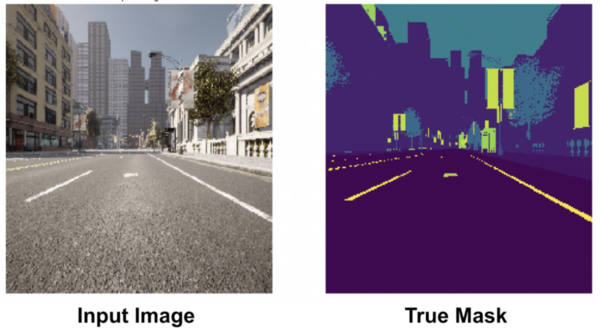
The authors looked at ways that autonomous vehicles could be trained to better perform in adverse weather without the use of actual images taken during adverse weather events. They were able to improve performance, but models using actual images still perform the best.
Read More...Using machine learning to detect outliers of red clump stars
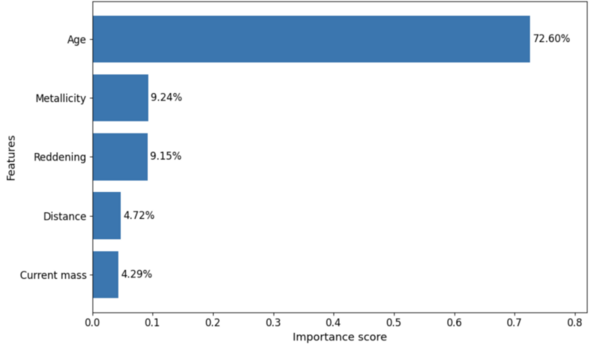
Machine learning offers a powerful way to analyze large astronomical datasets and identify stars with unusual properties. In this study, students used Extreme Gradient Boosting and Isolation Forest models to investigate why some red clump stars deviate from their expected luminosities. Their results show that stellar age plays a much stronger role than metallicity in driving luminosity variation, and the models successfully detected outlier stars that may affect distance measurements in galactic studies.
Read More...Retinal biomarkers for the detection of neurological disease using deep learning
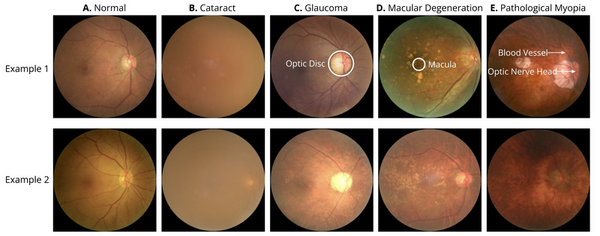
The authors looked at whether retinal features, specifically lens clarity, optic nerve cupping, and hyperreflective foci, can serve as biomarkers for neuro-ophthalmological diseases, which share pathological mechanisms with neurodegeneration and may indicate broader neurological risk. Using multimodal clinical data and machine learning, they investigated the potential of retinal imaging as a complementary diagnostic tool for more accurate and accessible detection of neurological disorders.
Read More...Photometry of the Type II supernova 2025ngs
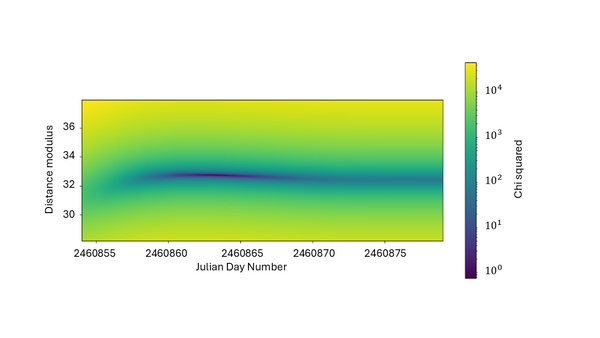
We observed supernova 2025ngs and created its light curve through aperture photometry. We were then able to determine that 2025ngs was a Type II-P supernova.
Read More...Global trends in total cholesterol by gender (1980-2018)
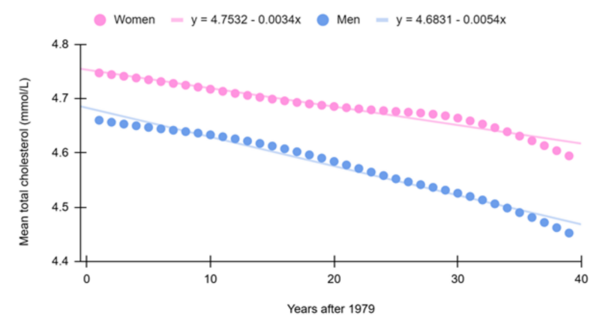
This study explores global trends in average total cholesterol levels among adults from 1980 to 2018, finding a significant decline in both men and women, with a sharper decrease among men. While these improvements likely reflect advances in public health and medical treatment, the persistent gender gap highlights the need for more targeted approaches to cardiovascular disease prevention.
Read More...Lung region complexity affects Grad-CAM and Deep Taylor outcomes in pneumonia predictions
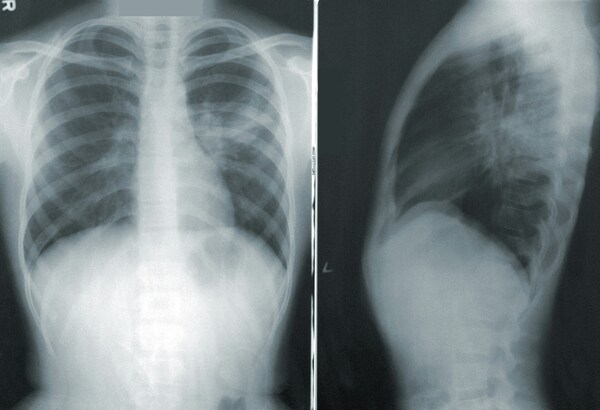
The authors studied the accuracy of two commonly used explainable AI techniques for detecting pneumonia in chest x-rays.
Read More...Testing the Impact of a Geometric Curvature Variable on the Accuracy of Econometric Forecasting Models
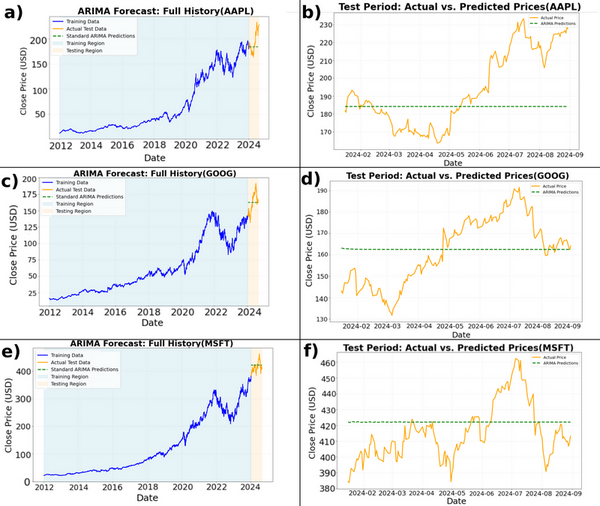
Classical financial forecasting models often fail to capture the complex, nonlinear dynamics of the stock market. This study demonstrates that incorporating a single variable to represent the 'geometric curvature' of a time series dramatically improves the accuracy of standard econometric forecasts. Our findings highlight that geometric properties are a significant predictive factor, opening new avenues for more powerful financial modeling.
Read More...Distributional effects of residential energy tax credits: A machine learning approach
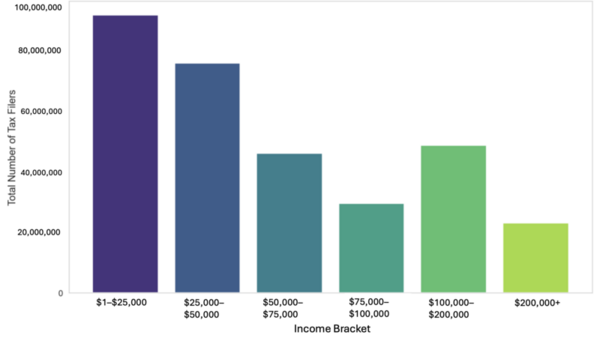
Tax incentives for sustainable technology are a key part of the push for a greener future. However, these incentives may not reach all income strata equally. Using a machine learning approach, this study analyzed the distributional effects of residential energy tax credits across different income levels in the United States.
Read More...Comparative study on three machine learning models in novel autonomous drone-based detection of invasive plant Brassica nigra
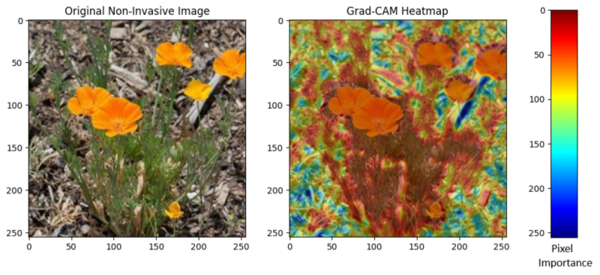
Autonomous drone imaging combined with machine learning offers a promising approach for early detection of invasive species. In this study, students built an autonomous drone and compared three models: CNN, SGDC, and XGBoost, to identify Brassica nigra from aerial footage. Their results show that CNNs most effectively recognize key visual features, demonstrating strong potential for supporting conservation and invasive plant management.
Read More...