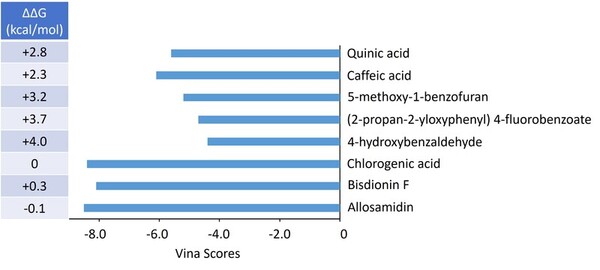
This study investigated whether chlorogenic acid, a plant compound with known health benefits, can interact with the proteins CHIT1 and CHI3L1, which could ultimately lead to new therapeutic strategies for a range of chronic diseases.
Read More...Computational prediction of chlorogenic acid binding to disease-linked proteins CHIT1 and CHI3L1
This study investigated whether chlorogenic acid, a plant compound with known health benefits, can interact with the proteins CHIT1 and CHI3L1, which could ultimately lead to new therapeutic strategies for a range of chronic diseases.
Read More...The effectiveness of glass fines on the fire resistance of mycelium-based biocomposites
Dantrolene-induced ER stress alters sleep in Drosophila melanogaster
Performance comparison of indoor polyculture utilizing hydroponic and soil-based systems
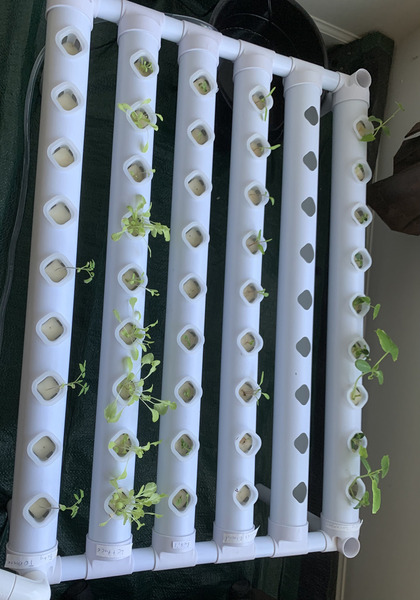
Hydroponics is often promoted as a highly efficient alternative to traditional soil farming, but its effectiveness in small indoor polyculture systems is not well understood. In this study, students compared plant growth and maturity across hydroponic and soil-based indoor polycultures and found that soil grown plants were generally taller and more mature than those grown hydroponically. These results suggest that soil-based methods may outperform hydroponics in certain household polyculture settings.
Read More...The ecological mysteries of Opheodesoma spectabilis : Seasonal trends, habitat preferences, and climate responses
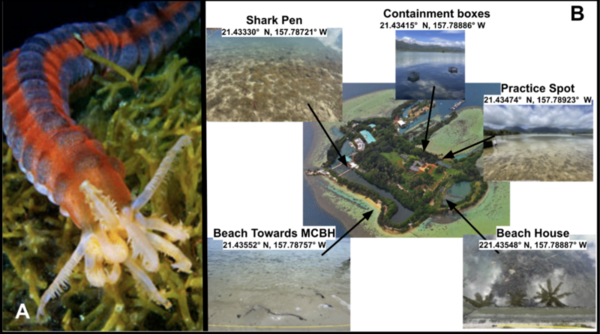
This study examines how environmental conditions influence the abundance and ecological role of the sea cucumber Opheodesoma spectabilis in Kāneʻohe Bay. Field observations and laboratory experiments showed that the species is more common in algae-dominated sandy habitats, where it improves water clarity and increases dissolved oxygen through bioturbation. However, exposure to very high temperatures caused rapid mortality, suggesting that marine heat waves could threaten this species and the ecological functions it provides.
Read More...Upregulation of the AP-1 complex as a potential biomarker for Alzheimer’s disease (AD)
Simulating single versus cocktail antibiotic effects on the human gut microbiome

This study, uses SimulATe to model changes in microbial diversity and community structure upon administering a cocktail of antibiotics versus a single antibiotic. The authors hypothesized that antibiotic cocktails, particularly those combining broad-spectrum drugs like tetracyclines and trimethoprims, would cause a more significant reduction in gut microbial diversity compared to single-drug treatments. The findings confirmed a greater loss of microbial diversity with combinatorial treatments compared to single-drug treatments. While individual antibiotics dynamically reshaped the surviving species of the microbiome, antibiotic cocktails frequently cleared all species of the gut microbiome.
Read More...Evaluating the filtration efficiency and water quality impact of Corbicula javanicus
Bacterial contamination on New York City transit and the effectiveness of hand hygiene
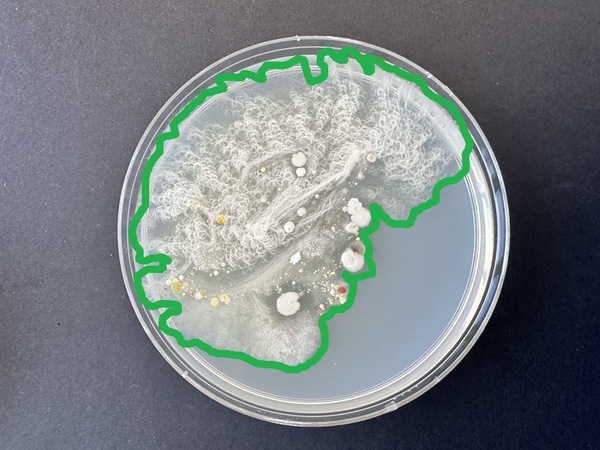
The authors studied bacterial contamination of the New York City transit system, as well as the effectiveness of hand washing and hand sanitizer.
Read More...Implications of various pure tones on Phaseolus vulgaris and Gaultheria shallon
.jpg)
This study investigated how different sound frequencies (0, 1,000, 5,000, and 15,000 Hz) affect the growth of Phaseolus vulgaris and the transpiration rates of Gaultheria shallon. Although some differences in plant growth were observed, the authors found no consistent evidence that sound frequency enhanced overall growth or transpiration, highlighting the need for further research.
Read More...